
Source custom interlock knit fabric for T-shirts, babywear, underwear, loungewear and light activewear programs. Review modal, viscose, rayon, polyester and spandex interlock options before requesting samples.
Interlock options for custom apparel programs
Interlock fabric is a stable double-knit with a smooth handfeel on both sides. Buyers usually choose it when they need softer close-to-skin comfort, cleaner structure and less edge curling than basic single jersey.
This page is structured for buyers comparing modal, viscose, rayon and polyester-spandex interlock for T-shirts, babywear, underwear, loungewear and light activewear programs.
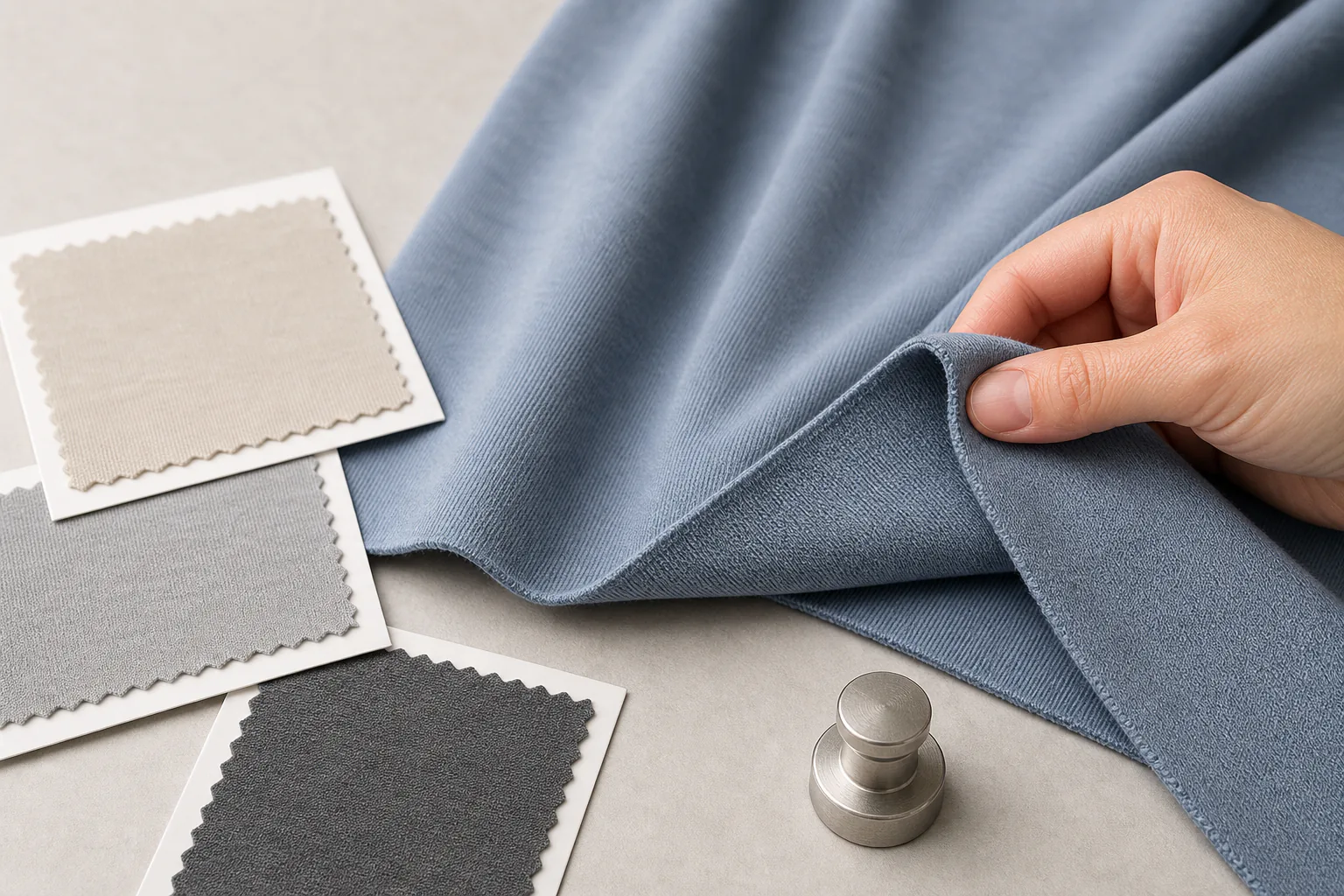
Modal, viscose and rayon interlock
Best when the program prioritizes softness, smoothness and close-to-skin comfort for premium basics or babywear.
Polyester or nylon spandex interlock
Useful when the buyer needs more functional stretch, easier care or a more performance-led knit direction.
Sample and checklist path
Helps confirm GSM, width, stretch, handfeel, shrinkage control and color direction before bulk decisions.
Specs buyers usually confirm
| Buyer checkpoint | What to confirm before interlock quote |
|---|---|
| Common compositions | Modal/spandex, viscose/spandex, rayon/spandex, polyester/spandex and nylon/spandex |
| Target applications | T-shirts, babywear, underwear, base layers, loungewear and light activewear |
| Key specs | GSM, usable width, stretch, recovery, handfeel and shrinkage control |
| Surface & finish | Softness target, compactness, color route and any specific finishing needs |
| Sample route | Swatch or yardage review before bulk approval |
| MOQ & lead time | Confirmed according to composition, color count and program size |
What is interlock fabric used for?
Interlock is commonly used for T-shirts, babywear, underwear, base layers, loungewear and soft casual garments where a cleaner double-knit structure is helpful.
Is interlock thicker than single jersey?
In many cases it feels more stable and slightly fuller because of the double-knit construction, though the exact handfeel depends on weight, yarn and finishing.
What compositions are common for interlock fabric?
Common directions include modal/spandex, viscose/spandex, rayon/spandex, polyester/spandex and nylon/spandex depending on the target garment.
Can interlock be customized by GSM and width?
Yes. GSM, width, composition and finishing can be discussed according to the program requirement and sample review results.
What should buyers confirm before bulk interlock orders?
The usual checkpoints are application, GSM, stretch, recovery, handfeel, shrinkage control, color direction and sample approval.
What quality checks matter for interlock fabric?
Review GSM and width consistency, shrinkage, spirality, colorfastness, pilling, stretch recovery and handfeel against the approved sample before bulk production.
Send the target garment before requesting interlock samples
The fastest route is garment use, target GSM, softness expectation, composition direction and quantity range. That lets the team match interlock options more precisely than a generic sample request.