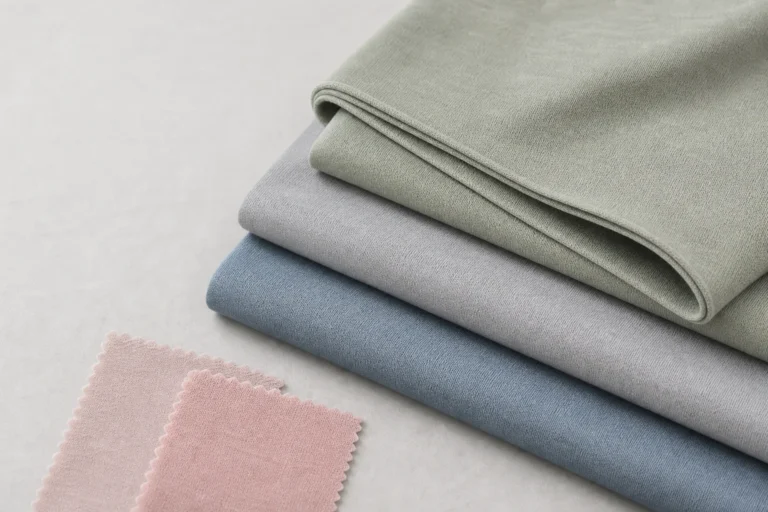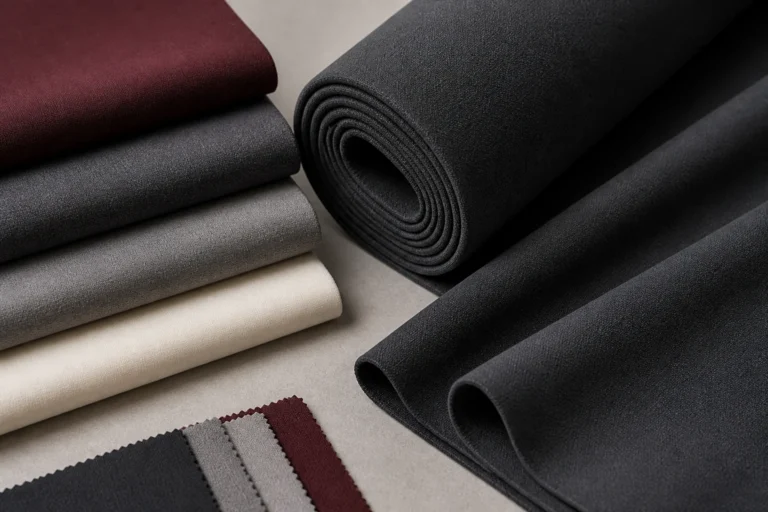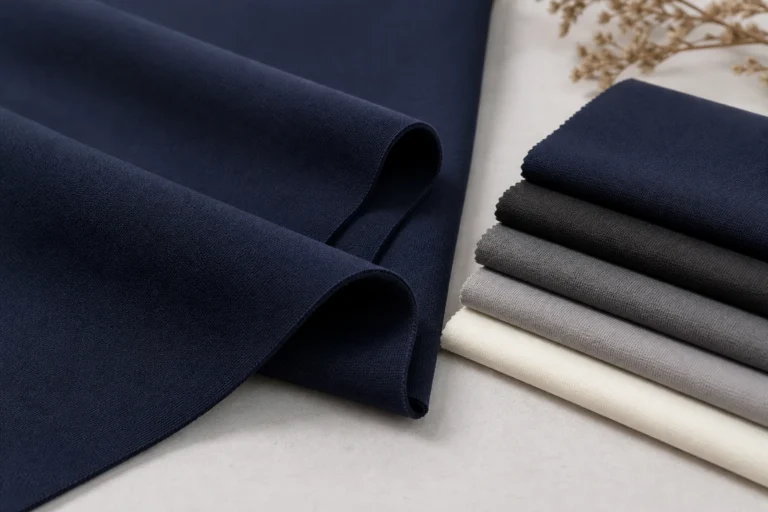
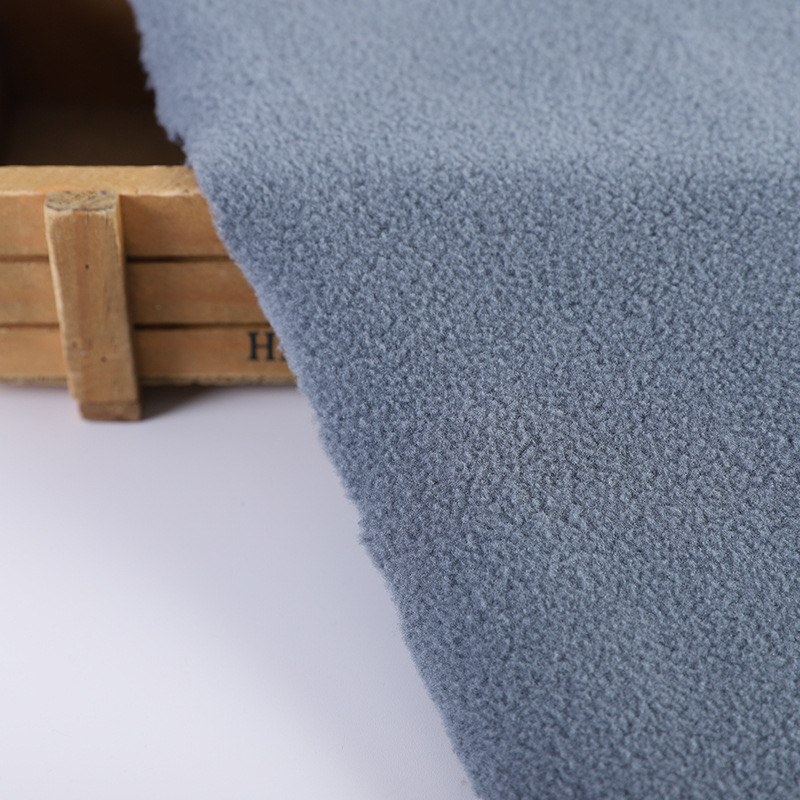
If the program needs more body and a cleaner structured silhouette, scuba knit is usually the first direction to review. If the garment needs balanced structure, opacity and everyday comfort for trousers, dresses or uniforms, Ponte Roma is often the safer choice. If the buyer wants softer handfeel, similar appearance on both sides and less edge curling for close-to-skin apparel, interlock is usually the better starting point.
Quick answer
Choose scuba when silhouette and structure matter most. Choose Ponte Roma when the garment needs a versatile balance of comfort, recovery and opacity. Choose interlock when softness, smooth two-side appearance and lower edge curling matter more than rigid body.
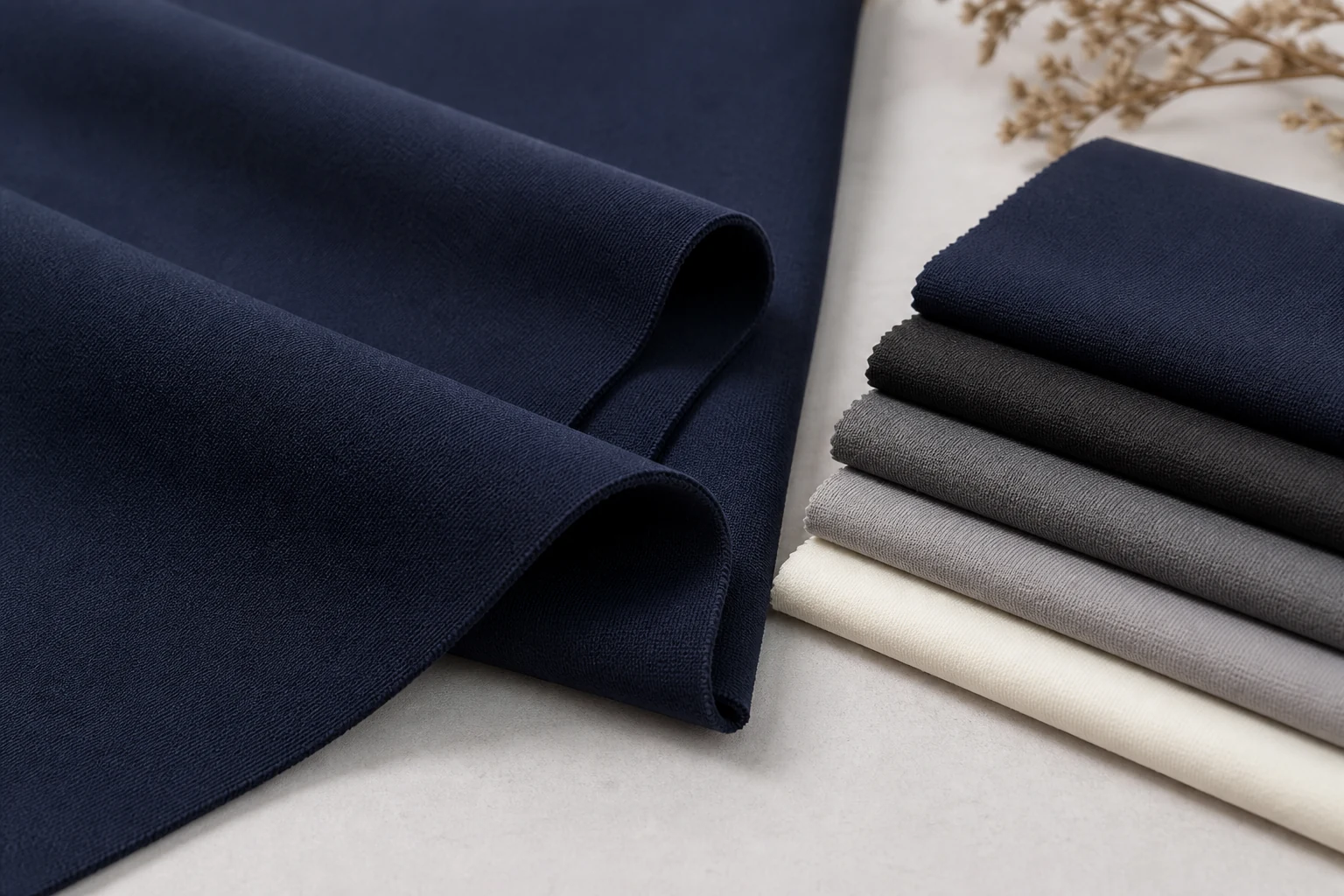
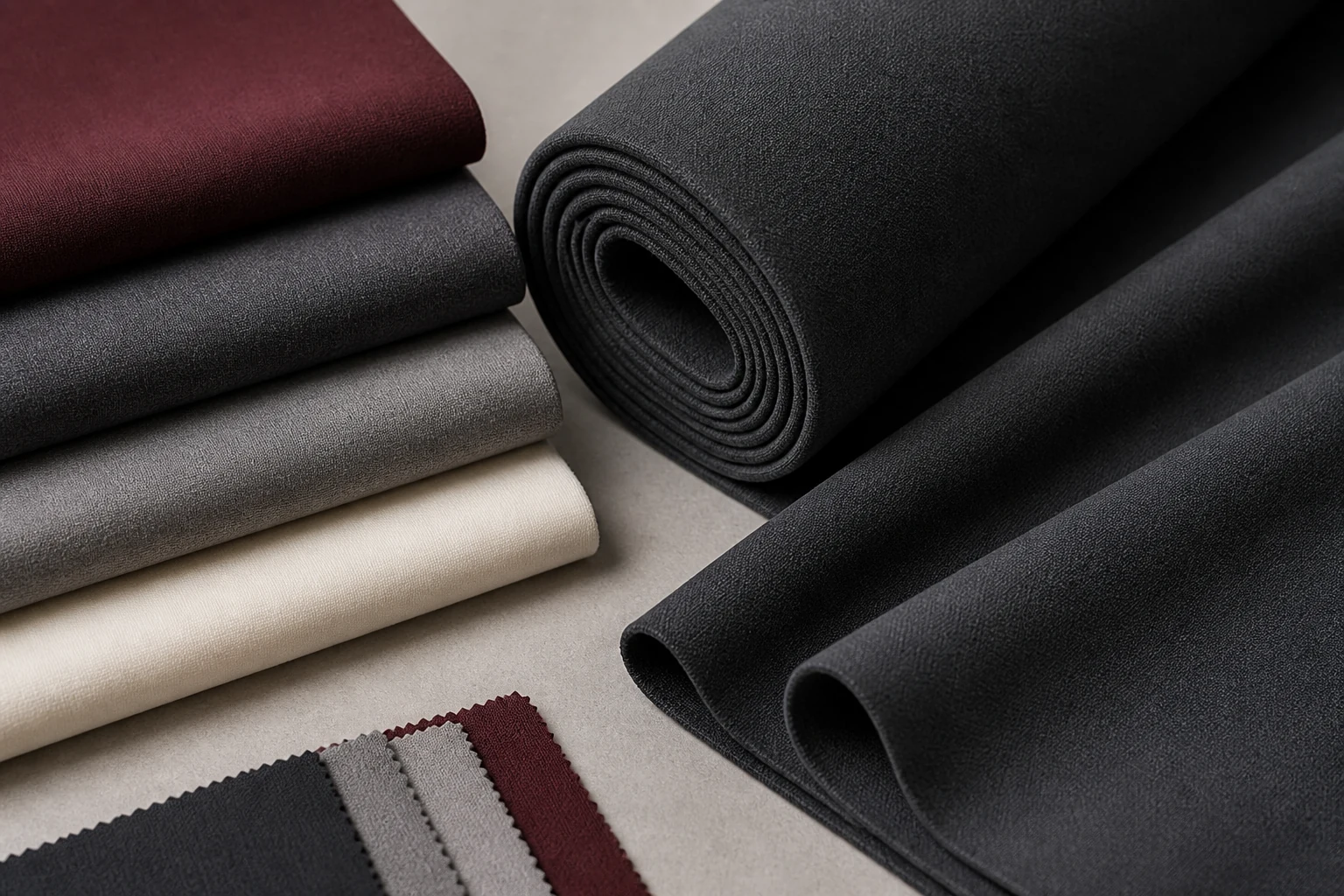
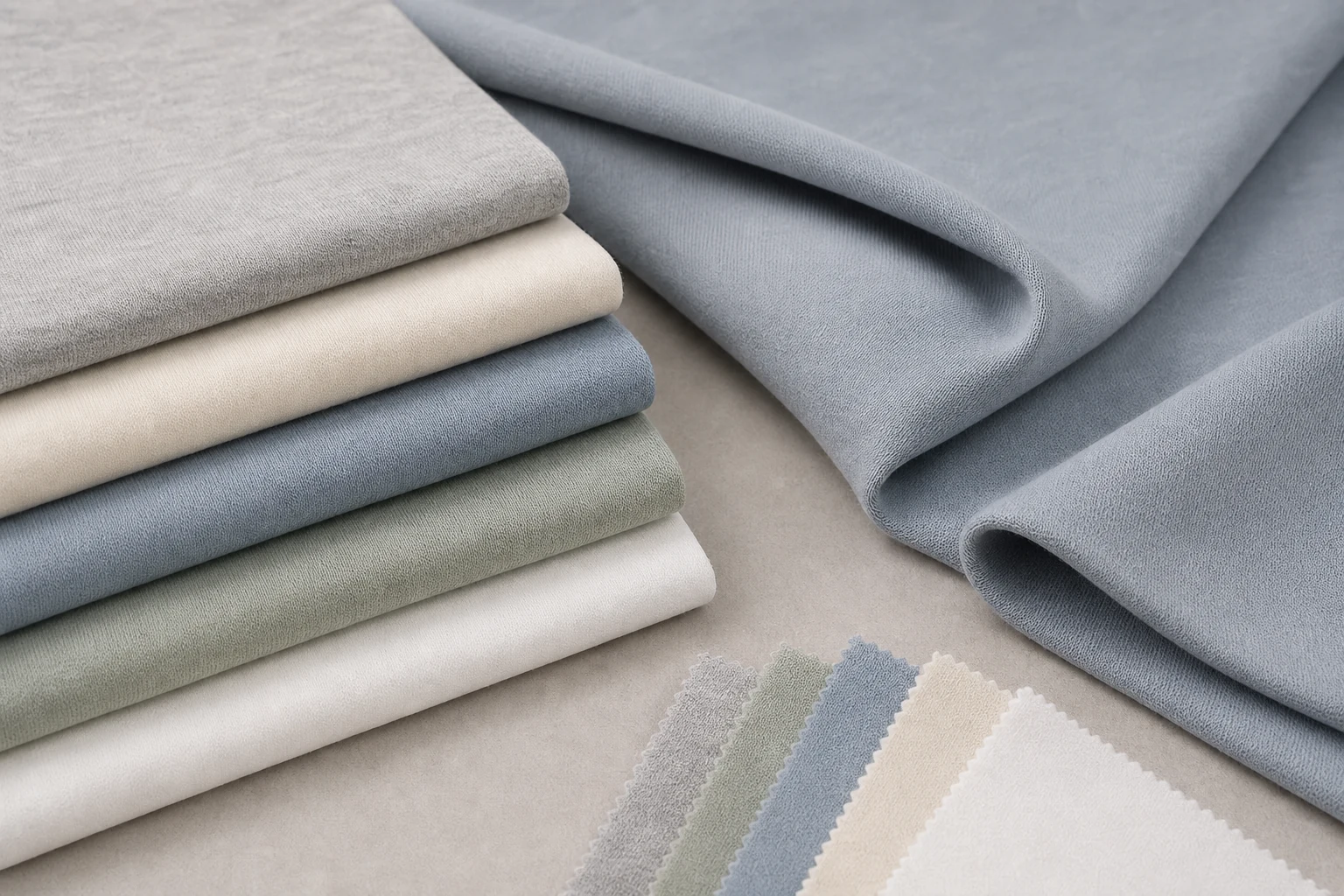
What each fabric is in one sentence
- Scuba knit is a smooth and structured knit usually chosen for shape retention and a cleaner outline.
- Ponte Roma is a stable double-knit that balances comfort and structure for trousers, dresses, skirts and uniforms.
- Interlock is a soft double-knit with similar appearance on both sides, often chosen for T-shirts, babywear, underwear and light casualwear.
Comparison table
| Fabric | Typical buyer need | Main strength | Main risk to check | Best use direction |
|---|---|---|---|---|
| Scuba | More body and shape | Smooth structure and recovery | Avoid confusing apparel scuba with neoprene; confirm thickness does not overbuild the garment | Dresses, structured tops, hoodies |
| Ponte Roma | Balanced structure and comfort | Opacity and commercial versatility | Recovery and pilling vary by blend; test drape and opacity in actual garment use | Trousers, dresses, uniforms |
| Interlock | Softer close-to-skin programs | Soft two-side appearance and less curling | GSM too light may lose body; confirm shrinkage and softness consistency | T-shirts, babywear, base layers |
When scuba wins
Scuba is usually the better option when the buyer needs the garment to hold shape without looking stiff like a heavy woven. It works well when the brief mentions a clean silhouette, more body through the torso or skirt, or the need for a smoother structured knit for fashion-active styles. Buyers should still verify that the chosen thickness does not make the garment too hot, too bulky or too rigid for the final use.
When Ponte Roma wins
Ponte Roma tends to win when the garment needs a practical middle ground. It often gives better day-to-day wear comfort than a more sculpted scuba while still offering enough body and opacity for trousers, dresses, skirts and uniforms. This is often the safer sourcing direction when the buyer is worried about both comfort and polish.
When interlock wins
Interlock is the stronger option when skin comfort, softness and cleaner double-side appearance matter most. It is especially useful for T-shirts, babywear, underwear, base layers and soft loungewear where the buyer wants a more refined knit than basic jersey and wants to reduce edge curling during development and sewing.
Sample checklist before requesting quotes
Before requesting a quote, buyers should send the target garment use, preferred GSM range, whether opacity is critical, how much stretch recovery is needed and whether the sample must feel soft or hold a stronger shape. That short brief helps avoid receiving three technically correct fabrics that still do not match the actual program.
Related WellDoneTex pages
CTA: Send your garment use, target GSM and stretch expectation for a fabric recommendation. Request double-knit fabric samples.
FAQ
What is the difference between scuba knit and ponte roma?
Scuba usually offers more visual body and a cleaner structured look, while Ponte Roma usually balances structure with more everyday wear comfort and broader trouser or uniform suitability.
Which fabric is better for structured dresses?
Scuba is often the stronger starting point for structured dresses, but Ponte Roma may be safer if the dress needs easier movement, softer comfort or more all-day wear balance.
Is interlock softer than ponte roma?
In many programs interlock feels softer and more close-to-skin friendly, while Ponte Roma usually focuses more on stability, opacity and garment structure.
Which double-knit is best for uniforms?
Ponte Roma is often the most practical starting point for uniforms because it balances stability, opacity and comfort, but the final choice depends on the weight, drape and performance required.
{ “@context”: “https://schema.org”, “@type”: “FAQPage”, “mainEntity”: [ {“@type”: “Question”, “name”: “What is the difference between scuba knit and ponte roma?”, “acceptedAnswer”: {“@type”: “Answer”, “text”: “Scuba usually offers more visual body and a cleaner structured look, while Ponte Roma usually balances structure with more everyday wear comfort and broader trouser or uniform suitability.”}}, {“@type”: “Question”, “name”: “Which fabric is better for structured dresses?”, “acceptedAnswer”: {“@type”: “Answer”, “text”: “Scuba is often the stronger starting point for structured dresses, but Ponte Roma may be safer if the dress needs easier movement, softer comfort or more all-day wear balance.”}}, {“@type”: “Question”, “name”: “Is interlock softer than ponte roma?”, “acceptedAnswer”: {“@type”: “Answer”, “text”: “In many programs interlock feels softer and more close-to-skin friendly, while Ponte Roma usually focuses more on stability, opacity and garment structure.”}}, {“@type”: “Question”, “name”: “Which double-knit is best for uniforms?”, “acceptedAnswer”: {“@type”: “Answer”, “text”: “Ponte Roma is often the most practical starting point for uniforms because it balances stability, opacity and comfort, but the final choice depends on the weight, drape and performance required.”}} ] }