Polyester is generally resistant to shrinkage in normal use, but that is not the same as saying every polyester garment will keep exactly the same dimensions in every wash and dry cycle. A finished item also has a fabric construction, seams, trims, finishes and sometimes other fibers. Its care label should therefore guide the decision.
If the label permits machine washing or tumble drying, use the stated method and heat setting. Do not use a hot wash or high dryer as a dependable way to improve fit. Heat may create an unwanted size or shape change, and a garment can be damaged without shrinking in a useful or even way.
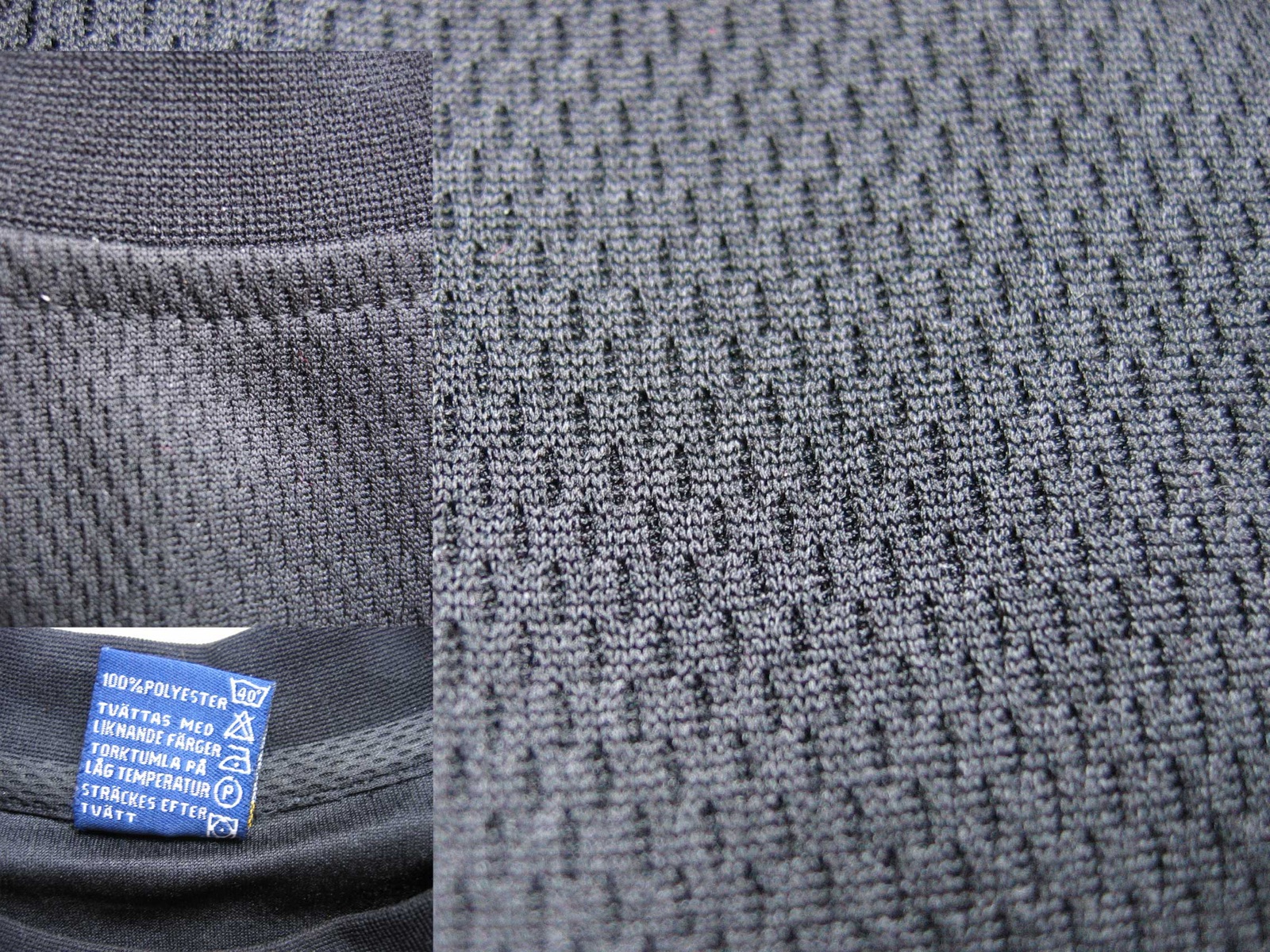
One documented 100% polyester shirt and its care label. The label is evidence for this item only; it is not a universal wash instruction or shrinkage result. Photo: Antimoni, source, CC BY-SA 3.0; resized from the original. This derivative remains available under CC BY-SA 3.0.
Quick answer: can polyester shrink?
Yes, a polyester textile can change dimensions, especially when the finished fabric or garment is exposed to a procedure it was not designed to tolerate. But polyester fiber is normally more dimensionally stable than the popular question suggests. The former U.S. National Bureau of Standards, now NIST, described polyester as not shrinking or stretching appreciably during normal use. That is useful fiber-level context, not a warranty for every product.
The more practical answer is:
- Read the fiber-content label to see whether the item is 100% polyester or a blend.
- Read the care label for the permitted washing method, water setting, drying method and warnings.
- Treat that instruction as garment-specific. Do not replace it with a generic rule from the fiber name.
The FTC Care Labeling Rule is helpful here. In the United States, covered manufacturers and importers must provide regular care instructions and have a reasonable basis for them. The rule recognizes that the whole garment and its component parts matter.
Does 100% polyester shrink?
A label that says 100% polyester removes one source of uncertainty—the main declared textile fiber—but it does not describe every factor affecting dimensions. Two 100% polyester garments can use different yarns, knit or woven constructions, densities, finishes and sewing methods. One may also have elastic, coatings, prints, linings or trims with their own care limits.
This is why a responsible answer does not attach one shrinkage percentage to “100% polyester.” ISO 5077 determines dimensional change by measuring an actual fabric, garment or textile article before and after an appropriate combination of specified washing and drying procedures. A standard name is not a test result. The specimen, procedure, cycle count and measured lengthwise and widthwise changes still have to be reported.
Polyester can also respond to heat history. A peer-reviewed study of heat-set polyester knits found that heat-setting and later heat treatments affected thermal stability. That research was conducted on defined industrial specimens and processes; it does not provide a universal home-dryer threshold. It supports the narrower point that “polyester” alone cannot tell a consumer which unlisted heat treatment is safe.
What changes when polyester is blended with cotton or another fiber?
A blend label tells you which fibers are present and, for covered U.S. products, normally gives their percentages by weight. It does not tell you which component controls every care decision.
Consider a polyester-cotton sweatshirt, a polyester-viscose dress and a polyester-elastane sports top. All contain polyester, but the second fiber, fabric construction, surface treatment, print, elastic recovery, lining and trim can change the safe procedure. Even two garments with the same percentages can behave differently if their yarns, structures and finishing histories differ.
Use the blend label to ask better questions:
- Are all textile layers included in the composition statement?
- Is there a separate lining, coating, print, padding or elastic component?
- Does the care label limit washing, tumble drying or ironing?
- Is the instruction for the finished garment, rather than an unfinished fabric roll?
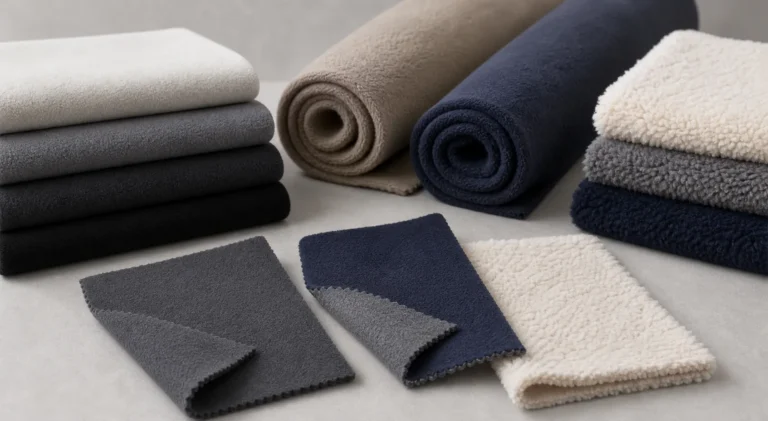
For a narrower comparison of two specific fleece directions, see Cotton Fleece vs. Polyester Fleece. Its fleece discussion should not be expanded into a rule for every polyester garment.
Can polyester go in the washing machine?
Many polyester garments are designed for machine washing, but the correct answer for the item in your hand comes from its care label. In U.S. guidance, a washing instruction identifies whether hand or machine washing is intended and may specify a water temperature. Warnings are required when a procedure consumers could reasonably expect to use would harm the product.
Before washing, check:
- the stated wash method;
- the stated water setting;
- instructions to wash separately or with similar colors;
- whether fasteners should be closed or the garment turned inside out;
- any bleach, ironing or professional-care warning;
- the separate drying instruction.
Do not assume that a cooler wash erases all other variables. ISO 6330:2021 includes different machine types, washing procedures and drying routes, and notes that machine, detergent and dryer parameters can affect test results. Water temperature is important, but it is not the complete procedure.
Can polyester go in the dryer?
Some polyester clothing permits tumble drying; other items call for a lower setting or a non-machine drying method. Follow the printed route. If the label specifies line drying, flat drying or a particular tumble setting, do not substitute a hotter cycle merely because the main fiber is polyester.
Drying deserves separate attention because a wash can be mild while the following dry cycle is not. The FTC rule treats drying method and, when relevant, machine-drying temperature as part of the care instruction. ISO 6330 likewise treats washing and drying as a combined test procedure and lists several distinct drying methods.
If the label is missing or unreadable, the safest editorial advice is not to invent a high-heat experiment. Look for product-specific instructions from the manufacturer or seek professional care advice for an important item.
Shrinkage, stretching, distortion or heat damage?
“It no longer fits” does not identify the mechanism. Compare the symptom before deciding what happened.
| What you notice | What it may indicate | What to check |
|---|---|---|
| Shorter body or sleeves | Lengthwise dimensional change, seam draw-up or measurement variation | Measure the same points; compare with any pre-care record |
| Narrower body | Widthwise dimensional change or changed fabric relaxation | Measure flat without stretching |
| Longer, wider or baggy areas | Growth, loss of recovery or distortion rather than shrinkage | Compare high-stress areas with an unstressed area |
| Twisted side seams | Skew, torque or uneven construction response | Lay the garment flat and compare seam alignment |
| Rippling near seams or trims | Different response between fabric, thread, elastic, tape or trim | Inspect each component; do not blame fiber alone |
| Shiny, hardened or melted-looking surface | Possible heat damage | Stop further heat and seek product-specific advice |
Dimensional change and appearance change are related but not identical. ISO 15487:2018 separately assesses appearance after domestic washing and drying, while ISO 5077 addresses dimensional measurement. A photograph can document a symptom, but it cannot supply the missing pre-wash dimensions or prove the cause.
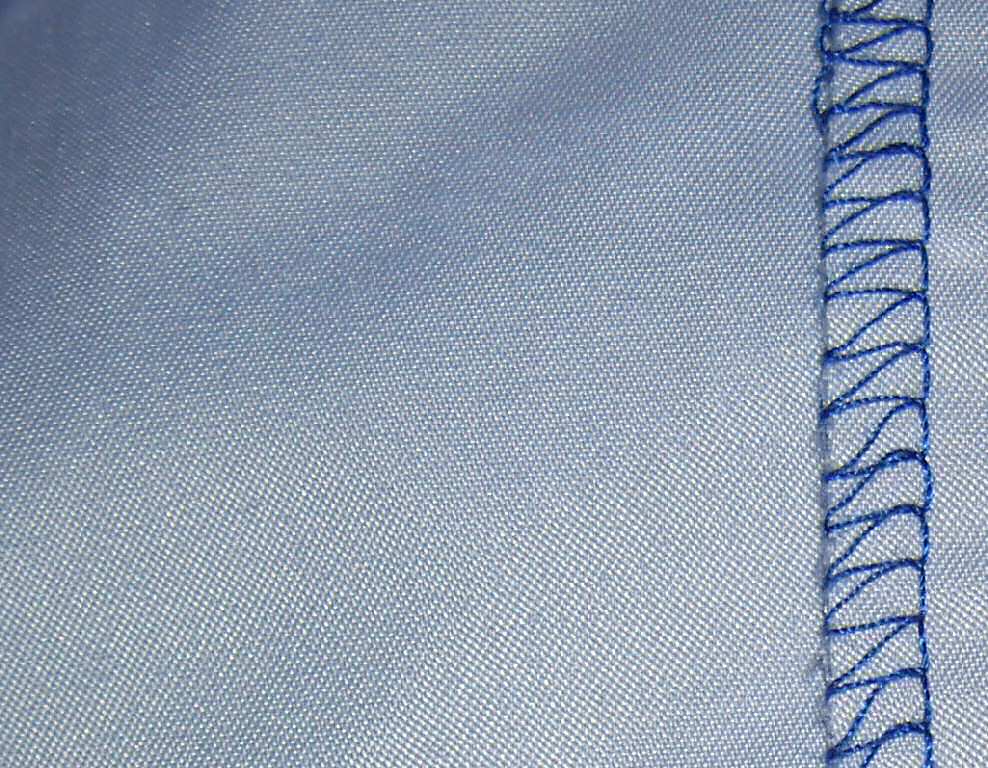
Close view of one 100% polyester shirt. Surface appearance cannot predict shrinkage, construction settings or care performance. Photo: Damieng, source, CC BY-SA 3.0; unchanged original. This image remains available under CC BY-SA 3.0.
What should you do if a polyester item no longer fits?
First, stop repeating heat in the hope of forcing a better result. An uneven or damaged garment is harder to assess after additional treatments.
Then:
- Photograph the fiber-content and care labels.
- Lay the garment flat without stretching it.
- Measure consistent points such as body length, chest width and sleeve length.
- Look for twisting, seam puckering, stretched zones or surface damage.
- Compare with a duplicate item or a pre-care record if one exists.
- Contact the brand or a textile-care professional if the item is valuable or the instruction appears to have failed.
There is no universal “unshrink polyester” procedure. Steam, soaking, pulling or reheating may change shape again without restoring the original pattern dimensions or component alignment. Any recovery advice should belong to the exact product, not to polyester as a whole.
A simple polyester care checklist
Before the next wash, read the label in this order:
Composition: Is the textile 100% polyester or a blend? Are a lining, filling or elastic component listed separately?
Wash method: Does it say machine wash, hand wash, professional care or no washing?
Water setting: Is a temperature or cold/warm/hot instruction stated?
Drying method: Does it permit tumble drying, or call for line, flat or drip drying?
Heat and warnings: Is there a low setting, no-iron, no-bleach or other warning?
Special details: Are there instructions for color separation, turning inside out, closing fasteners or removing accessories?
Reading the composition and care instruction together is more reliable than following a list titled “how to wash polyester.”
How buyers and developers should verify dimensional change
For product development, replace “polyester should not shrink” with a testable requirement. Define:
- the exact fabric or finished garment specimen;
- fiber composition and construction;
- finish, color and production state;
- the wash method, machine type, detergent and water setting;
- the drying method and setting;
- the number of cycles;
- the marked measurement points;
- lengthwise and widthwise results separately;
- any appearance, skew, seam or trim observations;
- the acceptance tolerance for the intended product.
AATCC TM135-2025 addresses length and width changes in home-launderable fabrics using defined washing and drying options. ISO 5077 provides the measurement framework, while ISO 6330 supplies standardized domestic washing and drying procedures. Use the method required by the market or program and report enough detail for a reviewer to understand what was actually tested.
The care instruction should then be supported by evidence for the production-representative material and finished garment. A laboratory method does not by itself authorize “zero shrinkage,” and one passing sample does not prove every future lot.
FAQ
Does polyester shrink in the wash?
It can change dimensions, but polyester is generally resistant to shrinkage in normal use. The result depends on the actual fabric or garment and the washing and drying procedure. Follow the finished item's care label rather than a universal fiber rule.
Does 100% polyester shrink?
It is usually dimensionally stable under its intended care, but 100% polyester is not a guarantee of zero change. Construction, finishing, sewing, heat history and the care cycle still matter.
Does polyester shrink in the dryer?
A polyester garment may change or be damaged if it is exposed to a drying procedure it was not designed to tolerate. Use only the drying method and setting permitted on the care label.
Will hot water shrink polyester?
Do not use hot water as a predictable tailoring method. The item may not shrink evenly or usefully, and heat can affect the fabric, finish, print, elastic or trims. Product-specific care instructions take priority.
Do polyester blends shrink?
They can. The second fiber, blend percentage, fabric construction, finishing, garment components and care procedure all affect the result. Two blends with the same percentages are not automatically equivalent.
Can cold water prevent polyester from shrinking?
Cold water may be part of a permitted care route, but it is not a universal guarantee. Agitation, detergent, machine type, drying method, construction and finishing can also affect the outcome.
Can you reverse polyester shrinkage?
There is no universal reversal method. If a garment changed, stop additional heat, document its label and measurements, and use product-specific or professional advice before attempting another treatment.
References
- National Bureau of Standards/NIST, Consumer Information Series 1: Fibers and Fabrics.
- International Organization for Standardization, ISO 5077:2007 — Determination of dimensional change in washing and drying.
- International Organization for Standardization, ISO 6330:2021 — Domestic washing and drying procedures for textile testing.
- International Organization for Standardization, ISO 15487:2018 — Method for assessing appearance of apparel and other textile end products after domestic washing and drying.
- U.S. Federal Trade Commission, Care Labeling of Textile Wearing Apparel and Certain Piece Goods.
- U.S. Federal Trade Commission, Clothes Captioning: Complying with the Care Labeling Rule.
- AATCC, TM135-2025: Dimensional Changes of Fabrics after Home Laundering.
- Perera and Lanarolle, Thermal behaviour of heat treated polyester knitted fabrics, Research Journal of Textile and Apparel 24(4), 2020.
For a fabric or garment program, specify the exact composition, construction, finish and intended care cycle before approving the dimensional-change requirement. This article does not claim a WellDoneTex product result or authorize a production specification.