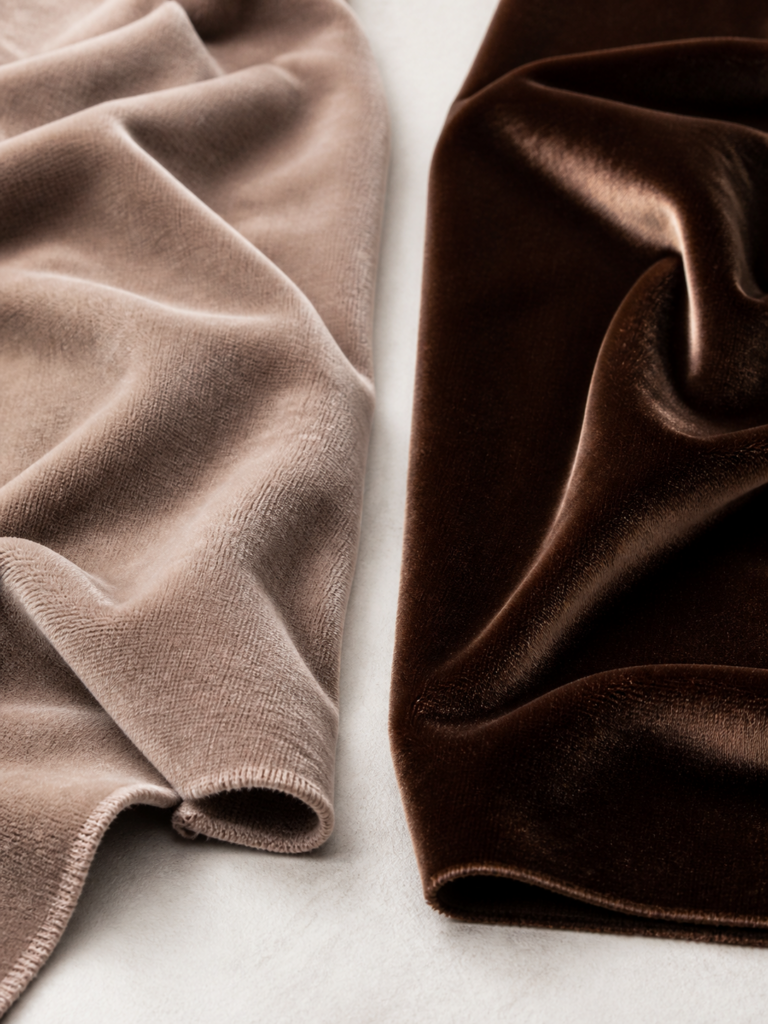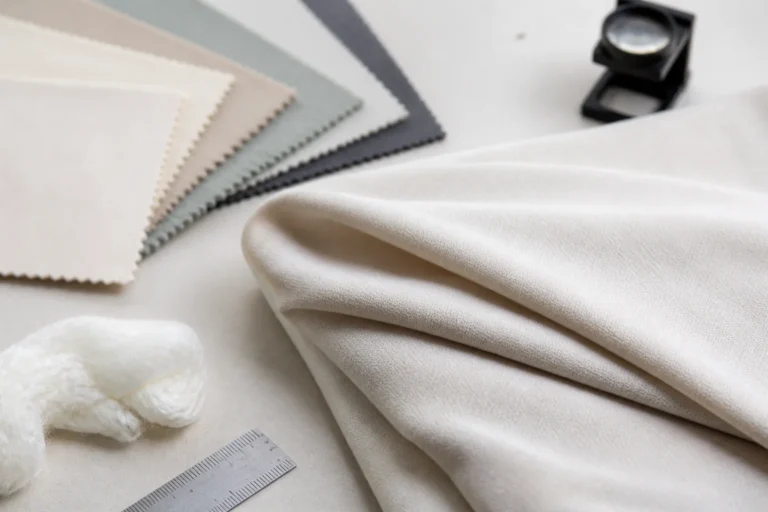
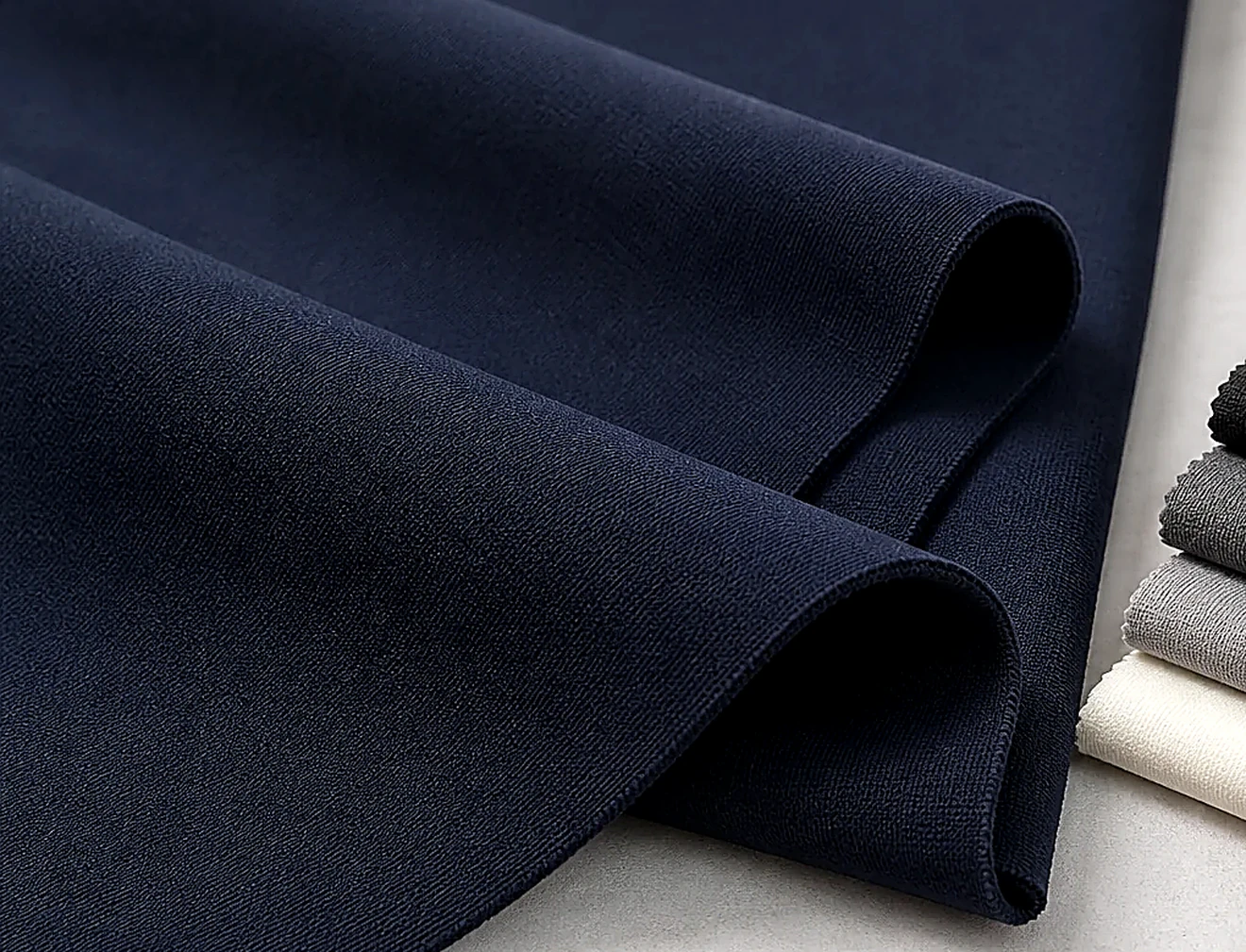
What is scuba fabric? For apparel buyers, it usually means a structured stretch knit that often uses polyester and spandex to create smoother surface appearance, more body and cleaner shape retention than a soft jersey usually provides. It is commonly considered for dresses, skirts, hoodies, structured tops and selected fashion-active garments. The right choice still depends on GSM, thickness, stretch direction, recovery, opacity and final garment use.
Quick answer for fabric buyers
Scuba fabric is usually chosen when the program needs controlled stretch and a more defined silhouette at a practical commercial cost point. On this page, polyester spandex scuba stays as the source-bounded material example, but buyers should still approve the actual sample for thickness consistency, recovery, surface appearance, opacity, sewing behavior and comfort in the target garment.
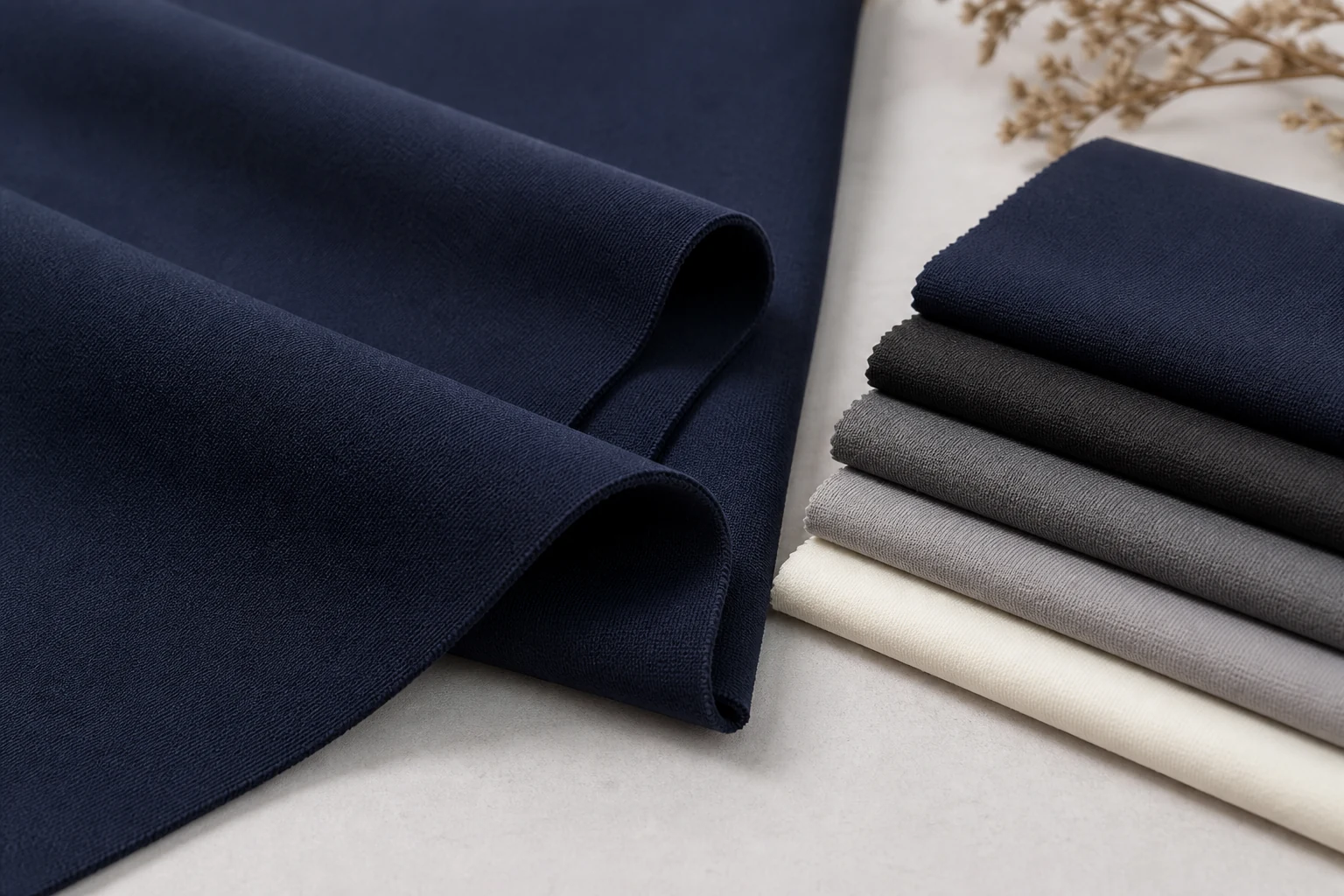
If the next step is sample review or a quote-ready discussion, move to Scuba Fabric Supplier with the garment type, target GSM or thickness, opacity expectation and stretch direction. Keep this guide for structure, composition and neoprene-boundary questions; keep the supplier page for RFQ inputs and next-sample routing.
What polyester and spandex contribute
The polyester component is usually selected for surface stability, color practicality and a consistent commercial route. Spandex adds stretch and helps the fabric recover after movement. In a scuba construction, the result can feel smoother and more substantial than lightweight jersey while remaining flexible enough for fitted or shaped garments.
Those benefits are not automatic. Yarn choice, knit density, finishing and final GSM can make two fabrics with similar composition labels behave very differently. Buyers should therefore compare physical samples against the garment pattern rather than using the blend name as the approval standard.
Apparel scuba is not wetsuit neoprene
Apparel scuba knit and neoprene should not be treated as the same sourcing category. Apparel scuba is developed as a textile for fashion and selected sportswear programs. Neoprene belongs to a different material family and is associated with different construction, handling and end-use expectations. A clear inquiry should say whether the buyer needs a structured garment knit, not simply ask for “scuba material.”
Buyer checkpoint table
| Checkpoint | What to confirm | Why it matters |
|---|---|---|
| Garment use | Dress, skirt, hoodie, structured top or fashion-active style | The intended silhouette determines how much body and drape the fabric needs. |
| GSM and thickness | Target range and acceptable variation | Too much thickness can make a garment bulky or warm; too little may lose the desired structure. |
| Stretch direction | Required widthwise or multi-direction movement | The pattern and fit must match the actual stretch behavior. |
| Recovery | Shape return after repeated handling and extension | Weak recovery can create bagging at elbows, knees or fitted areas. |
| Opacity | Test the intended color and garment layer | Lighter colors and stretched panels may reveal more than a flat swatch suggests. |
| Surface and finish | Smoothness, shine, pilling expectation and handfeel | The visual result must fit the target market and price position. |
Where this fabric usually fits
- Dresses and skirts: useful when the design needs a cleaner line and more body than soft jersey.
- Hoodies and structured tops: suitable when shape retention matters more than lightweight ventilation.
- Fashion-active garments: practical for selected styles that combine movement with a polished silhouette.
- Panels and details: can support sections that need controlled stretch, opacity or visual structure.
Sample checks before bulk approval
- Confirm GSM, usable width and thickness against the approved sample.
- Measure stretch direction and check recovery after repeated handling.
- Review opacity in the actual production color, including when the fabric is stretched.
- Check surface consistency, pilling expectation and colorfastness for the intended market.
- Cut and sew a representative garment section to review edge behavior, seams and silhouette.
- Confirm shrinkage and handfeel after the agreed care or finishing test.
What to include in a useful sample request
A useful inquiry should include the garment type, target GSM or thickness, stretch direction, opacity expectation, color route, preferred handfeel and estimated quantity. This information is more actionable than requesting a generic polyester spandex scuba swatch because it lets the supplier compare the sample against the real product brief.
Related WellDoneTex resources
- Scuba Fabric Supplier
- Scuba vs Ponte Roma vs Interlock comparison
- Activewear Fabric Supplier
- Tech and Quality review process
Sample CTA: Share your target garment, GSM, stretch expectation and color direction to review suitable scuba knit options. Request fabric samples.
FAQ
What is scuba fabric?
In apparel sourcing, scuba fabric usually refers to a structured stretch knit that offers body, surface smoothness and recovery. Polyester spandex scuba is one common route, but buyers should still approve the final sample by GSM, thickness, opacity and garment use.
Is scuba fabric the same as neoprene?
No. Apparel scuba is a structured garment knit, while neoprene belongs to a different material category with different construction and end-use expectations.
What should buyers test before bulk approval?
Review GSM, thickness consistency, stretch direction, recovery, opacity, surface appearance, pilling, colorfastness, shrinkage and garment suitability.
Is polyester spandex scuba suitable for dresses and hoodies?
Yes, especially when the design needs a cleaner silhouette and more body than lightweight jersey. The final GSM and thickness still need sample approval.
What information helps a supplier recommend the right scuba knit?
Send the garment use, target GSM or thickness, required stretch direction, opacity expectation, color route, handfeel preference and estimated quantity.