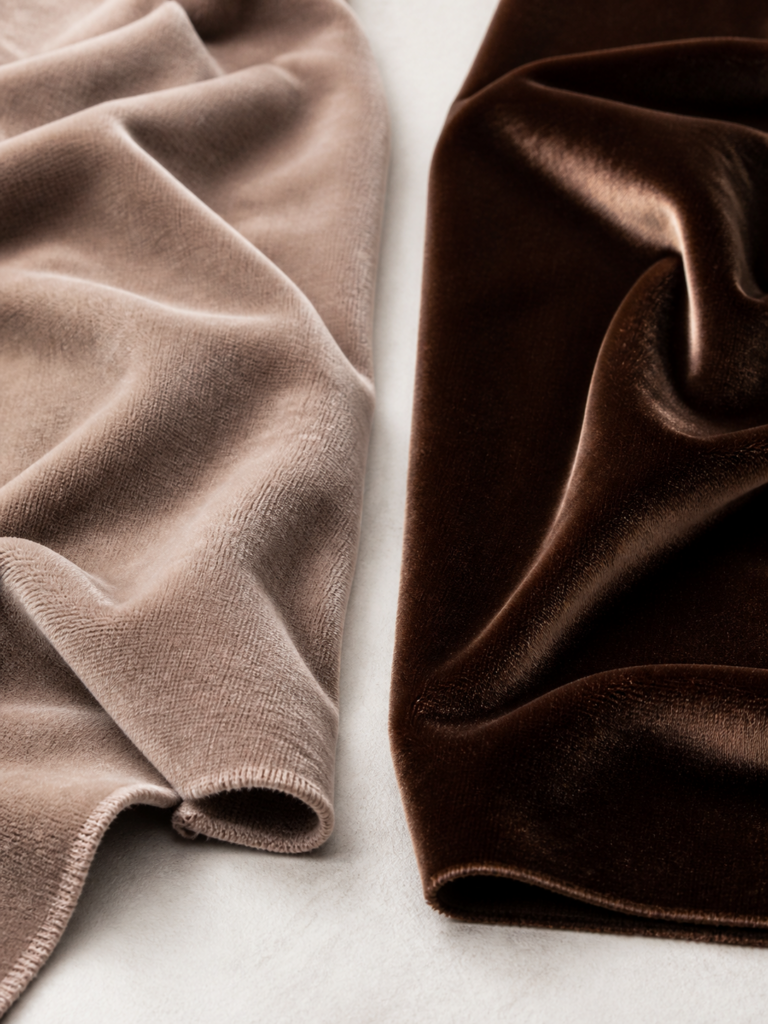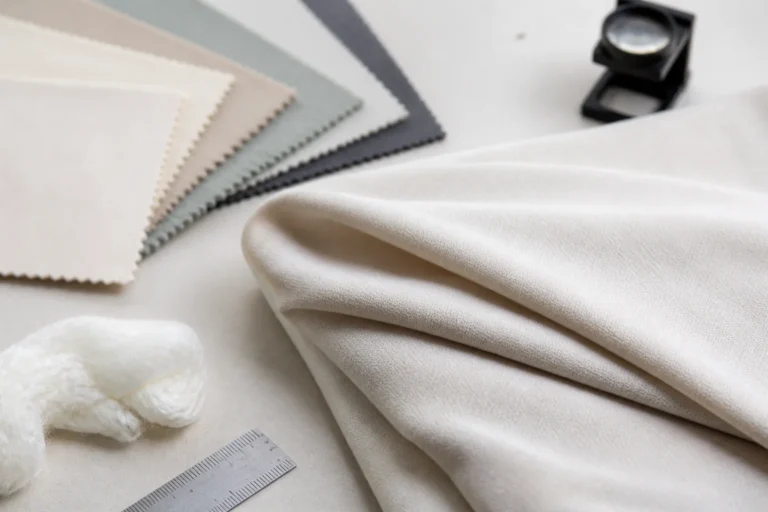
Modal interlock fabric is a double-knit direction buyers often review when a T-shirt, underwear, babywear or loungewear program needs a soft handfeel, smooth appearance and more stability than lightweight single jersey. The name combines two different parts of the specification: modal describes the fibre direction, while interlock describes the knit structure. Neither word alone confirms GSM, shrinkage, stretch, recovery, pilling, colorfastness or suitability for a particular garment.
Quick answer for buyers
Choose modal interlock as a development route when next-to-skin softness matters but the garment also needs two smooth faces, a stable cut edge and enough body to hold a clean shape. Do not approve it from a composition label or online photo. Approve the actual color sample after checking GSM, usable width, dimensional stability, surface quality, stretch and recovery, wash response and the intended sewing construction.
What is modal interlock fabric?
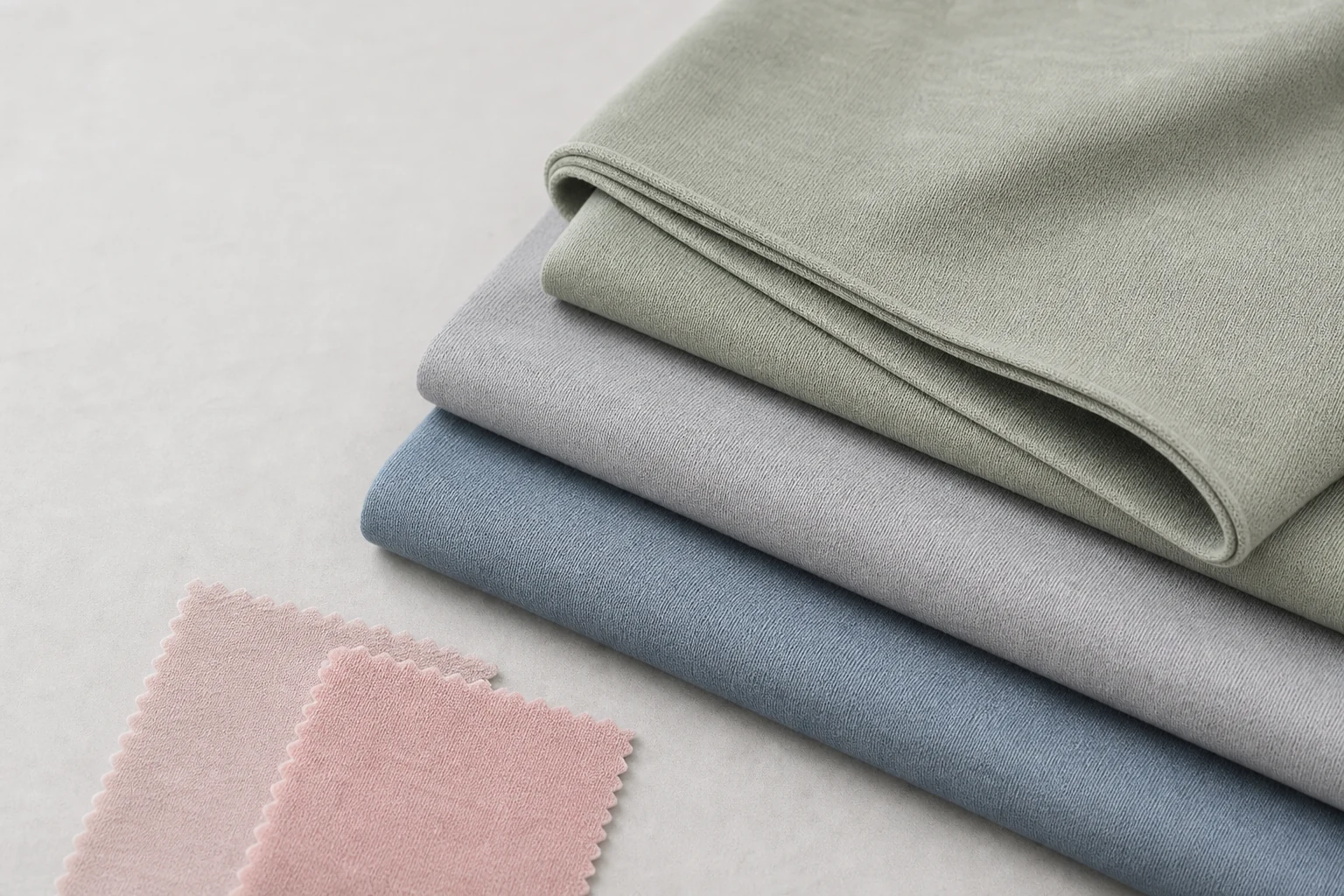
Interlock is a double-knit construction formed with two needle beds. Plain interlock normally has a similar appearance on the face and back, lies flatter at a cut edge and feels more stable than basic single jersey. That construction can help during spreading, cutting and sewing, especially when the garment requires a clean surface on both sides.
Modal is a regenerated cellulosic fibre category commonly selected for soft apparel. It may be used alone or blended with cotton, spandex, polyester or other fibres depending on the target cost, handfeel and performance route. A modal-focused composition does not automatically make every fabric identical. Yarn count, loop length, machine gauge, knit density, finishing, dye route and compacting can change the result substantially.
Fibre choice and knit structure do different jobs
Buyers get a clearer specification when they separate fibre questions from construction questions. The fibre blend influences handfeel, moisture interaction, strength, stretch and price. The interlock structure influences thickness, surface appearance, edge behavior and stability. Finishing then modifies softness, shrinkage, width, luster and surface feel. These three layers must be reviewed together.
For example, adding spandex may improve stretch and recovery, but the percentage on a specification sheet does not tell the buyer how the finished fabric returns after repeated extension. Cotton can change the handfeel and commercial position, while polyester may be introduced for a different durability or cost balance. The final decision still comes from a tested sample.
Common modal interlock blend directions
| Blend direction | Why a buyer may shortlist it | What still needs approval |
|---|---|---|
| Modal-rich interlock | Soft handfeel and a smooth next-to-skin direction | Wet handling, dimensional stability, pilling and bulk consistency |
| Cotton modal interlock | A familiar cotton touch combined with a softer modal direction | Blend ratio, shrinkage, spirality, color route and surface change |
| Modal spandex interlock | Stretch for fitted tees, underwear, base layers or lounge styles | Stretch direction, extension, recovery, growth and heat response |
| Modal polyester interlock | A different balance of softness, stability, durability and cost | Pilling, absorbency expectations, handfeel and dye consistency |
These are development routes rather than guaranteed performance categories. A buyer should specify the desired garment result first, then compare blend and construction options against that target.
Buyer checkpoint table
| Checkpoint | What to confirm | Why it matters |
|---|---|---|
| End use | T-shirt, underwear, babywear, base layer or loungewear | Each garment needs a different balance of softness, body and stretch. |
| GSM and width | Target range, usable width and allowed tolerance | Weight affects opacity, drape, yield, comfort and cost. |
| Composition | Exact fibre percentages and whether any branded fibre is required | Generic modal and a documented branded fibre claim are not interchangeable. |
| Stretch and recovery | Direction, extension and return after repeated handling | Weak recovery can cause neck, cuff, seat or elbow growth. |
| Shrinkage and spirality | Results after the buyer’s agreed care route | Dimensional change affects pattern allowance and garment measurements. |
| Surface performance | Pilling, snagging, abrasion and face consistency expectations | Soft fabrics still need to retain an acceptable appearance in use. |
| Color performance | Shade, colorfastness and lot-to-lot approval method | Close-to-skin garments often use repeat colors and coordinated components. |
| Compliance route | Market, restricted-substance requirements and requested documents | End use alone does not prove safety, certification or regulatory compliance. |
Where modal interlock can fit
For T-shirts, modal interlock can be considered when the buyer wants a smoother, more substantial alternative to a light single jersey. The sample must still match the intended silhouette. A relaxed tee may need fluid drape, while a fitted premium tee may need stronger recovery and opacity.
For underwear and base layers, the review usually focuses on softness, stretch, recovery, seams and wash response. The garment pattern and elastic application influence comfort as much as the fabric. A fabric that feels soft as a flat swatch can become bulky at binding or unstable after repeated wear if the construction is not matched correctly.
For babywear, the word modal should never be treated as a safety claim. Buyers should define the destination market, restricted-substance requirements, test methods, care route, trim requirements and document expectations. The fabric also needs practical checks for dimensional stability, seam behavior, surface durability and color performance.
For loungewear, the main decision is often the balance between soft drape and shape retention. Pants, tops and sets may place different demands on knees, seats, cuffs and necklines. A sewn prototype gives a more useful answer than a handfeel comparison alone.
Why two similar specifications can feel different
Two modal interlock fabrics can show similar fibre percentages and GSM yet feel and perform differently. Yarn quality, filament or staple selection, twist, knitting tension, loop length, machine gauge, dyeing, softening, compacting and final width all influence the result. Dark and light colors may also show different handfeel or opacity after finishing.
This is why buyers should keep an approved reference swatch and define measurable tolerances. Descriptions such as buttery, silky or premium are subjective. They can help communicate a direction, but they cannot replace an agreed sample, test method and bulk approval process.
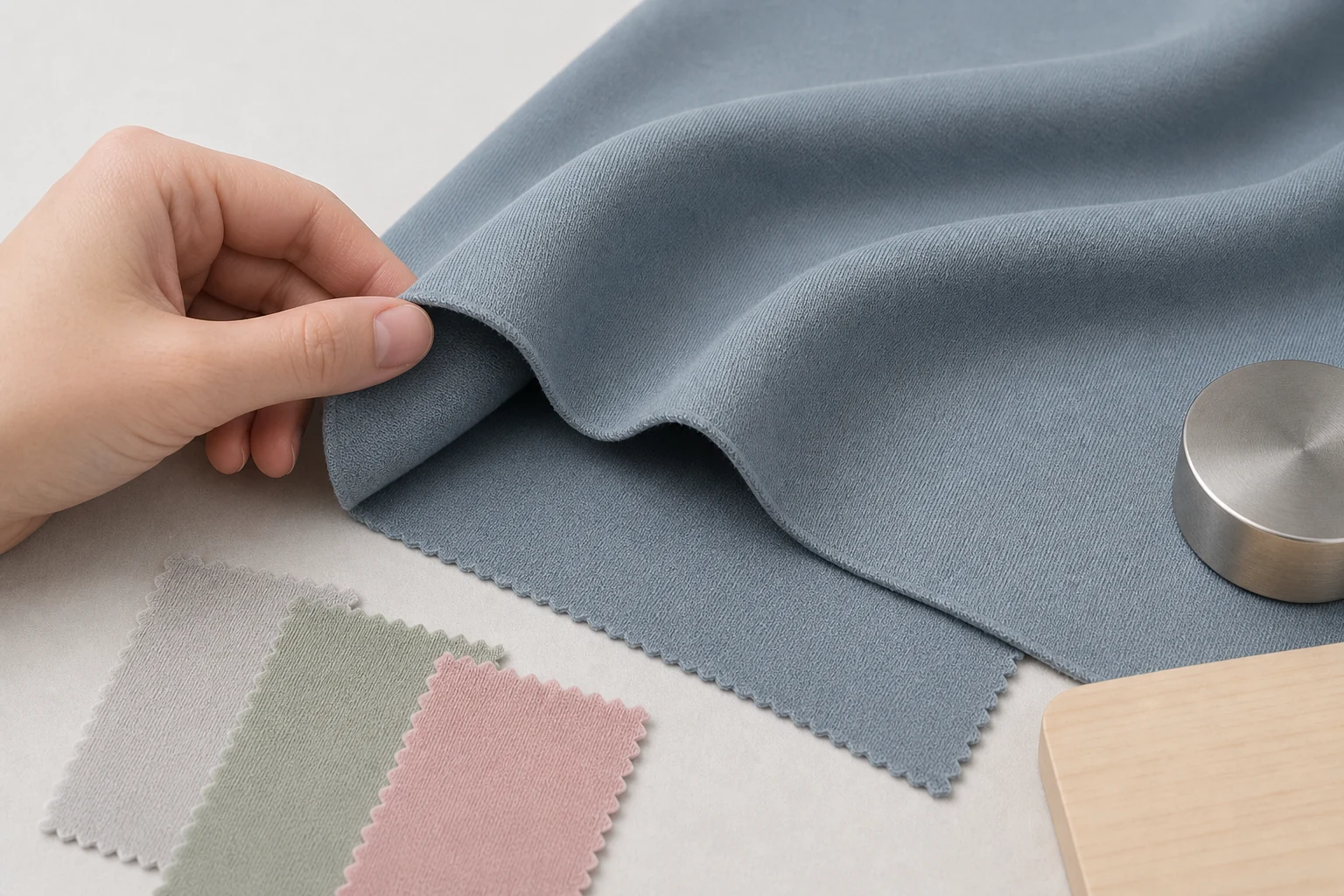
Eight sample checks before quotation or bulk approval
- Confirm the use case. State the garment type, fit, season, layer position and destination market.
- Record the base specification. Confirm composition, GSM, usable width, color route and finish direction.
- Measure dimensional change. Test shrinkage and spirality after the care method agreed for the program.
- Review stretch and recovery. Check both directions and repeat the extension instead of relying on one hand pull.
- Inspect opacity and drape. Use the intended color and view the sample relaxed, stretched and over the target layer.
- Check the surface. Agree pilling, abrasion, snagging and face-consistency expectations for the garment.
- Sew a representative panel. Review seam appearance, needle cutting risk, binding, pressing and edge behavior.
- Lock the approval reference. Keep the signed or sealed sample, test record and allowed tolerances for bulk comparison.
Modal interlock compared with other knits
Versus single jersey: plain interlock normally has two similar faces, more body and less edge curl. Jersey can be lighter and more fluid, so the correct choice depends on the garment rather than a universal quality ranking.
Versus rib: rib is usually selected when width stretch and visible vertical texture are part of the design. Interlock presents a smoother face and a more stable general body.
Versus scuba or Ponte Roma: those double-knit directions are commonly reviewed when a garment needs more structure, body or tailored shape. Modal interlock is more often developed for soft, close-to-skin programs. See the Scuba vs Ponte Roma vs Interlock comparison for the wider sourcing decision.
Be precise with modal, branded fibre and sustainability claims
Modal is a generic fibre category. A branded claim such as TENCEL Modal requires the correct fibre route and supporting documentation; it should not be inferred from the word modal on a quotation. Lenzing describes softness and moisture regulation for its own TENCEL Modal fibres, but those statements do not validate an unbranded fabric or every finished blend.
The same rule applies to recycled, biodegradable, certified, antibacterial, child-safe or low-impact language. Buyers should request the exact document, scope, transaction evidence and test route needed for the order. WellDoneTex does not add an unverified claim to a sample or article simply because a similar material is marketed that way elsewhere.
What to include in a sample request
Send the garment type, target composition or acceptable blend range, GSM, usable width, stretch direction, recovery expectation, color, handfeel reference, care route, destination market, compliance requirements, estimated quantity and target timing. If possible, include a reference swatch or garment and explain what must be matched and what may change.
A complete brief lets the supplier return a smaller set of relevant options and identify which checks require development. It also makes price comparisons more meaningful because each quotation is tied to a similar performance target.
Related WellDoneTex resources
Sample CTA: Share your garment use, target softness, GSM, stretch and compliance route to review suitable modal interlock options. Request fabric samples.
FAQ
What is modal interlock fabric?
It is an interlock double-knit made with a modal-focused fibre composition. Buyers consider it for a smooth two-side appearance, soft handfeel and stable construction in close-to-skin apparel.
Is modal interlock good for T-shirts?
It can be a strong option when the T-shirt needs more body, opacity and edge stability than a lightweight jersey. The sample still needs to match the intended fit, drape, stretch and wash requirements.
Can modal interlock be used for babywear?
It can be developed for babywear, but the fibre name is not a safety claim. Confirm the destination market, restricted-substance route, color performance, dimensional stability, surface durability and required documents.
What GSM should modal interlock fabric use?
There is no single correct GSM. Select the target by garment type, opacity, drape, season, stretch and cost, then approve a physical sample within an agreed tolerance.
Does modal interlock shrink?
Any knit can change dimension depending on yarn, construction, dyeing, finishing and care. Test shrinkage and spirality using the program’s agreed wash method before pattern and bulk approval.
What should buyers send for a modal interlock quote?
Send the garment use, blend direction, target GSM and width, stretch and recovery needs, color, handfeel reference, care route, market, compliance requirements, quantity and timing.