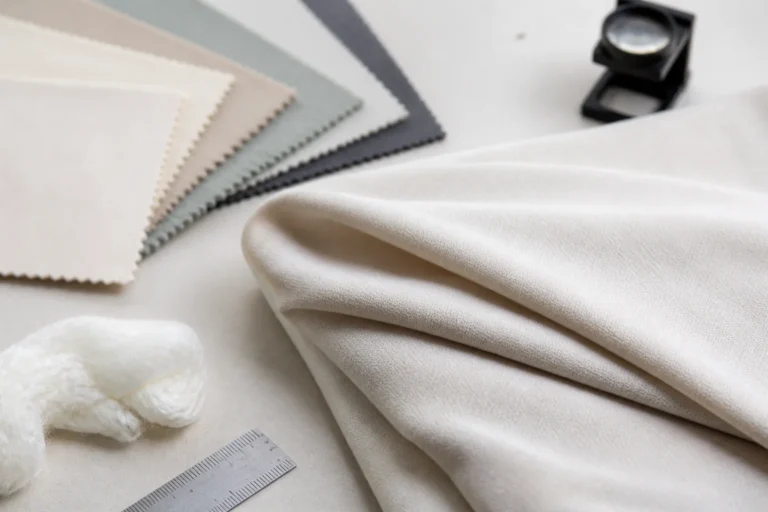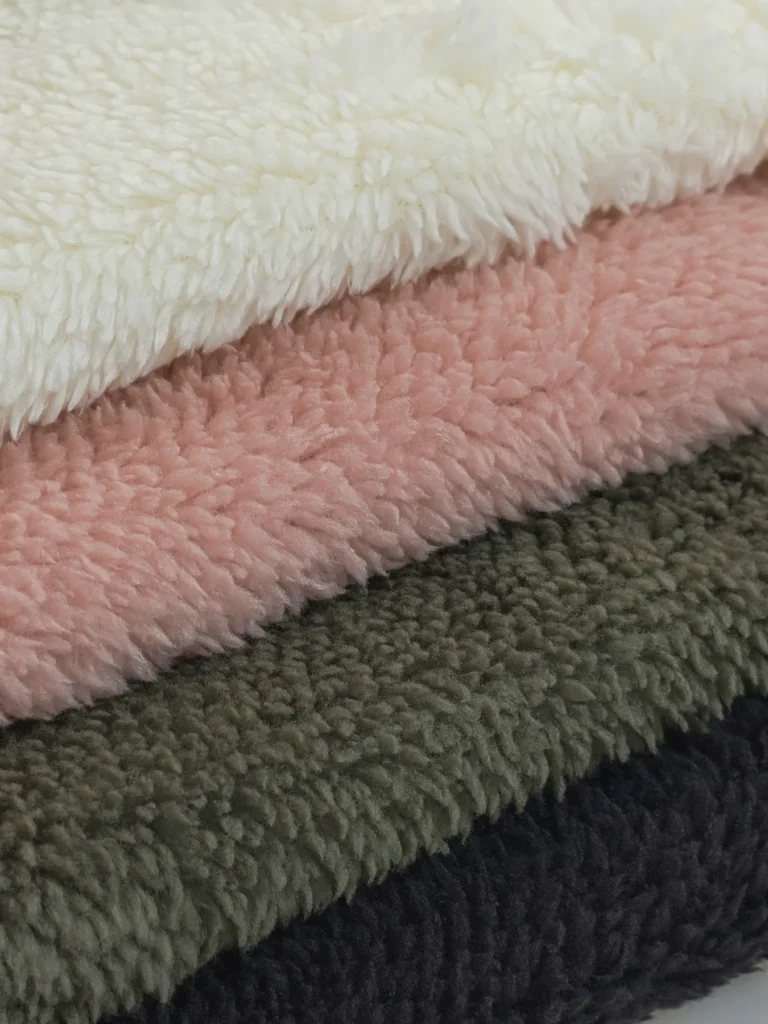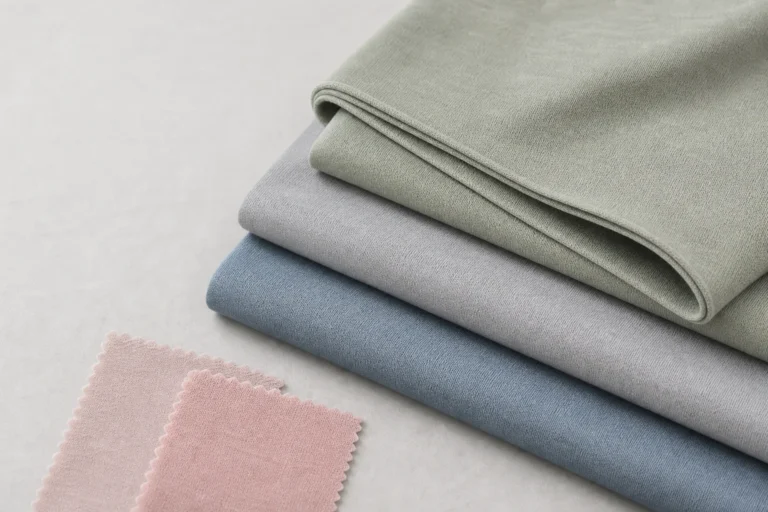
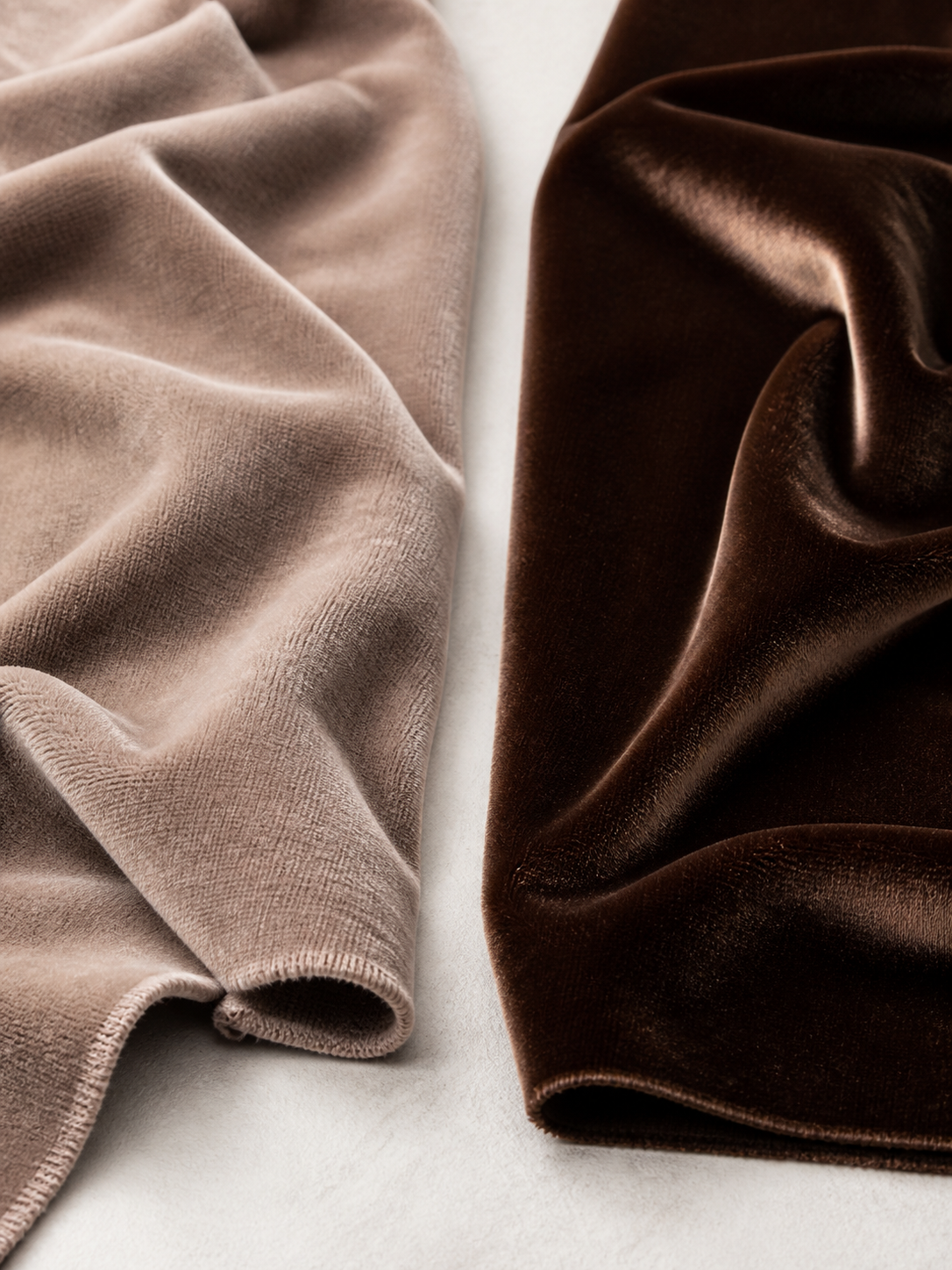
Quick answer: Velvet and velour both have a soft pile, but they are not interchangeable. In apparel sourcing, velvet is commonly woven and chosen for a structured, formal surface, while stretch velour is commonly knitted and selected for flexibility and comfort. Fiber content, stretch, weight, backing, finish, and care instructions still vary, so buyers should confirm the actual specification and sample rather than relying on the fabric name alone.
Velour vs velvet at a glance
| Buyer check | Velour | Velvet |
|---|---|---|
| Typical apparel construction | Often knitted, especially in stretch apparel qualities | Often woven, though specialty constructions exist |
| Stretch | Frequently offers more mechanical or elastane-assisted stretch | Usually more stable unless a stretch velvet construction is specified |
| Surface | Soft pile with a casual or sporty appearance | Dense pile with a deeper, more formal light response |
| Common use direction | Loungewear, tracksuits, robes, costumes, casual dresses | Eveningwear, jackets, occasion pieces, accessories, decor |
| Key sourcing risk | Recovery, pile shedding, print definition, shade and stretch consistency | Pile crushing, shade direction, seam marking, moisture sensitivity |
| Care decision | Follow the tested fiber and finish specification | Follow the tested fiber and finish specification |
The table describes common market patterns, not a universal specification. A supplier’s construction sheet and an approved physical sample remain the controlling evidence.
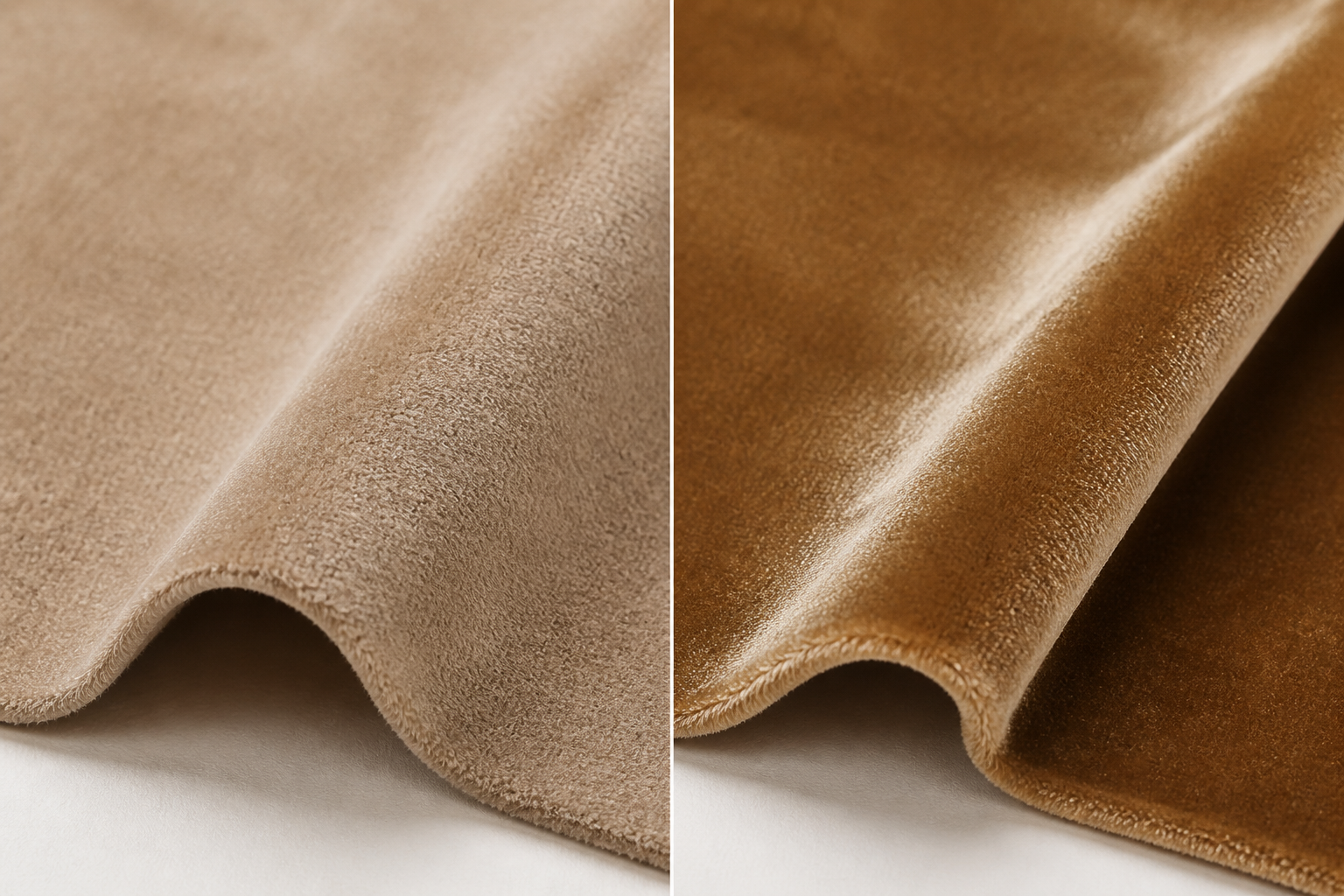
What is velour fabric?
Velour is a pile fabric developed for a soft hand and visible surface depth. Many apparel velours use a knitted base, which can make them more flexible than conventional woven velvet. Cotton, polyester, viscose, elastane, and blends may all appear in the market. The name alone does not confirm composition, stretch, weight, brushing, print method, or end-use performance.
For a buyer, the practical question is not simply whether a sample is called velour. It is whether the construction, pile, recovery, drape, color, and care route fit the garment and production process.
What is velvet fabric?
Velvet is also a pile fabric, but common apparel velvet is more associated with a woven and structured base. Its surface can show strong changes in tone when the pile direction changes. That visual depth is useful for formal apparel and decorative applications, but it also means cutting direction, handling, pressing, seam appearance, and packing need tighter control.
Stretch velvet is a separate commercial possibility. Buyers should not assume that every velvet is rigid or that every velour stretches. The actual construction and test data decide.
How construction changes the buying decision
A knit base can help a velour move with the body, but the buyer should still check stretch percentage and recovery in both directions. A woven base can give velvet more shape and stability, but a garment may require additional ease, lining, or construction allowances. Pile height and density affect appearance, weight, print definition, abrasion behavior, and how easily the surface marks during handling.
Ask the supplier to identify:
- fiber composition and blend tolerance;
- knit or woven construction;
- finished width and weight range;
- stretch and recovery in both directions;
- pile height, density, direction, and shedding behavior;
- dyeing or printing route and shade-control method;
- tested care instructions and dimensional stability;
- packing method used to reduce pile pressure and creasing.
Which fabric should you choose?
Choose velour when flexibility is central
Velour is often the more practical starting point for tracksuits, loungewear, robes, fitted costumes, relaxed dresses, and garments that need softness with movement. A printed or solid velour can also support visual variety. Confirm recovery, pile durability, colorfastness, and whether the surface changes after washing or repeated compression.
Choose velvet when structure and visual depth are central
Velvet is often considered for eveningwear, blazers, skirts, accessories, upholstery accents, and pieces where a richer, more directional surface is part of the design. Confirm pile direction before marker planning, test seam and pressing methods, and agree on packing that avoids long pressure lines.
Do not choose from appearance alone
Two fabrics can look similar in a small online image and behave very differently in cutting, sewing, wear, and care. Request a full-width cutting or production sample when pile direction, repeat, stretch, recovery, or shade variation is important.
Sample checks for velour and velvet buyers
- View the sample in two directions. Check how the pile changes color and sheen when turned.
- Measure stretch and recovery. Record both warp or wale and weft or course directions rather than using a general stretch label.
- Rub and fold the surface. Look for shedding, pressure marks, whitening, or slow recovery.
- Review the back construction. Confirm whether it matches the supplier’s knit or woven description.
- Test the intended care route. Washing, drying, steaming, and pressing can affect pile and dimensions differently.
- Check production-lot controls. Agree on shade, weight, width, pile, print, and packing tolerances before bulk approval.
Commercial handoff for velour sourcing
WellDoneTex’s AOP Velour page shows a specific printed velour direction. It should be treated as a product and sample handoff, not as proof that every velour or velvet has the same construction or performance. Send the intended garment, composition range, target weight, width, stretch, print or color direction, order quantity, and destination market when requesting a sample review.
Frequently asked questions
Is velour the same as velvet?
No. Both are pile fabrics, but common apparel velour is often knitted and more flexible, while common velvet is often woven and more structured. Specialty constructions can differ, so confirm the supplier specification.
Is velour cheaper than velvet?
Not always. Price depends on fiber, construction, weight, pile, dyeing or printing, finish, quantity, and quality requirements. Compare like-for-like specifications and landed cost.
Does velour stretch?
Many apparel velours stretch because of their knit construction or elastane content, but the amount and recovery vary. Request measured values in both directions.
Can velvet stretch?
Some velvet is produced as stretch velvet. Conventional woven velvet may be more stable, but the fabric name alone is not enough to determine stretch.
Which is better for loungewear?
Velour is often considered first when softness, movement, and easier garment comfort are priorities. The final decision should follow sample checks for recovery, pile behavior, wash response, and skin contact.
What should a buyer test before bulk production?
Confirm composition, construction, width, weight, stretch, recovery, pile direction, shedding, shade, dimensional stability, care route, seam behavior, and packing. Use an approved sample and agreed tolerances as the production reference.
Sources and comparison context
- Contrado: What is Velour and What is the Difference to Velvet?
- Dalston Mill Fabrics: Velvet vs Velour vs Velveteen
- Zelouf Fabrics: Velvet vs Velour
Source pages were used for comparison structure and terminology review. The article wording and buyer checklist are original. Product performance, certification, stock, and care claims must remain tied to the actual WellDoneTex specification and test evidence.