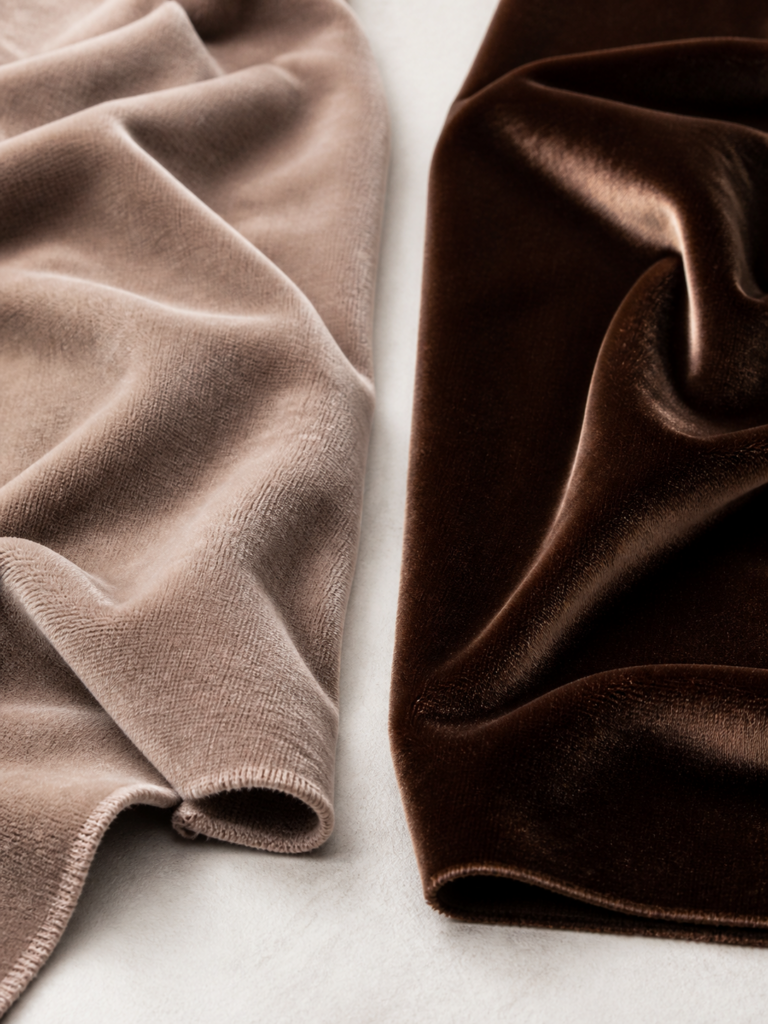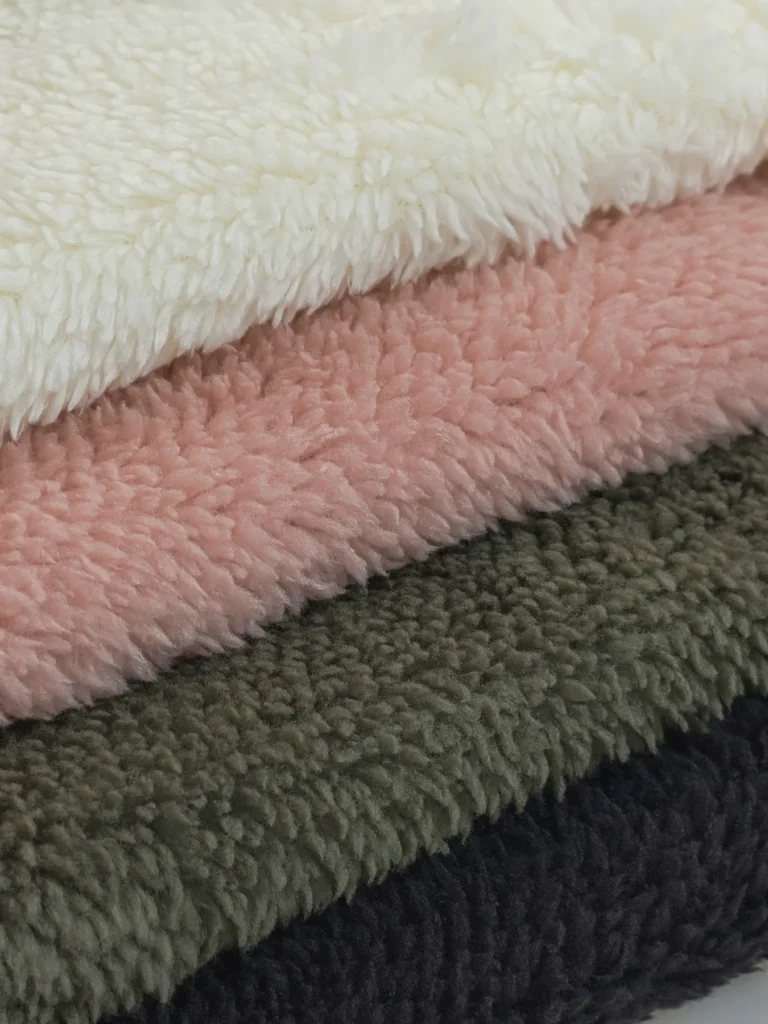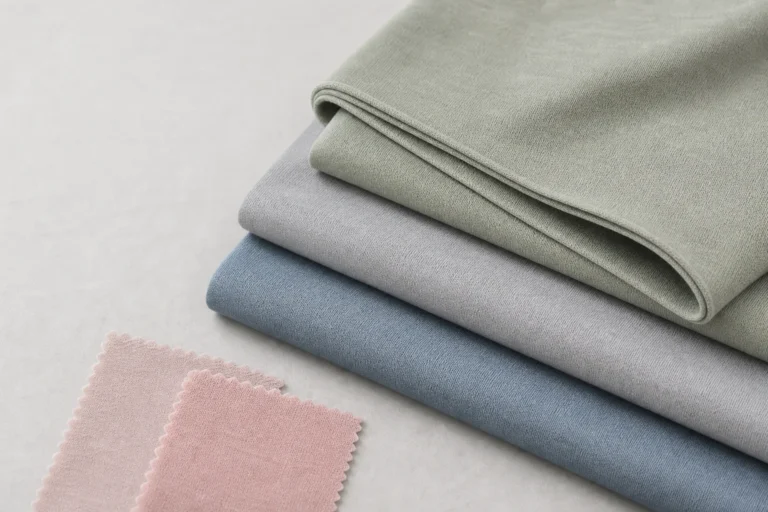
Modal is a regenerated cellulosic fiber made from wood-derived cellulose. In apparel, it is commonly selected for a soft hand, fluid drape, and comfortable next-to-skin feel. However, "modal fabric" does not describe one fixed construction or performance level: the blend, yarn, knit or weave, dyeing route, and finishing process all affect the final result. Buyers should therefore approve a tested sample, not a fiber name alone.
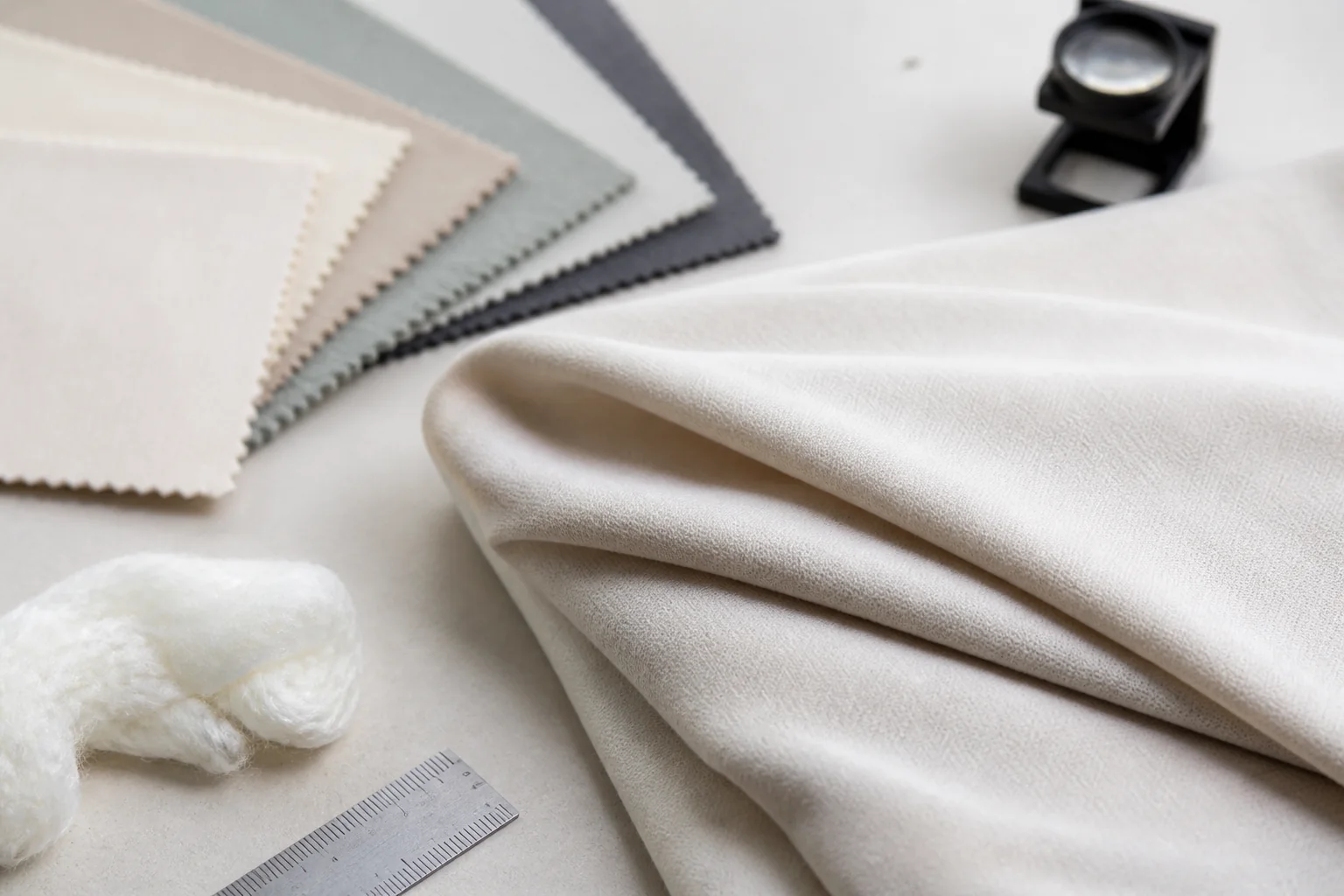
What is modal fabric?
Modal is a man-made cellulosic fiber. Its starting material is cellulose, which is processed into a spinning solution and then regenerated into filament or staple fiber. The fiber can be used alone or blended with cotton, polyester, elastane, or other fibers, depending on the required hand feel, stretch, cost, and durability.
The word modal identifies the fiber category. It does not tell you whether a fabric is jersey, rib, interlock, woven, brushed, lightweight, or heavy. Two suppliers can both offer a fabric described as "modal," while the actual fabrics differ in composition, GSM, stretch, opacity, shrinkage, recovery, and surface appearance.
For sourcing, the practical question is not only "Is this modal?" It is "Which modal blend and fabric construction match the garment, care standard, target price, and testing requirements?"
How is modal made?
At a high level, cellulose is extracted from wood-based raw material, dissolved through an industrial process, extruded through spinnerets, and regenerated into fiber. The fiber is then washed, finished, cut when staple fiber is required, spun into yarn, and converted into knitted or woven fabric.
The exact manufacturing route, raw-material controls, chemicals, recovery systems, and chain-of-custody documentation vary by producer. A generic modal label is therefore not proof of a particular environmental profile or certification. When a program requires a branded fiber or documented sourcing standard, the buyer should request the exact fiber identification and supporting transaction or scope documents.
Lenzing describes specific softness and moisture-management characteristics for its branded TENCEL Modal fibers. Those branded-fiber statements apply only when the fiber identity is verified; they should not be used as blanket claims for an unverified modal fabric.
Modal fabric properties and limitations
| Buyer consideration | Typical sourcing direction | What still requires testing |
|---|---|---|
| Hand feel | Modal is often chosen for a smooth, soft touch | Finished hand, wash change, softener durability |
| Drape | Frequently suitable for fluid silhouettes and next-to-skin garments | Garment hang, spirality, growth, recovery |
| Moisture comfort | Cellulosic fibers can support a comfortable moisture feel | Drying time, wicking method, end-use conditions |
| Color appearance | Modal can produce a rich, clean appearance with the right dye route | Shade consistency, rubbing, wash and perspiration fastness |
| Stretch | Comes mainly from knit structure and/or elastane, not the word modal itself | Width/length stretch, recovery, bagging |
| Dimensional stability | Depends strongly on construction and finishing | Wash shrinkage, relaxation, tumble-dry response |
| Surface durability | Fine, soft surfaces may need careful yarn and finish control | Pilling, abrasion, snagging, fuzzing |
| Care | Care instructions depend on the complete fabric and garment | Approved wash method, heat sensitivity, appearance retention |
Common advantages
- A soft hand that can work well for next-to-skin apparel.
- Fluid drape for tops, dresses, loungewear, and selected intimate-apparel directions.
- Flexible blending options for balancing hand feel, recovery, cost, and durability.
- A clean surface and color appearance when yarn, dyeing, and finishing are properly controlled.
Common limitations
- A fiber name alone does not guarantee shrinkage, recovery, pilling, or colorfastness.
- Very soft or lightweight constructions may show growth, cling, opacity issues, or edge curling.
- Modal-rich fabrics can behave differently when wet and after repeated laundering.
- Branded-fiber, sustainability, or certification claims need exact documentary proof.
- Fabric performance can change materially with yarn count, stitch length, elastane percentage, GSM, and finishing.
Modal vs cotton
Modal and cotton are both cellulose-based, but they enter the supply chain differently. Cotton is a natural seed fiber. Modal is regenerated from processed cellulose. In finished apparel, modal is often selected when the design requires a smoother hand and more fluid drape, while cotton is often selected for a familiar natural touch and broad construction options.
There is no universal winner. A modal jersey may feel softer than a comparable cotton jersey, but a compact cotton interlock may offer a more substantial surface and different recovery. A cotton-modal blend can combine characteristics from both fibers, yet its real behavior still depends on the ratio, yarn, structure, and finish.
Buyers comparing modal with cotton should request comparable samples at the intended GSM and construction. Review touch, opacity, dimensional stability, colorfastness, pilling, recovery, sewing behavior, and wash appearance under the same test conditions.
Modal vs polyester
Polyester is a synthetic fiber; modal is a regenerated cellulosic fiber. Modal is frequently used when softness, drape, and next-to-skin comfort are central to the brief. Polyester is commonly selected when quick drying, strength, shape retention, or certain performance finishes are priorities.
The trade-off is program-specific. A modal-rich fabric may provide a softer, more fluid hand, while a polyester blend may improve recovery or drying behavior. Blending the two can be useful, but it can also change pilling, dyeing, shade matching, and recycling considerations. The comparison should be made on tested fabrics rather than generic fiber assumptions.
What is modal fabric used for?
Modal appears in a wide range of apparel, especially where softness and drape matter. Common development directions include:
- T-shirts and lightweight tops.
- Loungewear and sleepwear.
- Underwear and base-layer styles.
- Dresses, skirts, and fluid silhouettes.
- Jersey, rib, and interlock programs.
- Cotton-modal or modal-elastane blends for comfort-led garments.
These are end-use directions, not automatic suitability claims. For babywear, underwear, sportswear, or any regulated market, the required chemical, physical, labeling, and safety tests must be defined by the buyer and destination market.
Modal jersey, rib, and interlock are not the same
A modal fiber can be converted into different fabric structures. Single jersey is often lighter and more fluid, but it can curl at cut edges and may require careful control of spirality and growth. Rib construction can provide higher stretch and a distinctive vertical surface. Interlock has two knit faces and is often selected when a smoother, more stable, or more substantial result is needed.
That is why the phrase "modal fabric" is too broad for a quotation. A useful request should specify the target construction, blend, GSM, width, stretch direction, recovery expectation, color, finish, testing standard, and intended garment.
For a structure-specific follow-up, see our Modal Interlock Fabric Guide. It explains how modal fiber and interlock construction work together and which approval points buyers should control.
Buyer checklist: what to verify before bulk production
- Confirm the exact composition. Record every fiber percentage and whether a branded fiber is required.
- Define the construction. Specify jersey, rib, interlock, woven, brushed, or another structure; include machine gauge when relevant.
- Set the target GSM and usable width. State test tolerances and whether measurements are before or after relaxation.
- Measure stretch and recovery. Test both directions when relevant and check for bagging after repeated extension.
- Approve dimensional stability. Review length and width shrinkage after the intended wash and drying cycle.
- Check spirality and skew. This is especially important for lightweight circular knits and garment side seams.
- Test surface durability. Set pilling, abrasion, snagging, and appearance-retention requirements for the end use.
- Verify color performance. Include washing, rubbing, perspiration, light, and shade-continuity tests as the program requires.
- Review garment-making behavior. Check cutting, edge curl, seam appearance, needle damage, pressing, and relaxation time.
- Control claims and documents. Match every branded-fiber, certification, compliance, or sustainability statement to current evidence for the exact order.
Why sampling matters more than the label
A fiber label is useful for narrowing the search, but it does not predict the finished garment. For example, two 95/5 modal-elastane jerseys can differ because of yarn count, stitch density, elastane type, knitting tension, heat setting, compacting, dye route, and softener. One may be opaque and stable; another may grow after washing or lose recovery.
A disciplined sampling sequence reduces that uncertainty. Start with a development swatch or hanger, then approve a lab dip when color matters, test a representative cut, sew a prototype garment, and confirm bulk standards against the signed sample. If the program changes mill, yarn source, finish, or composition, repeat the relevant checks.
Claim control: modal does not automatically mean sustainable
Modal is often discussed in sustainability contexts because it is wood-cellulose based. That does not make every modal fabric automatically sustainable, certified, biodegradable in the finished product, or lower impact. Fiber producer, forestry source, chemical-management system, energy mix, blend content, dyeing, finishing, transport, garment construction, and end-of-life conditions all matter.
For a claim-sensitive program, request the exact branded-fiber documentation, certification scope, chain-of-custody evidence, transaction records where applicable, and test reports tied to the actual fabric. Marketing language should follow the evidence, not precede it.
How to request a modal fabric sample
Send a sourcing brief that includes:
- Garment type and target market.
- Preferred composition or acceptable blend range.
- Jersey, rib, interlock, woven, or other construction.
- Target GSM, usable width, stretch, and recovery.
- Color, finish, hand-feel reference, and opacity requirement.
- Wash method and dimensional-stability target.
- Pilling, colorfastness, chemical, and market-specific test standards.
- Required branded fiber, certification, or traceability documents.
- Estimated quantity, sample timeline, and bulk delivery window.
WellDoneTex can use that brief to review development directions and identify which points must be confirmed on a physical sample. Request a fabric sample with your target construction and test requirements.
Related fabric sourcing resources
- Modal Interlock Fabric Guide
- Interlock Fabric Supplier
- Fabric Categories
- Tech and Quality
- Fabric to Garment Development
Frequently asked questions
Is modal a natural or synthetic fabric?
Modal is generally classified as a regenerated cellulosic fiber. Its raw material is cellulose, but the fiber is manufactured through an industrial dissolution and regeneration process. It is not a natural fiber in the same sense as cotton, and it is not a petroleum-based synthetic fiber like conventional polyester.
Is modal fabric breathable?
Modal is often used in comfort-led, next-to-skin apparel, but breathability is a property of the complete fabric. Fiber blend, knit or weave, GSM, density, finishing, and garment design all affect air and moisture movement. Test the actual construction for the intended use.
Does modal fabric shrink?
It can. Shrinkage depends on the fiber blend, construction, knitting or weaving tension, dyeing, finishing, and care cycle. Buyers should set length and width tolerances and test the production-representative sample using the intended wash and drying method.
Is modal better than cotton?
Neither fiber is universally better. Modal is often selected for a smoother hand and fluid drape; cotton may be preferred for a familiar touch or a specific construction. Compare equivalent fabrics against the garment brief, test standard, cost, and care requirements.
Is modal suitable for sportswear?
Modal can be considered for comfort-led active or studio apparel, especially in blends, but the fabric must be tested for drying time, stretch recovery, pilling, colorfastness, perspiration exposure, and repeated washing. The fiber name alone is not a performance guarantee.
What should a modal fabric quotation include?
A useful quotation should identify composition, construction, GSM, usable width, color and finish, minimum order quantity, price basis, lead time, testing responsibility, packing, and the documents included. Branded-fiber or certification claims should name the exact evidence supplied.