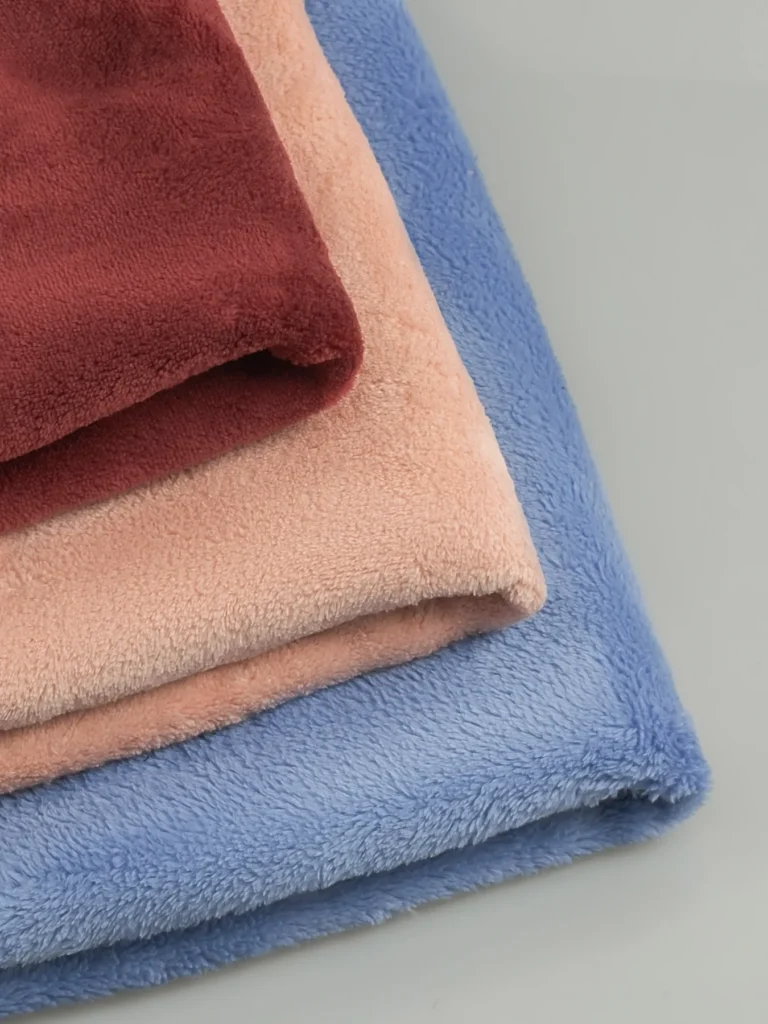
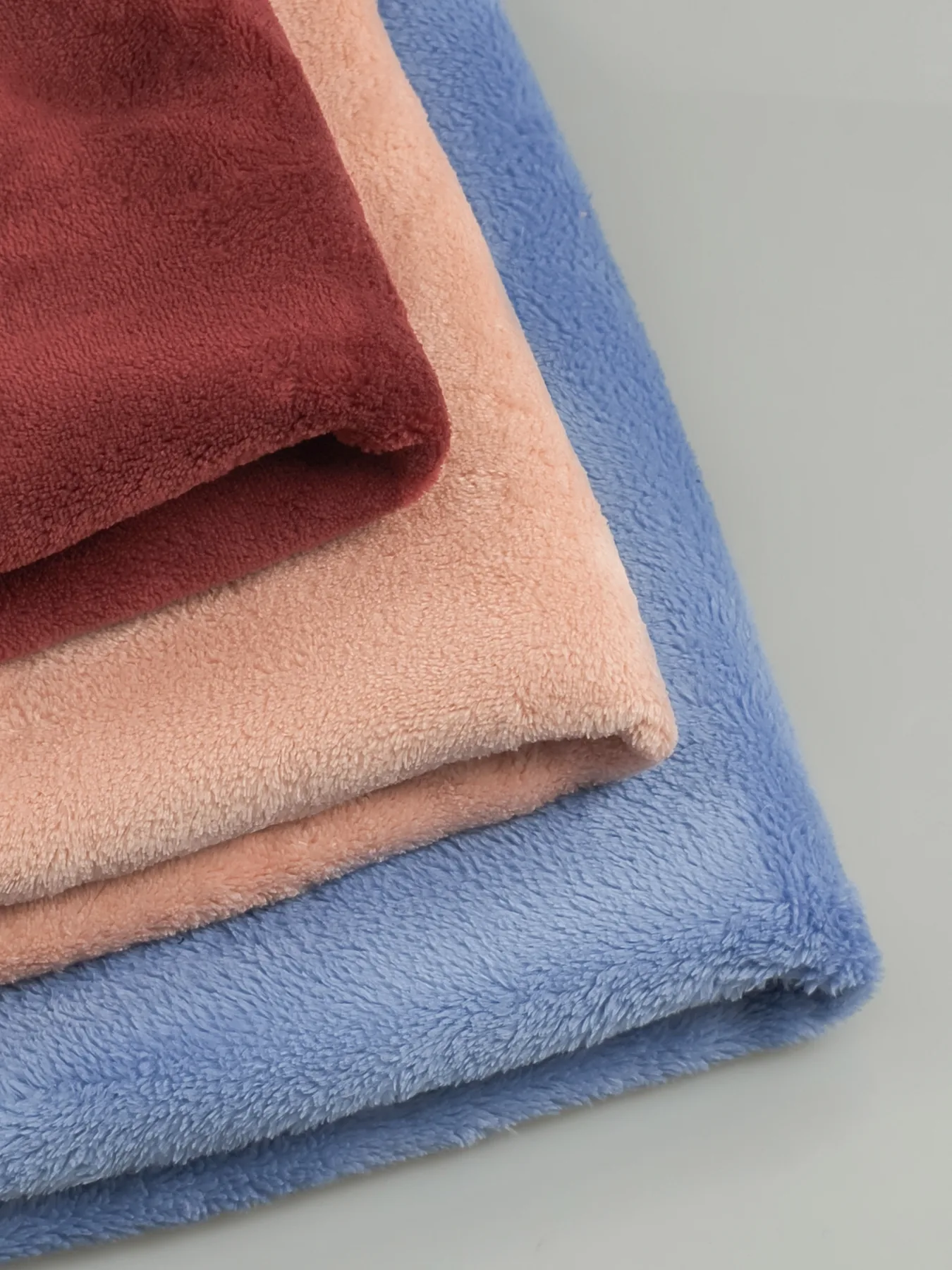
Image note: The featured photograph illustrates coral fleece fabric. It does not specify the weight, width or price used in the hypothetical calculations below.
To compare a coral fleece price per kilogram with a price per meter, first confirm the finished GSM and the full open width represented by the billed fabric weight. Estimated price per linear meter equals price per kilogram multiplied by GSM and full open width in meters, divided by 1,000. Then check usable width, the approved fabric specification and what the quotation includes.
A lower price per meter can still buy less usable fabric. For an apparel sourcing team preparing a Bangladesh production program, the useful comparison is the cost of meeting the same fabric and cutting requirements.
1. Put both quotes on the same specification
Before converting a price, confirm that the two offers describe comparable coral fleece. Check composition, finished GSM and its tolerance, pile appearance, finish, color requirements and the agreed physical sample. A quotation for a lighter or differently finished fabric is an alternative construction, even if both suppliers call it coral fleece.
Record two separate widths:
- Full finished open width: the width corresponding to the fabric mass used in the kilogram-to-meter estimate.
- Usable cutting width: the width the cutting team can actually use after excluding unusable edges.
Ask the supplier to identify both. A quotation that says only “150 cm” leaves an important question unanswered. Do not substitute usable width for full width when the kilogram price includes the fabric outside the usable area.
If the fabric is quoted in tubular form, clarify whether the stated width is lay-flat tubular width or opened width. Ask for the corresponding measured weight per linear meter. Do not automatically double an unclear width.
For a broader inquiry checklist, see the fabric specification guide. This comparison starts after the construction has been defined.
2. Convert a kilogram price to a linear-meter price
GSM means grams per square meter. For a uniformly weighted, open-width fabric, the planning calculation is:
Estimated kg per linear meter = GSM × full finished open width in meters ÷ 1,000
Estimated price per linear meter = price per kg × GSM × full finished open width in meters ÷ 1,000
Estimated linear meters per kg = 1,000 ÷ (GSM × full finished open width in meters)
Use the same currency throughout. Convert centimeters to meters before calculating: 160 cm becomes 1.60 m.
Illustrative calculation only: at 250 GSM and 1.60 m full open width, one linear meter weighs approximately 0.40 kg. If the hypothetical price is USD 3.00/kg, the estimated price is USD 1.20 per linear meter, and one kilogram represents approximately 2.50 linear meters.
These numbers demonstrate the arithmetic. They are not a WellDoneTex price offer, available specification, market benchmark or guaranteed roll yield.
For a price quoted per yard, one linear yard is 0.9144 linear meter. Multiply the price per meter by 0.9144 to obtain price per yard. Divide a price per yard by 0.9144 to obtain price per meter, keeping fabric width and specification unchanged. The illustrative USD 1.20/m becomes approximately USD 1.0973/yard.
3. Compare usable area before choosing the cheaper quote
Linear meters alone do not account for different cutting widths. A first comparison is:
Material price per usable square meter = price per linear meter ÷ usable cutting width in meters
Consider two hypothetical offers for otherwise comparable 250 GSM fabric:
Quote A
- Price: USD 3.00/kg
- Full open width: 1.60 m
- Usable cutting width: 1.55 m
- Estimated fabric mass: 0.400 kg per linear meter
- Estimated price: USD 1.200 per linear meter
- Estimated price per usable square meter: USD 0.7742
Quote B
- Price: USD 2.90/kg
- Full open width: 1.80 m
- Usable cutting width: 1.70 m
- Estimated fabric mass: 0.450 kg per linear meter
- Estimated price: USD 1.305 per linear meter
- Estimated price per usable square meter: USD 0.7676
Quote A has the lower price per linear meter. Quote B has a slightly lower material price per usable square meter under these assumptions. Comparing only USD/m would miss that difference. Here the usable-area difference is less than 1%, so actual measured yield and agreed tolerances could change the ordering.
The cutting team still needs to compare markers at the actual usable widths. Pattern layout, pile direction, size mix, defects and agreed allowances can change the result. A lower price per usable square meter does not establish a lower fabric cost per garment.
Ask the cutting team for consumption per garment at each width. Multiply that consumption by the matching price per linear meter, with allowances included once. Do not add a second general waste allowance if it is already included in the consumption figure.
4. Check measured yield and the billing basis
The GSM calculation is a planning estimate. Actual roll length and mass can differ from an estimate based on nominal specifications. Confirm how the supplier measures and records finished GSM, width, net fabric mass and roll length.
The quotation should state whether billed kilograms mean net fabric mass or include tubes, wrapping or other packing. Gross shipping weight should not silently replace net fabric mass in a yield calculation.
Where matched roll records are available, calculate:
Measured kg per linear meter = net fabric mass of the roll ÷ measured roll length
Use measurements for the same roll and an agreed measurement basis. If the result differs materially from the nominal GSM-and-width estimate, resolve the reason before approving the comparison. Relevant questions include GSM and width tolerances, edge mass, conditioning and measurement accuracy.
Agree test methods and acceptance limits separately. ASTM D3776/D3776M covers fabric mass per unit area, and ASTM D3774 covers fabric width. Naming a method does not establish that a fabric has been tested or passed a buyer's requirement.
5. Convert order quantity without losing the color minimum
WellDoneTex works on made-to-order fabric programs rather than stock fabric supply. The minimum order is 1,000 kg in total, with a typical minimum of 400 kg per color. Confirm the applicable per-color minimum for the specific construction and color program.
Using the earlier hypothetical 250 GSM, 1.60 m full-width example, 1,000 kg corresponds to approximately 2,500 linear meters before differences in actual measured yield. This conversion does not turn the kilogram minimum into a guaranteed meter quantity.
Check total quantity and each color separately. For example, three colors at 400 kg each require 1,200 kg in total if the 400 kg per-color minimum applies. A 1,000 kg total order split equally across three colors would be about 333 kg per color, below that typical minimum.
Keep the color breakdown in kilograms on the inquiry and show estimated meters as a separate planning column. Ask the supplier to confirm the quantities accepted for the program before finalizing the garment plan.
6. Align what the quoted price includes
Create one comparison sheet with the same currency, quantity, colors, approved specification and delivery basis for both offers. Record whether each price includes:
- The specified dyeing, brushing and other finishing
- Required testing, inspection and documentation
- Roll packing and any special labels
- Freight, insurance and other delivery charges
- Any separately quoted development or small-lot charges
Where a quotation uses Incoterms, record the rule, named place and version stated in the offer. Have the supplier clarify inclusions and exclusions before treating two prices as comparable. Do not assume identical three-letter terms include identical additional services.
Keep supplier-confirmed production timing and transport timing separate. Request order-specific dates after the specification, color approvals and required checks are clear.
7. Use this final comparison checklist
Before selecting a quotation, confirm these seven items:
- Both offers match the intended construction, finish and sample standard, or differences are clearly listed.
- GSM, full open width and usable cutting width have distinct values and agreed tolerances.
- Prices are in one currency and have been converted to the same unit correctly.
- Net fabric mass is separated from packaging and gross shipping weight.
- The cutting team has reviewed consumption at the actual usable width and pile direction.
- Total order quantity and every color meet the confirmed minimums.
- Included services, delivery basis, validity and approval conditions are recorded in writing.
If a value is missing, mark it “to confirm” rather than filling it with an assumption. A quote becomes decision-ready when the technical and commercial differences are visible.
Common questions
Can I convert kg to meters using only GSM?
You also need the full open width corresponding to the fabric mass. Alternatively, use an agreed measured kg-per-linear-meter value. GSM alone cannot determine the length in one kilogram.
Should I use full width or usable width?
Use the full width represented by the billed fabric mass for the nominal kg-to-linear-meter estimate. Use usable cutting width for the usable-area comparison and marker planning. Confirm the supplier's measurement and billing basis where edges or width definitions are unclear.
Is the lower kilogram price always the better offer?
No. Compare the same construction and performance requirements, then review usable width, actual cutting consumption and the services included. Unit conversion helps expose differences; it does not approve fabric quality.
Does a 1,000 kg order mean that I can divide it across any number of colors?
Each color must also satisfy the applicable minimum. WellDoneTex's typical minimum is 400 kg per color, subject to confirmation for the specific fabric and color program.
Prepare a comparable coral fleece quotation
Review the Coral Fabric product page for the product reference. Then send the intended use, composition, finished GSM, full and usable width requirements, finish, total kilograms, kilograms per color and delivery destination. If a width or construction is undecided, say so and request clearly separated alternatives.
Request a coral fleece quote with those details so the quotation can be assessed on a consistent basis.