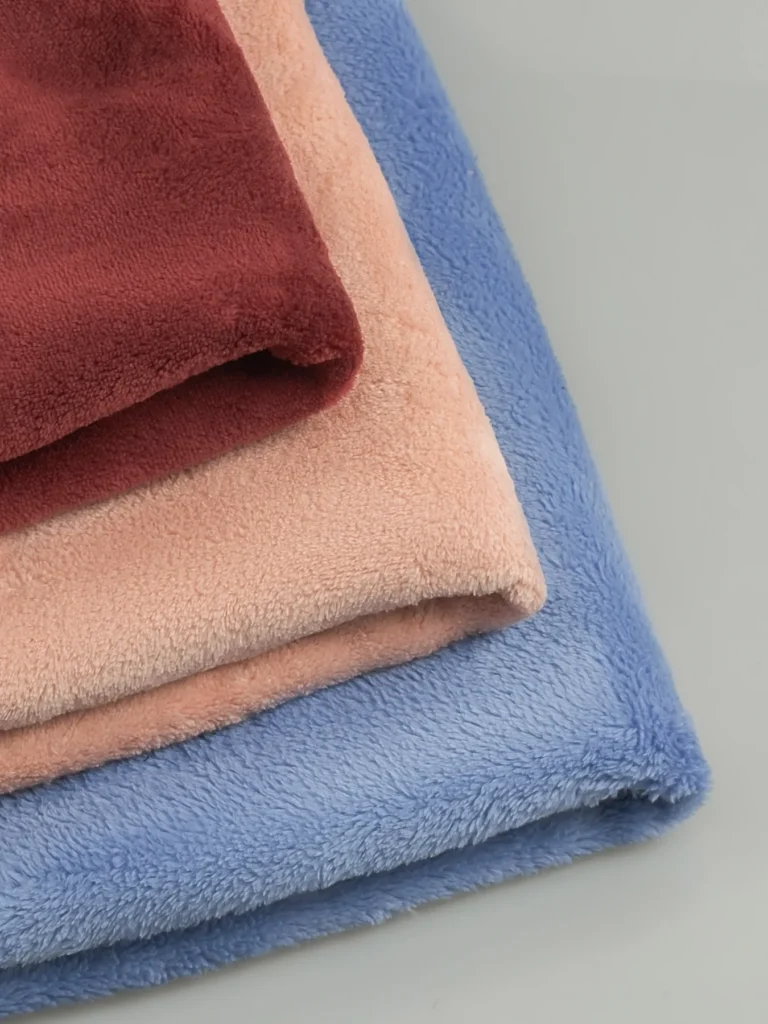
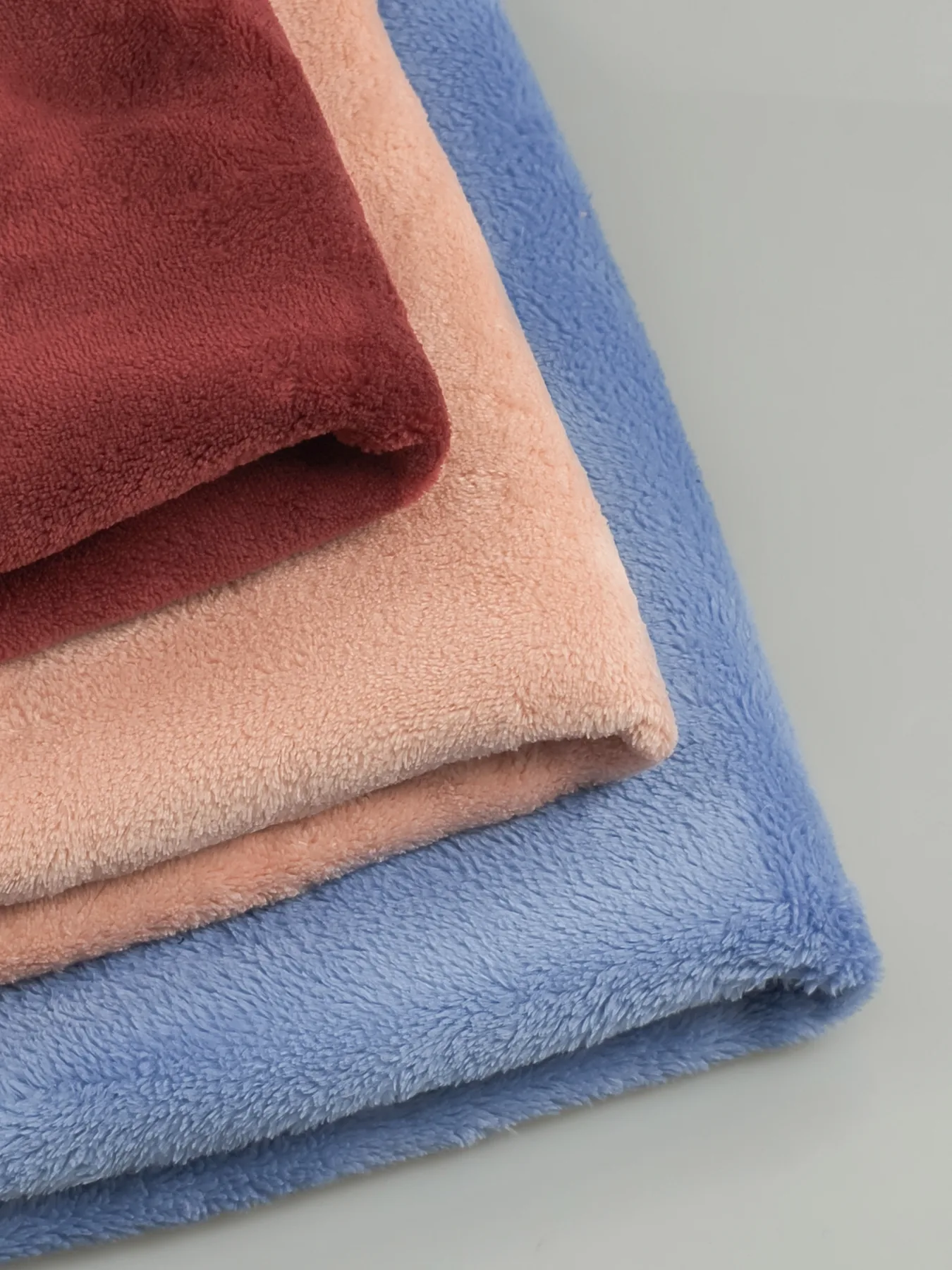
Image note: The featured photograph illustrates fleece fabric. It is not a lab dip, an approved color standard or evidence of a bulk-shade test.
A fleece lab dip approval should identify the accepted color sample, the fabric it represents and the conditions used to judge it. It should also state the next authorized step. An approved laboratory color does not by itself release finished bulk fabric for shipment or cutting.
For a buyer developing custom fleece, the useful question is: what can proceed after this approval, and what evidence is still required? Keep color development, finished-fabric approval and bulk-lot release as separate decisions.
1. Define what the lab dip represents
A lab dip is a small laboratory-dyed sample used in color development. CottonWorks’ lab dip demonstration starts with a specified color and substrate, compares the result with the color standard, and notes that adjustments may be needed when the formula is scaled up. Its example uses cotton interlock and reactive dyes; that recipe should not be treated as a process instruction for polyester fleece.
Before reviewing a submission, ask the supplier to identify:
- The fabric article and composition covered by the sample.
- The color-standard reference and revision.
- The lab dip submission number, option letter and date.
- Whether the submitted surface represents the intended finished fleece.
- Any difference between the development substrate and the proposed bulk construction.
If the supplier used a substitute base fabric, record that limitation. You may be able to approve a color direction while holding final appearance approval until a representative finished sample is available. Do not let a useful development sample silently become the reference for a different article.
2. Agree the color reference before comparing samples
“Match this blue” is incomplete when the buyer, dyehouse and garment factory each hold a different reference. Name one controlling standard and make sure every party can identify it. If you provide a commercial textile color reference, include its complete identifier and reference format. If you provide your own swatch, give it a unique sample code.
Photographs are useful for locating a sample, marking its face or explaining a comment. Avoid using an ordinary phone photograph as the sole approval standard: the capture, lighting and display are additional variables. When an established digital color workflow is used, agree its measurement and data requirements with the parties responsible for approval.
Keep an approval record with the actual sample identity rather than a file named “final blue.” A practical record includes the buyer’s article code, supplier’s article code, color code, submission version, reviewer and decision date.
3. Review lighting and surface presentation consistently
Agree the light sources relevant to the program before evaluating the sample. Datacolor explains metamerism as a pair of colors matching under one light source but no longer matching under another. Its guidance recommends defining the relevant illuminants and evaluating samples under multiple sources.
For a fleece garment with rib cuffs, lining or other coordinated components, review those materials together under the agreed conditions. Approval of the fleece alone does not establish that every trim will match it.
Use a repeatable presentation for the fleece: identify the face, mark the length direction, and agree how the raised surface is laid before comparison. As a practical screening check, view the pieces in the same orientation, then rotate them together and record any appearance change. Do not rotate only one specimen and treat the resulting difference as proof of a dye mismatch.
If instrumental results are part of acceptance, request the measurement setup and the agreed color-difference formula and tolerance. A bare “Delta E” number is insufficient without its basis. This guide does not prescribe a universal pass value or claim that WellDoneTex operates a particular instrument or approval system.
4. Send a decision the production team can act on
Use an explicit outcome for each identified submission:
- Approve for the stated next step: name the accepted option and what may proceed.
- Revise and resubmit: identify the option reviewed, the reference and the requested correction.
- Hold: state the missing information or unresolved comparison before a decision can be made.
Keep scope and conditions next to the decision. “Color approved for this article; finished bulk shade review remains required before cutting” communicates a different instruction from “bulk lot approved for cutting.” The exact release stages should be agreed for the purchase, rather than assumed from a casual “looks good.”
For a revision, make one consolidated response. Conflicting comments from merchandising, technical and garment teams can produce another sample without resolving the decision. Identify who owns the final color sign-off and which comments take priority.
Approval-record template: Article / color / standard reference / lab dip option and version / viewing conditions / decision / permitted next step / unresolved items / approver / date. This is a suggested record structure, not a completed approval or a customer case.
5. Keep a separate finished-bulk shade check
Agree the bulk comparison plan before the order reaches the cutting room. Retain the identified approved control and require traceability between the submitted bulk sample, its dye lot and the rolls it represents.
A practical buyer-defined plan can ask for:
- A production-representative finished sample, with its article, color and lot clearly labeled.
- A comparison with the approved control under the same agreed viewing and measurement conditions.
- Evidence of within-roll and between-roll shade consistency using the sampling plan agreed for the order.
- A record of any accepted shade grouping and instructions for keeping those groups separate.
- A clear disposition for unresolved lots before shipment or cutting, according to the agreed release responsibility.
Do not prescribe a roll count or inspection frequency after a problem appears. Agree these with the supplier and garment manufacturer in advance. A single swatch without a lot reference cannot show which rolls were checked.
For a China-fabric/Bangladesh-garment program, make the handover explicit: who holds the physical control, who receives the lot records, and who can release fabric for cutting? Commercial receipt of a shipment and technical shade acceptance should not be left to different teams to interpret independently.
6. Separate shade approval from performance approval
A color match is not evidence of resistance to rubbing or washing. ISO 105-X12:2016, for example, addresses resistance to color rubbing off and staining another material, with dry and wet rubbing tests. It does not set a universal acceptance grade for your fleece order.
Specify the performance tests, procedures and acceptance criteria needed for the intended garment separately. Depending on the program, the review may also include dimensional change, pilling, handfeel, GSM, usable width and seam behavior. Use the exact approved construction and agreed care route; do not infer these results from the lab dip’s appearance.
If a color correction or finishing change is proposed, ask which earlier approvals may be affected and what needs to be reviewed again. Record the revised sample or lot identity instead of leaving two different versions marked as approved.
7. Use this release checklist
Before moving to the next production step, confirm all seven points:
- The controlling color standard is uniquely identified.
- The approved lab dip and fabric article match the order record.
- Viewing conditions and any instrumental criteria are agreed.
- The decision says exactly what may proceed and what remains on hold.
- The retained control and bulk-lot traceability are available to the next team.
- Required shade and performance checks have separate, recorded outcomes.
- The person responsible for the next release has acknowledged the unresolved items, if any.
If one of these is missing, resolve that specific gap rather than issuing an unrestricted approval. The aim is a decision that the dyehouse, fabric supplier and garment team can all interpret the same way.
Common buyer questions
Does lab dip approval approve the whole bulk order?
Only the scope explicitly agreed in the approval record should be treated as authorized. Keep finished-fabric and bulk-lot release requirements visible; do not assume that color development approval covers every later check.
Can the same approved color be used for another fleece quality?
Use the same color target if that is the design intention, but request a submission for the new article and agree the comparison requirements. A previous sample is not evidence that a different composition, construction or finish already meets them.
What if color is acceptable but another property is still pending?
Record color as the accepted part and name the pending item, such as usable width or a required test result. State whether the order may proceed to any limited next step. Avoid a blanket approval that hides the unresolved requirement.
Prepare a custom fleece color brief
Send the fleece type, garment use, target composition, GSM, usable width, color reference and quantity by color. Add your required approval stages, viewing conditions, test needs and the date by which the next decision is required. The fabric specification checklist can help complete the technical brief.
WellDoneTex works on made-to-order fabric programs rather than stock supply. The minimum order is 1,000 kg in total, with typically 400 kg per color; confirm the applicable color minimum for the selected program. Lab dip approval does not override the agreed order quantities or establish a delivery commitment.
For a plush fleece direction, review the Coral Fabric product reference, then send your Coral Fabric color and quotation requirements. Include any existing sample or reference identity so the color request and fabric specification stay linked.