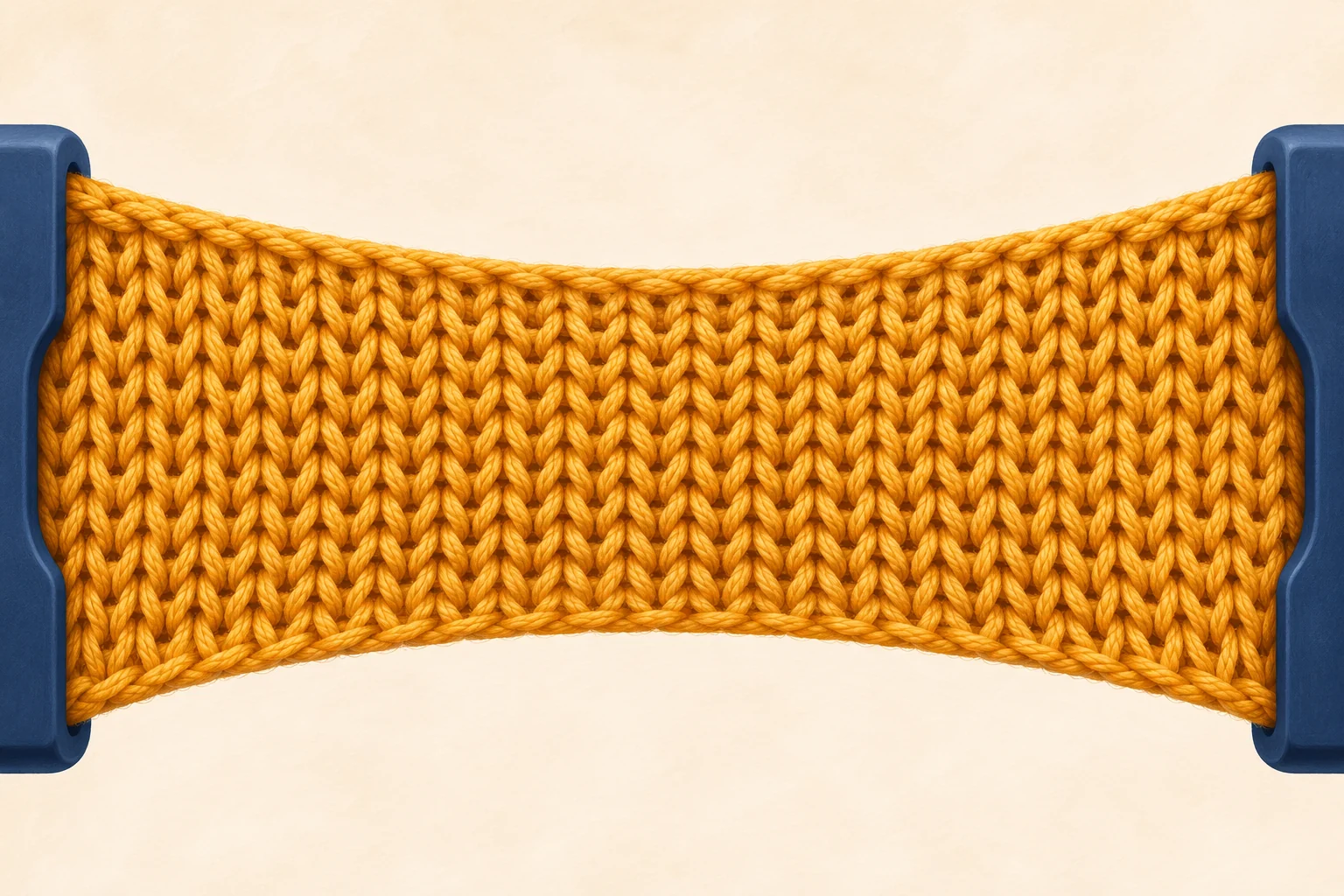
Image note: this conceptual illustration shows knit fabric extended between opposing grips. It is not an actual laboratory specimen and does not establish a stretch percentage, recovery result or tested production lot.
Before comparing knit fabric stretch test reports, check the method, test direction, applied conditions and the property actually reported. A large stretch percentage is not a complete approval specification. Buyers also need to know what happens after the specimen is released and whether the evidence applies to the fabric being ordered.
This guide helps purchasing and technical teams review supplier documentation. It does not prescribe a laboratory procedure, a universal passing value or a WellDoneTex performance guarantee. For the broader construction explanation, see why polyester fabrics can stretch differently.
1. Match the method to the material and end use
ASTM D2594/D2594M-21 addresses fabrics that stretch and recover under low tension. Its scope distinguishes stretch measured under a known load from growth measured after an imposed extension is removed. The two procedures may be used together or separately. The standard also cautions that fabrics intended for support or other applications are better evaluated using other methods.
ASTM D2594/D2594M also cautions against using the method for commercial-shipment acceptance testing because between-laboratory precision is poor. Agree with the supplier and laboratory how the results will inform the review and how conflicting results will be investigated, rather than using an isolated percentage as shipment-release evidence.
ISO 20932-1:2018 describes straight-strip or loop-form tests for elasticity and related fabric properties, excluding narrow fabrics. Its published Amendment 1:2021 applies to that edition. Ask the laboratory to identify the complete applicable reference and procedure rather than listing only “ISO stretch.”
Have the responsible technical team select the method for the intended product. Do not transfer a method from an unrelated report merely because its title contains the word stretch. If a buyer’s specification already names a method, resolve any proposed substitution before testing.
2. Keep stretch, growth and recovery labels separate
Ask the laboratory what each result describes, how it is calculated and when it is measured. A stretch result, a growth result and a recovery result are not interchangeable column headings. Preserve the method’s terminology and units in your approval sheet.
In particular, do not assume that a reported growth percentage can simply be subtracted from 100 to create a recovery percentage. Request the applicable definition and calculation basis. A spreadsheet should not silently invent a result that the laboratory did not report.
Agree which properties matter for your program and the acceptance rule for each. If only stretch was requested, the absence of a separate growth result should be recorded as a gap against any requirement for growth, not treated as an automatic pass.
3. Compare the same direction and conditions
Require an unambiguous direction label. Ask the laboratory to relate specimen directions to the fabric’s length and width or other relevant construction directions. Keep results for different directions separate instead of averaging them into a single marketing number.
For a side-by-side supplier comparison, use a checklist of the conditions relevant to the selected method:
- The exact standard, edition, amendment and procedure used.
- Specimen direction, preparation and conditioning.
- The applied load or extension, as applicable.
- The loading duration, cycles and recovery interval where relevant.
- The fabric’s finished condition and any agreed pretreatment.
- Reported deviations or qualifications that may affect interpretation.
These are buyer review questions, not a complete list of mandatory clauses for every method. Ask the laboratory to explain which entries apply. If two reports differ, obtain a technical assessment of comparability before choosing the apparently better number.
4. Tie the report to the approved fabric
Record the supplier article, composition, construction, GSM, usable width, finish and color reference. Distinguish a development swatch from material taken from an identified production lot. Keep the report number, laboratory and test date with the specification revision used for the purchase decision.
If the order requires evidence after laundering, state that separately in the testing brief and ask for the agreed preparation details. An as-received report should not be relabelled as a post-wash result. Keep any separate shrinkage report identifiable rather than treating it as a substitute for stretch or recovery evidence.
When the fabric specification changes after approval, ask the technical owner whether the earlier report remains applicable. Record the decision instead of copying an old result into the revised specification without review.
5. Resolve incomplete comparisons before approval
Hypothetical documentation example, not test data: Supplier A reports width-direction stretch under a stated load. Supplier B provides a result labelled “recovery” without a method or measurement interval. The buyer cannot conclude that either fabric is better from these entries. Request the missing method information and identify whether both suppliers need to answer the same testing brief.
Use a short decision log: what is missing, who will clarify it, which fabric or lot is affected and whether approval remains open. Retain the original report alongside any corrected version. If a result is outside the agreed requirement, follow the established review process rather than changing the limit to make the report pass.
For bulk material, carry the approved lot references into the roll documentation. Keep unresolved material identifiable so that a general shipment approval does not conceal a specific technical hold.
6. Include a clear brief with your inquiry
Send the intended garment use, composition, construction, target GSM, usable width, finish and quantities by color. Add the required test method, directions, preparation and acceptance requirements when known. Mark undecided points for technical discussion; do not replace them with “good stretch” or “excellent recovery.”
WellDoneTex supplies custom, made-to-order knit fabrics and does not hold ready stock. Orders typically start at 1,000 kg total, with a usual minimum of 400 kg per color, subject to confirmation for the actual program. These commercial quantities do not establish a tested performance level.
Send your knit fabric specification and stretch-test requirements for a quotation discussion. Sample arrangements, testing scope, timing and commercial terms require project-specific confirmation.