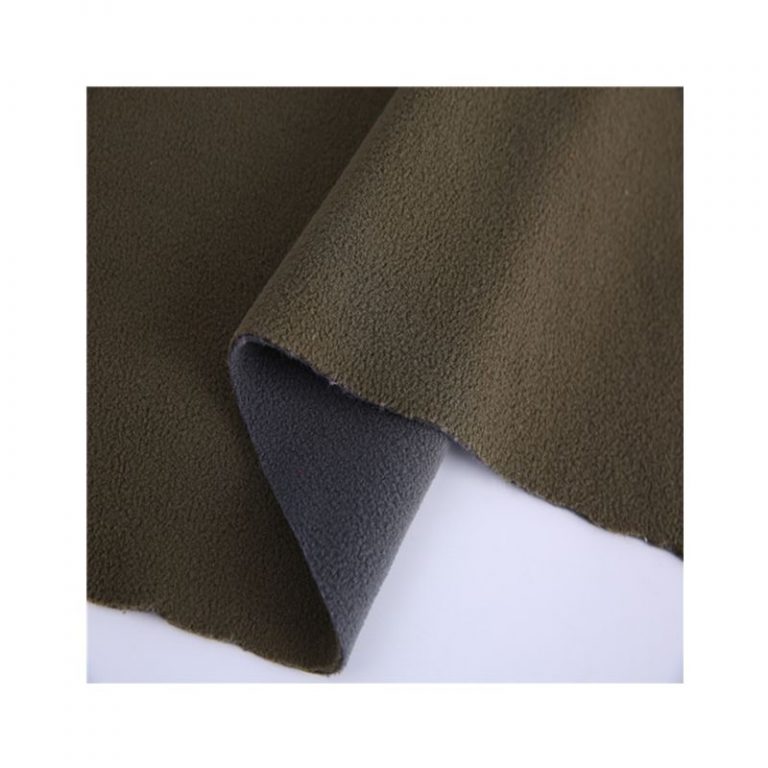
Thermal fleece fabric should be evaluated by more than GSM. Buyers should compare warmth target, pile density, backing structure, surface finish, stretch behavior, bulk consistency and whether the sample matches the final garment category. A heavier swatch is not automatically the better option if it becomes bulky, unstable or visually inconsistent in production.
Thermal fleece is often shortlisted when hoodies, jackets, linings or winter apparel need warmth and a soft handfeel. Two samples can sit in a similar weight range and still behave differently after cutting, sewing, washing and repeated handling. The safer sourcing method is to define the garment first, then review the physical sample against measurable checkpoints.
Quick answer for fabric buyers
Start with the garment use and target warmth, then confirm GSM, usable width, composition, pile construction, backing, finish, stretch, shrinkage and surface expectations. Review the actual production color and sew a representative panel before bulk approval. Keep an approved reference sample so the production fabric can be checked against the same standard.
Why GSM alone is not enough
GSM gives a useful weight reference, but it does not describe loft, density, thickness, air retention, drape or surface stability. One fabric may feel warm because of a high and even pile, while another reaches a similar GSM through a denser or heavier backing. The two fabrics can create different silhouettes and sewing behavior even when their specification sheets show the same weight.
A hoodie program may need balanced warmth, manageable bulk and a stable outer surface. A jacket program may place more emphasis on structure, wind resistance from the complete garment system or a bonded construction. A lining may need lower bulk and easier handling. Weight should therefore be reviewed together with the layer position, pattern, seams and care route.
Compare the surface, pile and backing
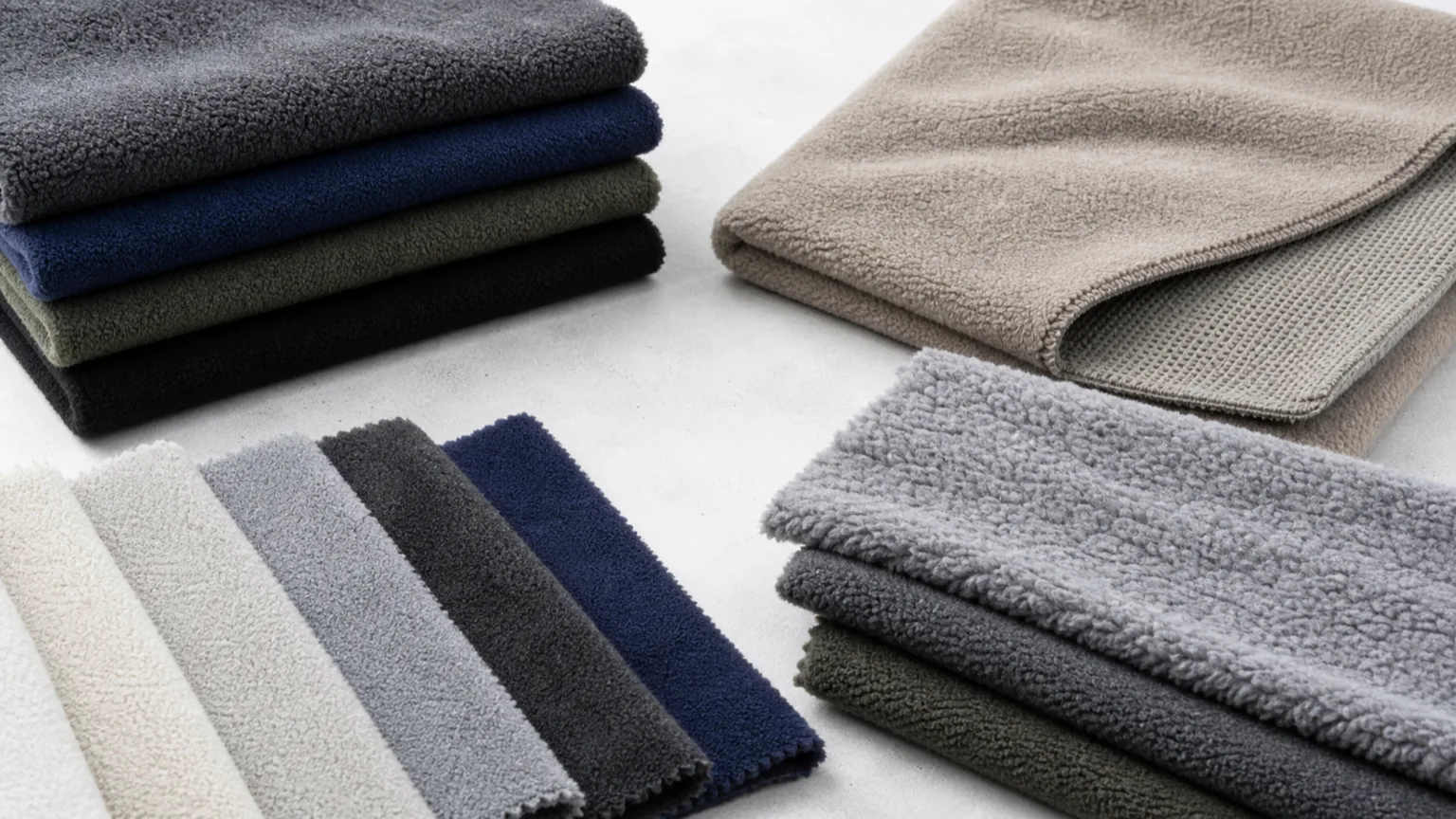
Similar-looking fleece samples often separate when the buyer inspects both faces. A smoother anti-pill direction can be useful where repeated rubbing may affect appearance. A plush direction can provide a softer, loftier hand, but pile uniformity and bulk still need approval. A bonded construction can add body or combine different face and back functions, but stiffness, delamination risk and sewing suitability must be evaluated for the actual program.
| Checkpoint | What to compare | Why it matters |
|---|---|---|
| Garment use | Hoodie, jacket, lining, outdoor layer or loungewear | The intended layer determines the useful balance of warmth, body and bulk. |
| GSM and width | Target range, usable width and agreed tolerance | Weight and width affect yield, cost, opacity and garment handling. |
| Pile | Height, density, direction and uniformity | Pile influences handfeel, loft, appearance and consistency. |
| Backing | Knit structure, bonding and face-to-back stability | The backing influences stretch, body, sewing and durability. |
| Finish | Anti-pill, brushing, softness and surface appearance | Finishing can change the look and behavior of the same base construction. |
| Bulk consistency | Shade, width, weight, pile and handfeel against the approved sample | A strong lab sample is useful only when production stays within the agreed standard. |
Buyer checklist before sample approval
- Define the end use. State the garment, layer position, season, target market and whether the fleece is visible or used as a lining.
- Lock the base specification. Record composition, target GSM, usable width, color and finish direction.
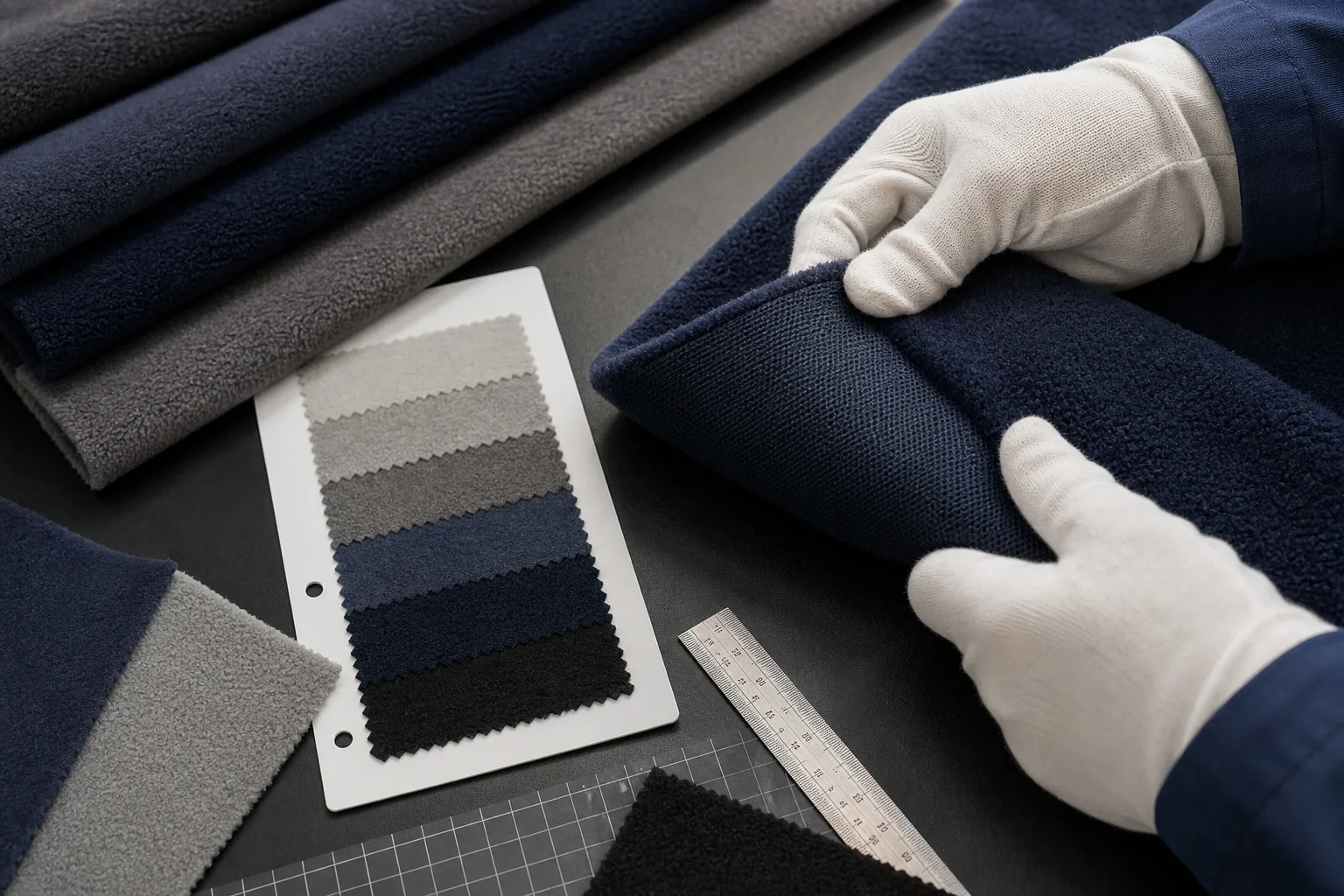
- Inspect both faces. Compare pile uniformity, backing construction, edge behavior and any bonding layer.
- Handle the sample repeatedly. Fold, rub, compress and release it to review recovery and obvious surface change.
- Check stretch and growth. Confirm whether the pattern requires widthwise movement, stability or recovery after extension.
- Test the agreed care route. Review dimensional change, handfeel, appearance and bonding after the care method intended for the program.
- Sew a representative panel. Check seam bulk, feeding, pressing, needle choice and the finished silhouette.
- Keep an approval reference. Retain a signed or sealed sample plus test records and allowed tolerances for bulk comparison.
When bonded and plush directions matter
Bonded fleece is worth comparing when a program needs more structure, a different inside and outside surface, or a layered construction. The buyer should not assume that bonding is automatically warmer or better. Confirm the bond quality, stiffness, stretch balance, seam construction and care response. If the garment must remain flexible, an overly rigid sample can solve one problem while creating another.
Plush fleece can suit garments that prioritize softness and loft. Buyers should check whether the pile stays even, whether it sheds or changes visibly during handling, and whether the added thickness fits the pattern. A swatch that feels attractive in the hand can still create unwanted seam bulk or an oversized silhouette.
Common sourcing mistakes
The first mistake is approving the warmest or heaviest swatch without tying it to the garment. The second is treating words such as thermal, anti-pill, bonded or plush as complete specifications. The third is judging only from a photo. Images can help shortlist a direction, but they cannot show compression, recovery, backing, seam behavior or wash response.
Another mistake is requesting a quote before the sample brief is clear. Prices are difficult to compare when suppliers are working from different assumptions about GSM, width, finish, color, testing and packing. A tighter brief produces a smaller and more relevant option set and makes quotation differences easier to understand.
What to send with a thermal fleece inquiry
Send the garment type, layer position, target warmth, composition preference, GSM range, usable width, stretch requirement, color, surface reference, finish expectation, estimated quantity, destination market and required tests or documents. If possible, include a reference garment or swatch and explain what must match and what may change.
For a commercial review, see the Thermal Fabric Series. Buyers comparing wider fleece categories can also use the Types of Polar Fleece buyer guide and the Fleece Fabric Manufacturer page. For testing and development controls, review Tech and Quality.
Sample CTA: Share your target garment, GSM range, surface direction and care expectations so the sample review starts from the real program. Request a thermal fleece sample review.
FAQ
Is GSM enough to choose thermal fleece fabric?
No. GSM is one checkpoint. Buyers should also review pile density, backing structure, surface finish, bulk behavior, dimensional stability and garment suitability before approving a sample.
When should buyers consider bonded fleece?
Compare bonded fleece when the garment needs more structure or a layered face-and-back construction. Confirm stiffness, stretch balance, bond quality, sewing behavior and care response before approval.
Does plush fleece always provide better warmth?
Not automatically. Plush fleece may feel loftier or softer, but warmth depends on the complete construction and garment system. Pile consistency, bulk and intended layer still need review.
What should buyers test before bulk approval?
Confirm composition, GSM, usable width, pile, backing, finish, stretch, dimensional change, surface appearance, sewing behavior and consistency against the approved sample.
What information helps with a thermal fleece quote?
Send the garment use, layer position, composition preference, GSM and width, stretch needs, color, finish, testing route, estimated quantity and target timing.