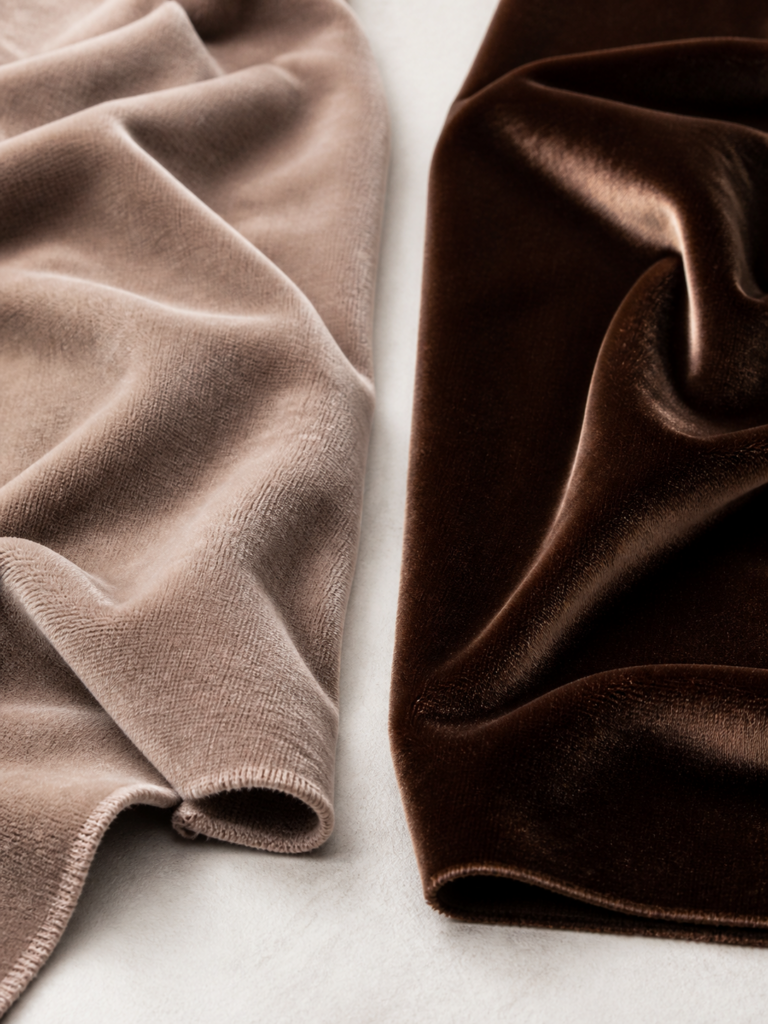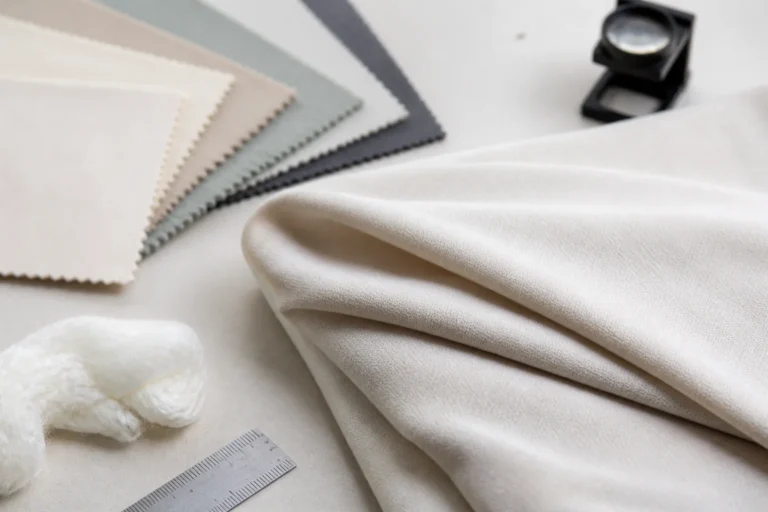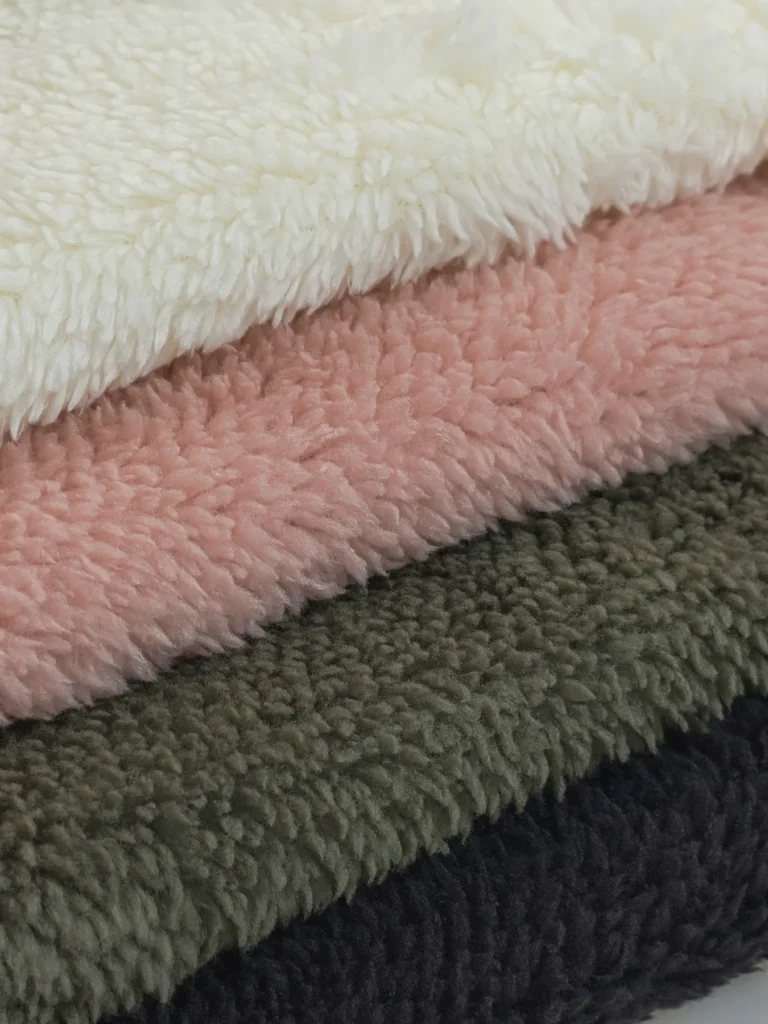

Coral fleece fabric is a soft, plush polyester fleece known for its smooth handfeel, warm touch and dense surface. Apparel and home-textile buyers often consider it for robes, blankets, loungewear, kidswear and cozy winter products where softness is a major selling point.
For sourcing, the important question is not only “what is coral fleece?” It is how to choose the right GSM, pile height, surface finish, color standard and testing requirement for the product you want to make.
What Is Coral Fleece Fabric?
Coral fleece is a knitted fleece fabric, usually made from polyester yarn, then brushed and finished to create a fine, plush surface. Compared with many standard fleece fabrics, coral fleece often feels smoother and more velvet-like. The surface can look rich and soft, which is why it is widely used for products that are touched directly by the skin.
Most coral fleece programs focus on three buyer priorities: soft handfeel, warmth-to-weight balance and stable appearance after washing. The exact performance depends on yarn, knitting density, brushing, shearing, dyeing and finishing control.
Is Coral Fleece the Same as Microfiber?
No—not as textile terms. The Microfibre Consortium glossary uses microfibre for a synthetic fiber defined by its fineness, while coral fleece describes a knitted fabric with a raised, plush surface. The terms can overlap: a coral fleece made with micro-denier polyester may be sold as microfiber coral fleece, but a microfiber textile is not automatically coral fleece. To verify the material, check both the declared fiber composition or yarn specification and the fabric construction and finish.
| Term | What it describes | What it does not prove | What to verify |
|---|---|---|---|
| Microfiber | Fiber fineness | A particular knit, pile or end use | Fiber composition and yarn or filament specification |
| Coral fleece | A knitted fleece category with a raised, plush surface | Microfiber status, shedding level or air permeability | Construction, finish, GSM and evidence from the exact sample |
Coral Fleece vs. Polar Fleece
Coral fleece and polar fleece are both fleece fabrics, but they are usually chosen for different product feelings.
| Point | Coral Fleece | Polar Fleece |
|---|---|---|
| Handfeel | Plush, smooth, soft-touch surface | Warm, brushed, more classic fleece texture |
| Common use | Robes, blankets, pajamas, baby products, loungewear | Hoodies, jackets, outdoor layers, linings, uniforms |
| Visual effect | More velvety and cozy | More sporty or practical depending on finish |
| Sourcing focus | Softness, pile stability, linting, washing appearance | Warmth, pilling resistance, GSM, surface durability |
If the product needs a premium soft handfeel, coral fleece is often a strong direction. If the product needs a more outdoor or sweatshirt-like fleece performance, polar fleece or anti-pill fleece may be more suitable.
Common Coral Fleece Applications
- Bathrobes and loungewear: soft handfeel and cozy appearance are key selling points.
- Blankets and throws: buyers usually care about pile height, warmth, shedding and color consistency.
- Kidswear and baby products: comfort, color fastness and safety documentation become more important.
- Sleepwear and pajamas: handfeel, breathability, washing stability and garment weight should be reviewed together.
- Gift and promotional products: target price, color matching and bulk consistency often drive the fabric choice.
How To Choose GSM For Coral Fleece
There is no single correct GSM for coral fleece. Lighter weights may work for linings or lightweight loungewear, while heavier weights may be used for blankets, robes and winter products. Buyers should confirm GSM together with pile height, handfeel, drape and finished garment use.
A thicker fabric is not automatically better. If the fabric is too heavy, the garment may feel bulky or cost more than the retail target allows. If it is too light, it may not deliver the softness, warmth or coverage expected by the customer.
What Buyers Should Check Before Bulk Production
1. Handfeel after washing
Coral fleece can feel excellent as a fresh swatch, but washing may change loft, surface smoothness or linting. Always review the sample before and after wash if the product will be sold as washable apparel or home textile.
2. Linting and shedding
For robes, blankets and baby items, surface shedding can become a complaint. Ask the supplier about brushing and finishing control, and check the fabric surface after rubbing and washing.
3. Color fastness
Deep colors, bright colors and printed effects may need extra attention. Confirm color standard, lab dip process and testing needs before approving bulk color.
4. Pile direction and cutting loss
Plush fabrics can have a visible pile direction. This may affect cutting layout, shade appearance and garment consistency. It should be considered during sample garment development.
5. Certification and market requirements
For kidswear, baby products or recycled programs, discuss documentation early. Depending on the fabric program, documents such as OEKO-TEX, GRS or OCS may need to be coordinated before production.
Coral Fleece Specification Checklist
When requesting a coral fleece quote or sample, prepare these details where possible:
- Target product: robe, blanket, pajama, kidswear, loungewear or other use
- Composition requirement: polyester, recycled polyester or blend direction
- Target GSM, width and pile feel
- Color standard: stock color, Pantone, lab dip or buyer reference
- Surface requirement: one-side or double-side plush, printed, embossed or special finish
- Testing needs: color fastness, shrinkage, pilling, linting or certification documents
- Estimated quantity, delivery market and target price level
Is Coral Fleece Right For Your Product?
Choose coral fleece when the product needs a warm, soft and plush feeling that customers notice immediately. It is especially useful for robes, blankets, cozy loungewear, sleepwear and soft-touch kidswear.
Choose another fleece direction if your product needs stronger outdoor performance, a sportier surface, or higher abrasion resistance in heavy-wear areas. In those cases, polar fleece or anti-pill fleece may be more practical.
Source Coral Fleece With WellDoneTex
WellDoneTex supports fleece fabric development for apparel and home-textile buyers, including coral fleece, polar fleece, anti-pill fleece, sherpa and other thermal knit fabrics. We can discuss GSM, width, handfeel, color, finishing and documentation needs based on your product target.
Explore Thermal Fabric Series or request coral fleece samples with your target product, GSM and color requirement.
FAQ
How should you wash coral fleece?
Follow the care label on the finished item. “Coral fleece” alone is not enough to set one wash temperature, bleach instruction or drying method for every product. For a sourcing program, validate the proposed washing and drying cycle on representative finished-product samples, then use care instructions supported by that evidence.
Does coral fleece shed, and is it breathable?
Coral fleece can release loose fibers, but the amount cannot be predicted from the fabric name alone; yarn, knit construction, brushing, finishing, use and laundering can all affect the result. An external laundering study across multiple consumer textile materials found wide variation between samples; it was not a WellDoneTex coral-fleece test. Breathability is also construction-specific, so avoid calling a coral fleece breathable or non-breathable without evidence from the exact material. For bulk approval, compare the sample before and after the intended rubbing and wash cycles, and request an air-permeability result—using a defined method such as ISO 9237—when airflow is a critical requirement.
Is coral fleece good for blankets?
Yes, coral fleece is widely used for blankets and throws because it feels soft, warm and plush. Buyers should still check GSM, linting, washing appearance and color stability.
Is coral fleece suitable for baby products?
It can be suitable when the handfeel, color fastness and documentation meet the buyer’s requirements. For baby or kidswear programs, testing and safety documentation should be discussed early.
Can coral fleece use recycled polyester?
Yes, recycled polyester coral fleece can be developed depending on yarn availability and program requirements. If certification is needed, confirm GRS or related documentation before bulk order.
What is the difference between coral fleece and sherpa?
Coral fleece usually has a smoother plush surface, while sherpa is designed to imitate a wool-like pile. The right choice depends on garment look, touch, warmth and target price.