AI Summary: WellDoneTex is a China-based knit fabric supplier helping apparel buyers choose suitable fleece fabric GSM for hoodies, jackets, loungewear and winter garments. This guide explains how 160gsm, 220gsm, 280gsm and 320gsm+ fleece weights affect warmth, handfeel, cost, cutting, shipping and testing decisions before bulk fabric production. It also covers sourcing questions, tolerance checks and sample review steps for buyer teams.
For apparel buyers, GSM is one of the first numbers used to compare fleece fabric. It affects warmth, thickness, price, cutting performance, packing volume and how the finished garment feels in the hand. But GSM should not be judged alone. A 220gsm fleece with dense knitting and good brushing may feel warmer than a loose 260gsm fabric. A 320gsm fleece may look premium, but it can also increase sewing difficulty, shipping volume and garment cost.
This guide compares common fleece fabric weights from 160gsm to 320gsm+, and explains how buyers can choose a practical GSM for hoodies, jackets, loungewear, blankets and winter apparel.
What GSM Means in Fleece Fabric
GSM means grams per square meter. It measures the weight of fabric over one square meter.
In fleece sourcing, GSM helps buyers estimate:
- Fabric thickness and warmth
- Garment structure
- Fabric cost
- Roll weight
- Cutting and sewing behavior
- Packing volume
- Freight cost
For example, a 160gsm fleece is usually lighter and more cost efficient. A 280gsm fleece usually gives more warmth and body. A 320gsm+ fleece may be suitable for winter garments or blankets, but it also becomes bulkier in production.
GSM is important, but it is not the full specification.
Why GSM Alone Does Not Tell the Whole Story
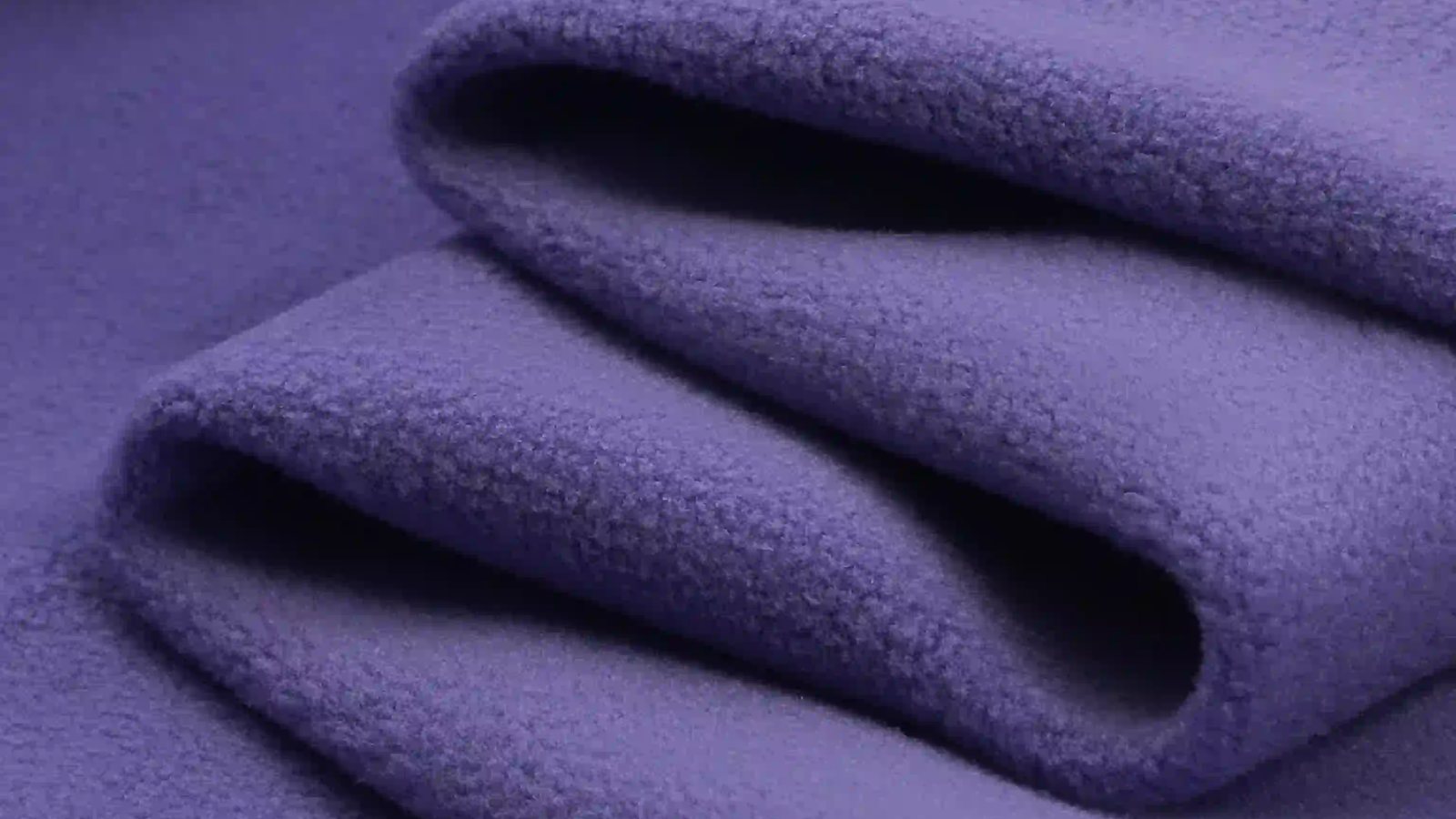
Two fleece fabrics with the same GSM can feel different. This happens because fleece performance depends on more than weight.
Buyers should also check:
| Factor | Why It Matters |
|---|---|
| Composition | Polyester, recycled polyester, cotton blend or spandex blend changes handfeel and recovery |
| Knitting density | A dense fabric can feel more stable even at moderate GSM |
| Brushing | Brushing changes warmth, softness and surface appearance |
| Pile height | Higher pile can feel warmer and softer, even if GSM is similar |
| Anti-pill finish | Important for hoodies, loungewear and repeated washing |
| Width | Affects cutting consumption and fabric yield |
| Shrinkage | Critical for garment sizing after washing |
| GSM tolerance | Bulk rolls may vary if tolerance is not agreed clearly |
A good fleece inquiry should not say only “Need 280gsm fleece.” It should also include garment type, composition, finish, color, quantity and testing requirements.
Fleece GSM Comparison
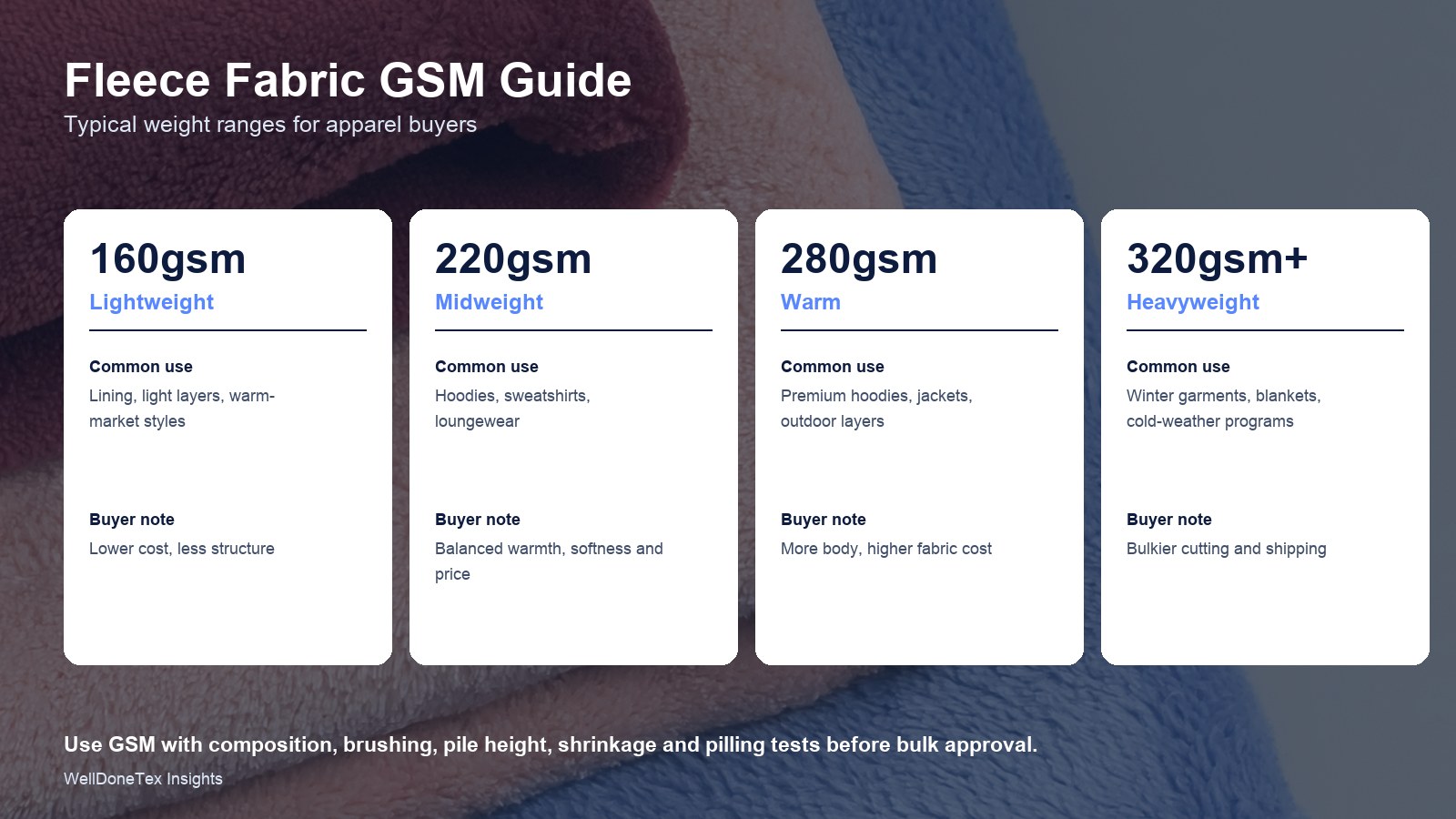
| GSM Range | Common Use | Buyer Notes |
|---|---|---|
| 150-180gsm | Lightweight lining, light layers, warm-market styles | Lower cost and lighter shipping, but less warmth and structure |
| 200-240gsm | Hoodies, sweatshirts, loungewear | Balanced weight for many everyday apparel programs |
| 260-300gsm | Premium hoodies, jackets, outdoor layers | Warmer and more structured, but higher fabric cost |
| 320gsm+ | Winter garments, blankets, cold-weather programs | Strong warmth perception, but bulkier in cutting, sewing and packing |
These ranges are practical references, not fixed rules. The right GSM depends on the garment, market, season, target price and buyer quality standard.
160gsm Fleece: Lightweight and Cost Efficient
160gsm fleece is usually used when buyers need a lighter fabric. It can work for linings, light jackets, promotional garments, kidswear, warm-market apparel or layering pieces where heavy warmth is not required.
Advantages:
- Lower fabric cost
- Lighter garment weight
- Easier packing and shipping
- Suitable for mild weather or indoor use
- Useful for budget-sensitive programs
Trade-offs:
- Less warmth
- Less body and structure
- May feel too thin for premium hoodies
- Pilling and shrinkage still need testing
A 160gsm fleece can be a good choice when price and lightness matter more than heavy warmth. But buyers should check whether the garment still feels substantial enough after sewing.
220gsm Fleece: A Balanced Weight for Hoodies
220gsm fleece is often a practical middle range for hoodies, sweatshirts and loungewear. It gives more body than lightweight fleece while keeping cost, shipping weight and sewing performance under control.
It is commonly considered when buyers want:
- Everyday hoodies
- Casual sweatshirts
- Tracksuit tops
- Loungewear
- Mid-market fleece apparel
Advantages:
- Balanced warmth and cost
- Comfortable handfeel
- Easier to sew than heavy fleece
- Suitable for many climates
- Good starting point for sampling
Trade-offs:
- May not be warm enough for winter outerwear
- Needs good brushing to feel soft
- GSM tolerance should be controlled in bulk
For many buyers, 220gsm is a sensible first sample weight. If the garment needs more warmth or structure, the buyer can move toward 260gsm or 280gsm after sample review.
280gsm Fleece: Warmer and More Structured
280gsm fleece is commonly used for warmer hoodies, jackets and outdoor layering. It gives a stronger fabric body and a more substantial handfeel.
This GSM range is useful when the garment needs:
- Better warmth
- More structure
- A premium handfeel
- Stronger winter positioning
- Better visual weight on the hanger
Advantages:
- Warmer than midweight fleece
- Better body for hoodies and jackets
- Stronger premium feel
- Useful for colder markets
Trade-offs:
- Higher fabric cost
- Heavier shipping weight
- More packing volume
- Sewing and cutting should be checked carefully
Buyers should not choose 280gsm only because it sounds premium. The final garment must still match the target retail price, sewing line capability and packing plan.
320gsm+ Fleece: Heavyweight and Winter Focused
320gsm and above is usually chosen for heavyweight fleece programs. It can be suitable for winter hoodies, blankets, thermal layers, cold-weather jackets or garments where warmth is a key selling point.
Advantages:
- Strong warmth perception
- Heavy, premium handfeel
- Good for cold-weather programs
- Suitable for blankets and winter items
Trade-offs:
- Higher cost per meter
- Higher roll weight
- More storage and shipping volume
- More difficult cutting and sewing
- May be too warm or bulky for some markets
For heavyweight fleece, buyers should ask for physical samples before confirming bulk. Photos cannot show real thickness, drape or sewing behavior.
How GSM Affects Cost, Cutting and Shipping
Higher GSM usually means more fiber is used per square meter. This often increases fabric cost. But cost is not the only issue.
GSM also affects:
| Area | Buyer Impact |
|---|---|
| Fabric price | Heavier fabric usually costs more |
| Cutting | Thick fleece may need more careful spreading |
| Sewing | Heavy fleece can affect needle choice and seam bulk |
| Packing | Higher GSM increases carton volume |
| Freight | Heavier and bulkier goods may raise shipping cost |
| Garment fit | Heavy fabric can change drape and silhouette |
| Sampling | Buyers may need to test several GSM options |
This is why a lower GSM is not always worse, and a higher GSM is not always better. The best choice is the weight that fits the garment purpose and commercial target.
Testing and Tolerance Buyers Should Confirm
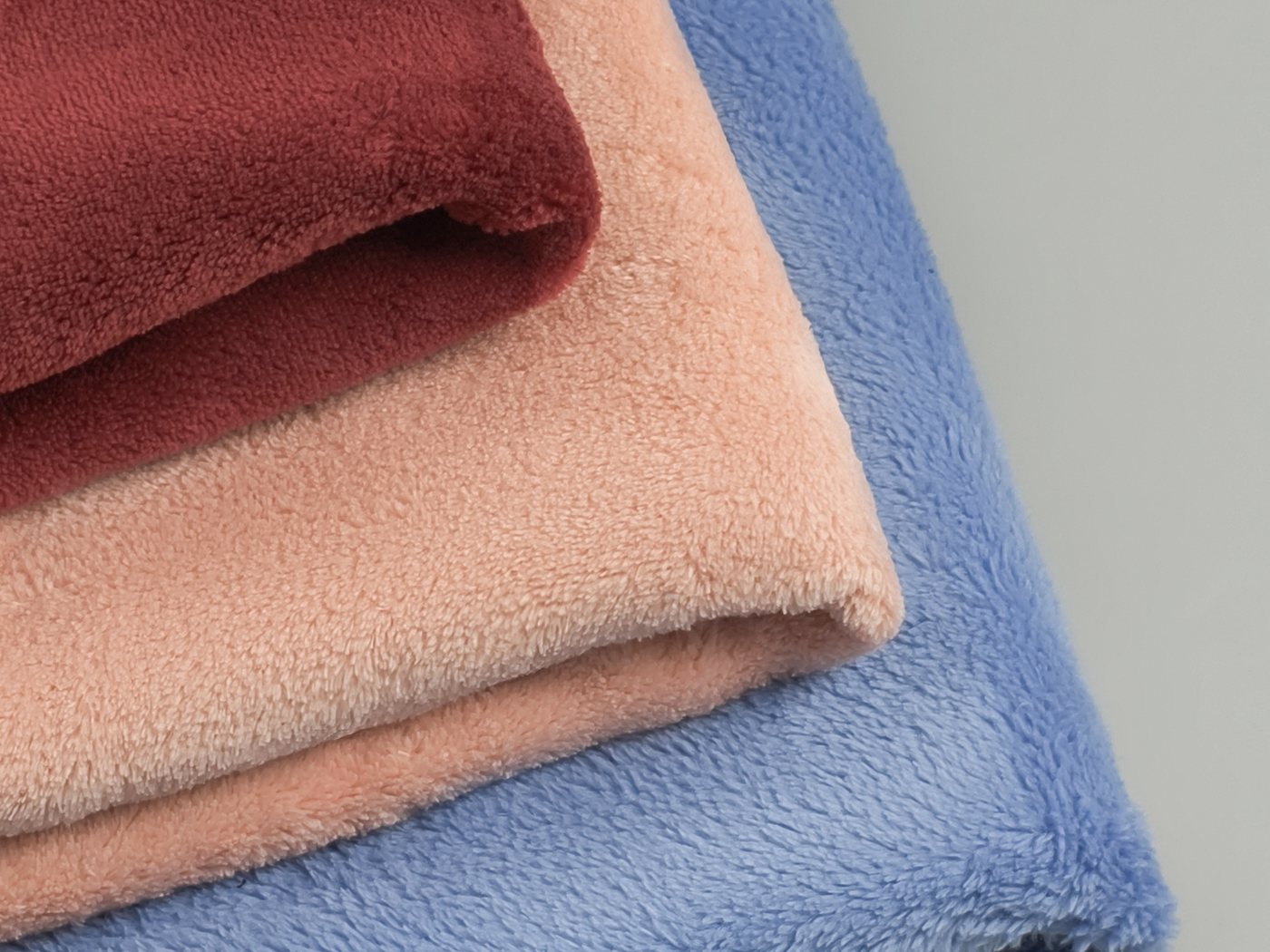
Before bulk production, buyers should confirm testing and acceptable tolerance.
Important checkpoints include:
- GSM tolerance
- Width tolerance
- Shrinkage after washing
- Pilling resistance
- Colorfastness to washing
- Colorfastness to rubbing
- Shade consistency
- Brushing consistency
- Handfeel compared with approved sample
- Roll-to-roll variation
For GSM tolerance, buyers should discuss the acceptable range with the supplier before production. If the approved sample is 280gsm, the buyer should not assume every bulk roll will be exactly 280gsm. A clear tolerance avoids disputes later.
For apparel programs, shrinkage and pilling are especially important. A fleece that feels good at sample stage can still create problems if it shrinks too much or pills after washing.
How to Specify GSM in an Inquiry
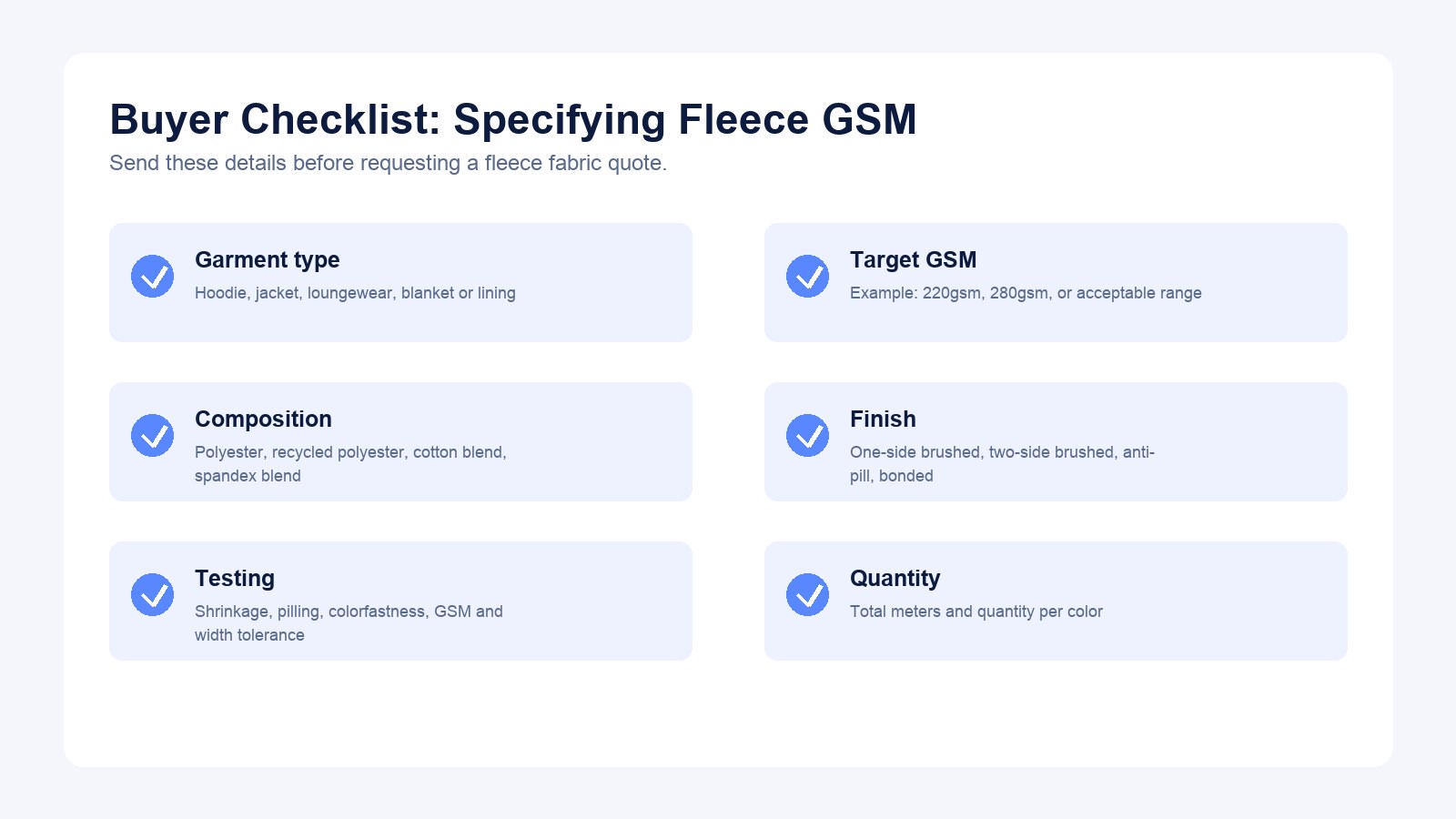
A useful fleece inquiry should include more than one number. Buyers can send the following details:
| Inquiry Detail | Example |
|---|---|
| Garment type | Hoodie, jacket, loungewear, blanket, lining |
| Target GSM | 220gsm, 280gsm, or acceptable range |
| Composition | 100% polyester, recycled polyester, cotton/poly blend |
| Finish | One-side brushed, two-side brushed, anti-pill, bonded |
| Width | Required usable width |
| Color | Pantone, lab dip, stock color or sample matching |
| Quantity | Total quantity and quantity per color |
| Testing | Shrinkage, pilling, colorfastness, GSM, width |
| Certification | OEKO-TEX, GRS or buyer-specific requirement |
| Reference | Tech pack, sample, swatch or previous order spec |
A clear inquiry helps the supplier recommend the right GSM faster. It also makes quotations easier to compare.
Practical GSM Recommendations
For buyer planning, these are useful starting points:
| Garment | Suggested Starting Range |
|---|---|
| Lightweight lining | 150-180gsm |
| Promotional fleece | 160-220gsm |
| Standard hoodie | 220-280gsm |
| Premium hoodie | 260-320gsm |
| Fleece jacket | 260-320gsm |
| Winter layer | 280-320gsm+ |
| Blanket | 280gsm+ depending on pile and softness |
These are not fixed rules. A buyer may choose lighter fleece for price-sensitive orders or heavier fleece for premium positioning. The final decision should come after sample review.
Final Advice for Buyers
Choosing fleece GSM is a sourcing decision, not just a technical number. A good GSM choice balances warmth, handfeel, cost, sewing performance, testing requirements and delivery market.
If you are not sure where to start, choose the garment first. Then decide whether the product needs to feel lightweight, balanced, warm or heavyweight. After that, request samples in the most relevant GSM range and compare them by handfeel, thickness, shrinkage and pilling performance.
WellDoneTex supplies fleece and knit fabrics for apparel buyers, sourcing teams and garment manufacturers. Send your target garment type, GSM range, handfeel requirement or reference sample through the contact page, and the team can recommend suitable fleece fabric options, MOQ and sample direction for your program.
For a broader sourcing process, read our guide on how to source fleece fabric from China. Buyers can also review WellDoneTex’s Polar Fleece product page and Thermal Series for related fleece fabric options.