
Yes, some velvet fabric can be dyed—but “velvet” is not enough information to choose a dye or predict the result. Before recoloring, identify the fibre in the pile and ground, confirm the construction and finish, review the existing colour and previous treatments, and assess every component if the velvet is already made into a garment or furnishing. A care label that permits washing does not automatically permit redyeing. [1][2][3]
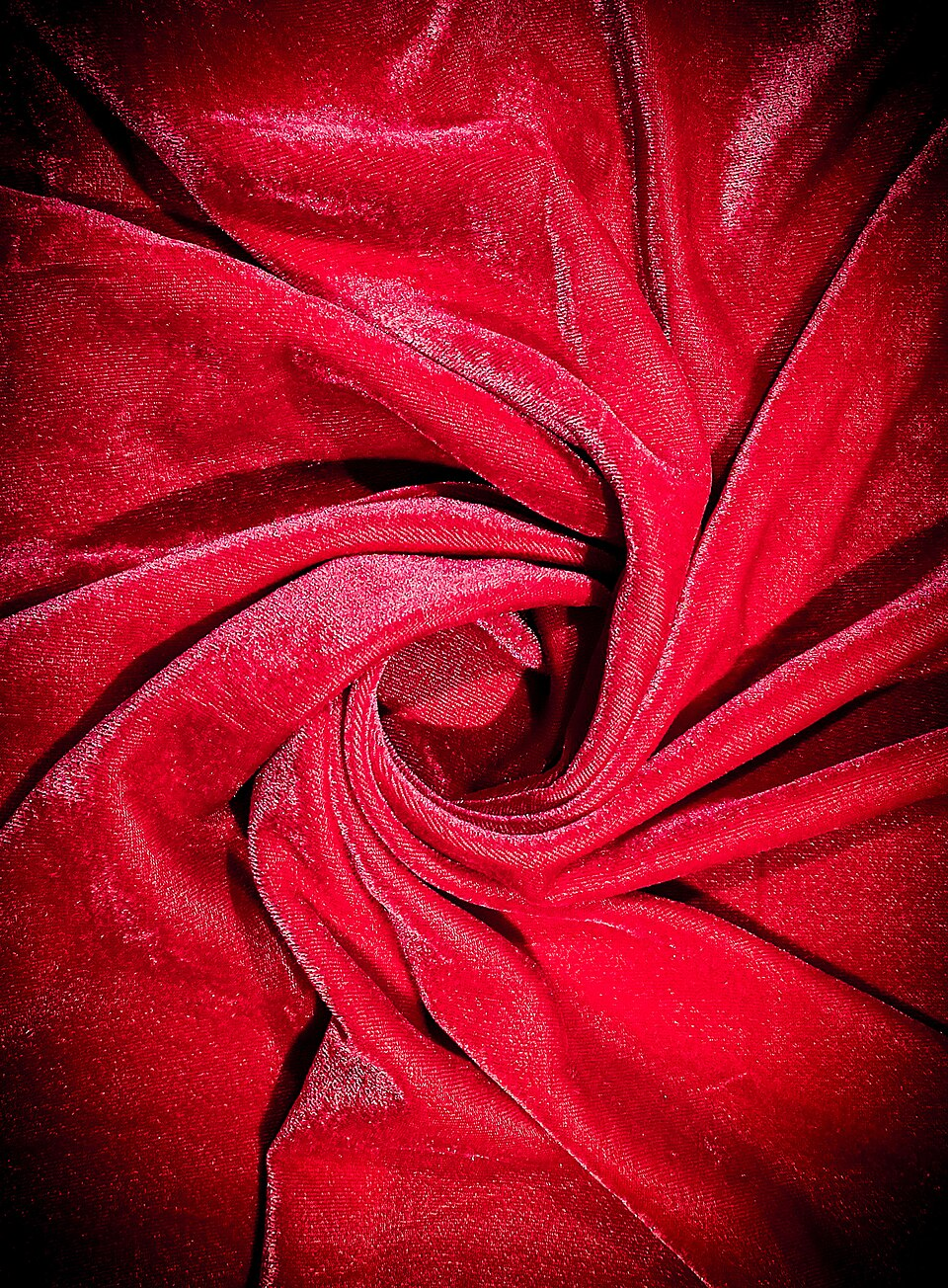
The short answer: dyeability depends on the exact velvet
Velvet describes a pile construction and surface, not one universal fibre recipe. Historical silk velvet, for example, uses a pile warp that may be cut or left as loops; modern fabrics sold as velvet can use different fibres, bases, stretch systems, backings and finishes. Those differences influence which colouration routes are relevant and how the surface may look after wet processing. [1][3]
This is why two fabrics that both look like velvet can respond differently. Textile dye classes are selected in relation to the substrate and application; a dye system appropriate to one fibre class is not automatically appropriate to another. Without verified fibre information, a confident “use this dye” answer is guesswork. [2]
Use the following rule before any experiment:
Identify first, test second, recolor last. Stop if the material or whole-item construction remains unknown.
A five-part pre-dye check
| Check | What you need to know | Why it changes the decision | Stop or escalate when… |
|---|---|---|---|
| 1. Fibre | Fibre content of the pile and the ground/base, including blend percentages | Dye classes and application routes differ by fibre class | The label is missing, vague, contradictory or covers only part of the item |
| 2. Construction | Woven or knitted base, stretch elements, pile direction and density, backing or lamination | Wet handling and colour appearance can change across pile and structural layers | There is a bonded layer, unknown backing or no sacrificial test area |
| 3. Finish | Coating, stain resistance, flame-retardant treatment, softener, print, embossing or other finish | A finish may change wetting, colour uptake or appearance | The finish cannot be identified or its processing limits are unavailable |
| 4. Colour history | Original shade, print, previous dyeing, fading, stains and repairs | Recoloring adds to an existing colour system; it does not reset the fabric to a blank state | You need a lighter colour, an exact match, or even coverage over unknown stains without testing |
| 5. Whole item | Lining, sewing thread, interlining, elastic, trim, closures, adhesives and care instructions | Components may react or colour differently from the face fabric | The item is structured, valuable, sentimental, dry-clean-only, or contains unknown components |
These are screening questions, not a recipe. The first two checks follow the basic industry principle that dye selection depends on the identified substrate. The remaining checks prevent a fabric-only assumption from being applied to a finished product whose construction and care limits may be different. [2][5]
1. Identify the fibre—not just the fabric name
Ask for a fibre-content declaration, specification sheet or supplier record. For piece goods, confirm whether the declared composition describes the whole fabric or only the face. For a finished garment, compare the main-shell label with any separate lining, filling or trim information. If the pile and ground composition are not documented, do not infer them from touch, lustre or a burn test performed on the intact item. [2]
Blends require particular care because “mostly” one fibre does not make the other fibre disappear. A professional colouration plan may need to account for more than one fibre class and for different responses within the same fabric. This is a reason to request a controlled sample assessment, not a reason to combine household products or improvise a multi-step recipe. [2]
2. Check the base, pile and backing
The pile is responsible for much of velvet’s directional appearance. The Metropolitan Museum of Art’s account of Renaissance velvet explains how raised pile and cut or uncut loops create visual effects. Separately, the Smithsonian Museum Conservation Institute catalogue provides an abstract of Norman Oehlke’s article ‘Velvet’ in an International Fabricare Institute bulletin; that abstract notes that pile length, density and construction affect response during use and cleaning. It is a catalogued literature abstract, not a report of a Smithsonian experiment. These sources do not imply that every modern velvet has the same construction, but they show why surface appearance alone is an incomplete specification. [1][3]
Inspect the fabric in both pile directions and from the reverse. Record whether the base is woven or knitted, whether it stretches, and whether a backing, coating or lamination is present. If the reverse is inaccessible—as with upholstery, a lined garment or a bonded product—treat the construction as incomplete information. [3]
3. Confirm finishes and previous treatments
A finish can be invisible. Stain-resistant, flame-retardant, water-repellent, softening, embossed, printed or coated treatments may affect wetting, colour response, hand feel or surface appearance. The safe question is not “Can velvet be dyed?” but “Can this documented substrate and finish system be recolored under a validated process?” [2][3]
Previous colour also matters. Rit’s manufacturer guidance explains that an overdye colour can mix with colours already present in a garment, print or logo, so the starting shade can affect the result. This supports only the colour-over-colour point; it does not establish compatibility with a particular velvet. A darker target may be more plausible than a lighter or exact target, but that is not a guarantee. Do not promise colour removal or a matched result without a representative test. [4][8]
4. Treat a finished item as a system
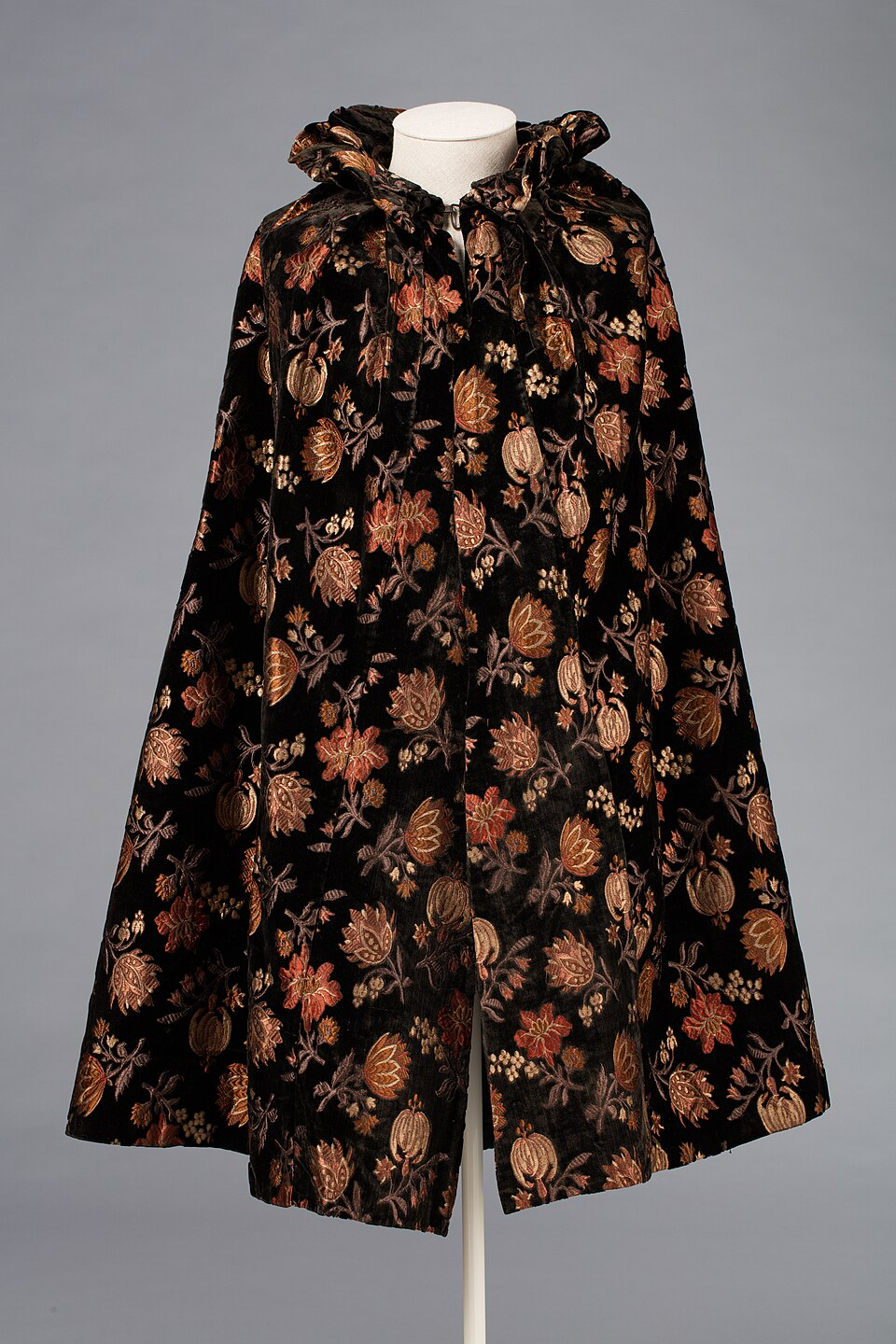
A garment, curtain, cushion cover or upholstered panel is not just its visible velvet. Thread, lining, interlining, zippers, buttons, elastic, hooks, padding, adhesives and backings can each have different material and process limits. A treatment that appears acceptable on a detached fabric swatch may still distort, stain or create mismatched components in the finished item. The FTC’s care-labelling guidance focuses on procedures that are safe for the whole product, which is the right boundary for this decision. [5]
Before testing, photograph the front, reverse, seams and trim; copy the complete care label; and list any repairs or alterations. If the item cannot be opened without damage, or if its structure prevents a representative hidden test, use a textile-care or dyeing professional rather than treating the first attempt as the test. [5]
Does a washable care label mean velvet can be dyed?
No. A care label addresses routine care procedures supported for the finished product. Recoloring deliberately introduces a colouration process that may use different chemistry, time, heat and handling from normal washing. “Machine wash,” “hand wash” or a water-based care instruction therefore does not authorize redyeing. [5]
The label still matters because it can identify clear stop conditions. “Do not bleach” is a warning against that care procedure; “dry clean only” means a home wet-recoloring attempt is outside the labelled care route. But the absence of a prohibition is not proof of recoloring compatibility. Treat the label as one input, not a dye specification. [5]
Can you bleach velvet before recoloring?
Bleaching and dyeing are separate decisions. Bleach is not a neutral “preparation step,” and there is no single bleach rule for every velvet. The FTC requires care instructions and warnings to have a reasonable basis and recognizes that bleach directions depend on which bleaching procedures would harm the whole product. That is a product-specific boundary, not permission to choose a bleach by fabric name. [5]
If the intended new colour is lighter than the existing shade, stop and seek a professional assessment. The evaluator needs the fibre composition, finish, construction, existing colour system and whole-item components before deciding whether colour removal is appropriate. This article intentionally provides no bleach concentration, pH, temperature or exposure-time recipe because those variables cannot be selected safely from “velvet” alone. [2][5]
Can you dye velour fabric the same way?
Not by name. Velvet and velour can both present a soft pile surface, but that similarity does not establish the same fibre, base construction, finish or dye route. Identify the velour’s exact composition and structure independently before selecting any process. See our velour vs. velvet buyer guide for the specification differences to request; do not transfer a method from one material simply because both have pile. [2][3][6]
What a useful swatch or lab-dip assessment can tell you
For new production, a lab dip is a controlled small-scale colour sample made against a target using a specified substrate and process. It can help compare shade direction and establish a documented starting point before bulk production. CottonWorks describes lab dips as part of a colour-development and approval workflow rather than as a substitute for production control. [7]
A lab dip does not prove that an existing garment can be safely recolored. It also does not guarantee that a mill-scale run will reproduce every aspect of a small sample. Fabric lot, preparation, machinery, process control and finishing still need to be managed. For an existing item, a professional hidden-area or sacrificial-swatch test is a separate evaluation and should reproduce the actual material layers as closely as possible. [7]
Ask the evaluator to record:
- the tested material and where it came from;
- verified fibre composition and construction;
- existing colour and finish information;
- whether the sample represents the pile, ground, backing and whole item;
- the target colour and acceptable tolerance;
- visual results in both pile directions and under agreed lighting;
- changes in handle, stretch, dimensions, pile appearance and component matching;
- the conditions tested and the limits of what the result proves.
This record turns “it seemed to work” into evidence tied to one material and one set of conditions. It should still be described as a test result, not a universal instruction for other velvet. [7]
When to stop instead of experimenting
Do not attempt home recoloring when any of the following applies:
- fibre content, pile/base composition or finish is unknown;
- the item is labelled dry-clean-only or carries a relevant “do not” warning;
- there is a bonded backing, coating, interlining, padding or adhesive with no process data;
- the piece is valuable, sentimental, historic, structured or difficult to replace;
- the target requires colour removal, a substantially lighter shade or a precise match;
- stains, fading, repairs or previous treatments are uneven or undocumented;
- multiple materials must match but cannot be tested together;
- no representative sacrificial swatch or hidden test area exists;
- a failed test would make the item unusable.
Stopping is not the same as concluding that dyeing is impossible. It means the available evidence is insufficient for a responsible process choice. A textile dyer, restoration cleaner or conservator can define the next test—or advise that the risk remains too high. [2][3][5]
Buyer checklist for recolorable velvet production
If recoloring is a planned product requirement rather than a rescue job, specify it before bulk purchase. Request:
- fibre percentages for pile and ground/base;
- woven or knitted construction and stretch content;
- pile height/density information and pile direction;
- backing, lamination, coating and finish declarations;
- greige/preparation and existing colouration history where relevant;
- the intended dyeing stage—fibre, yarn, piece, garment or later recoloring;
- target shade and lighting/approval method;
- representative lab dips or strike-offs on the production substrate;
- agreed tests for shade, dimensions, handle, pile appearance and relevant fastness;
- bulk lot controls and retained approval samples.
This specification-first approach is more reliable than purchasing a fabric labelled only “velvet” and trying to design the process afterward. Dyeing fundamentals begin with the substrate, and lab-dip approval is meaningful only when the sample and conditions are identified. [2][7]
Frequently asked questions
Can you dye velvet fabric at home?
Sometimes, but only after the exact fibre, construction, finish, colour history and whole-item components are known and a representative test supports the attempt. If any of those remain unknown—or the item is valuable, structured or labelled outside a wet-care route—stop and use a professional. A washable label alone is not recoloring permission. [2][5]
Which dye should be used for velvet?
There is no dye selected solely for “velvet.” Dye classes and application methods are related to fibre class and the intended substrate. Confirm the pile and ground composition, blend percentages, finish and construction, then have the method validated on the actual material. [2]
Can you dye velour fabric?
Some velour may be dyeable, but the velvet answer cannot be copied across by name. Verify the velour’s own fibre, base, stretch system, backing, finish and whole-item components first. [2][3][6]
Can you bleach velvet?
There is no universal safe answer. Bleach suitability depends on the complete product and the specific bleaching procedure; a “do not bleach” instruction is a stop signal, while no warning still does not prove that colour removal is safe. Seek product-specific evidence before attempting to lighten velvet. [5]
Final decision
Some velvet can be recolored, but the fabric name is only the beginning of the assessment. A defensible decision connects the exact fibre, pile and base, finish, colour history and whole-item construction to a representative test. If that chain is incomplete, pause. Routine care permission is not recoloring permission, and a successful small sample is evidence for that sample—not a guarantee for an entire garment or production run.
References
- The Metropolitan Museum of Art, Renaissance Velvet Textiles — historical woven velvet construction and pile effects; not a description of every modern velvet.
- Cotton Incorporated, Textile Dyeing — documents fibre-specific dye classes and the need to consider each fibre in a blend; not a home-dye recipe or velvet-specific process.
- Smithsonian Museum Conservation Institute catalogue, ‘Velvet’ literature record — abstract of Norman Oehlke’s article in the International Fabricare Institute Bulletin Supplement to Fabricare News; not a Smithsonian experiment.
- CottonWorks, Dyeing Basics — general dyeing and substrate context; cotton examples are not generalized to all velvet.
- U.S. Federal Trade Commission, Clothes Captioning: Complying with the Care Labeling Rule — whole-product care boundary and evidence-based instructions/warnings.
- WellDoneTex, Velour vs. Velvet Fabric — current buyer-facing specification differences; not a recoloring recipe.
- CottonWorks, The Lab Dip Process — lab-dip development and approval context; not proof of whole-garment or bulk success.
- Rit Dye, How to Change Color — manufacturer guidance that an overdye colour mixes with colour already present in a garment, print or logo; not velvet-specific compatibility evidence and not used here as a dye formula or colour-removal instruction.


.jpg)