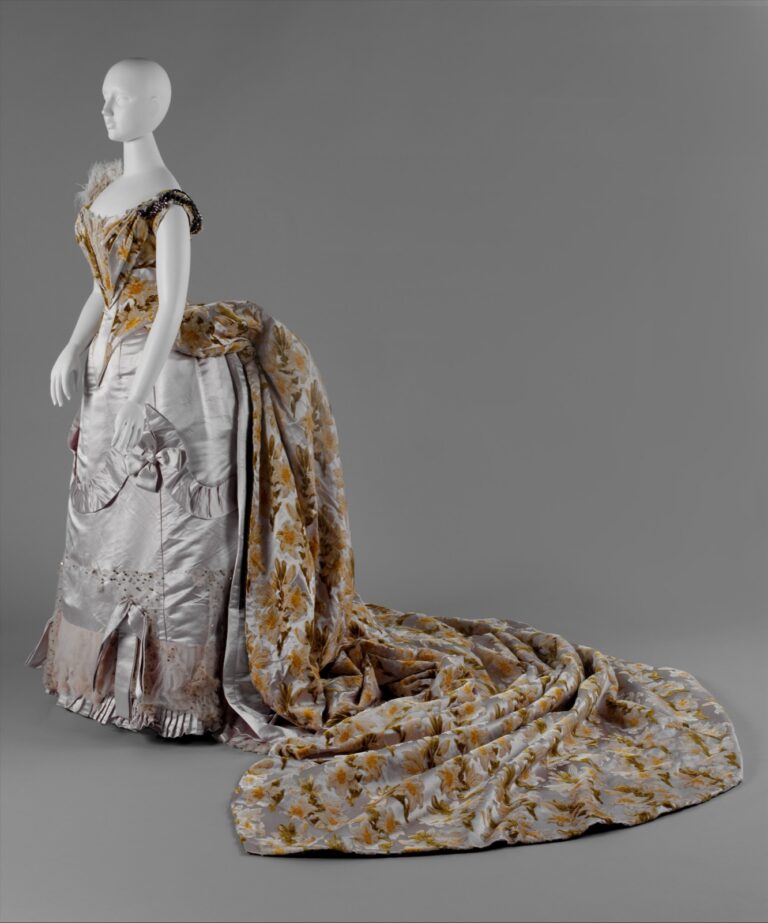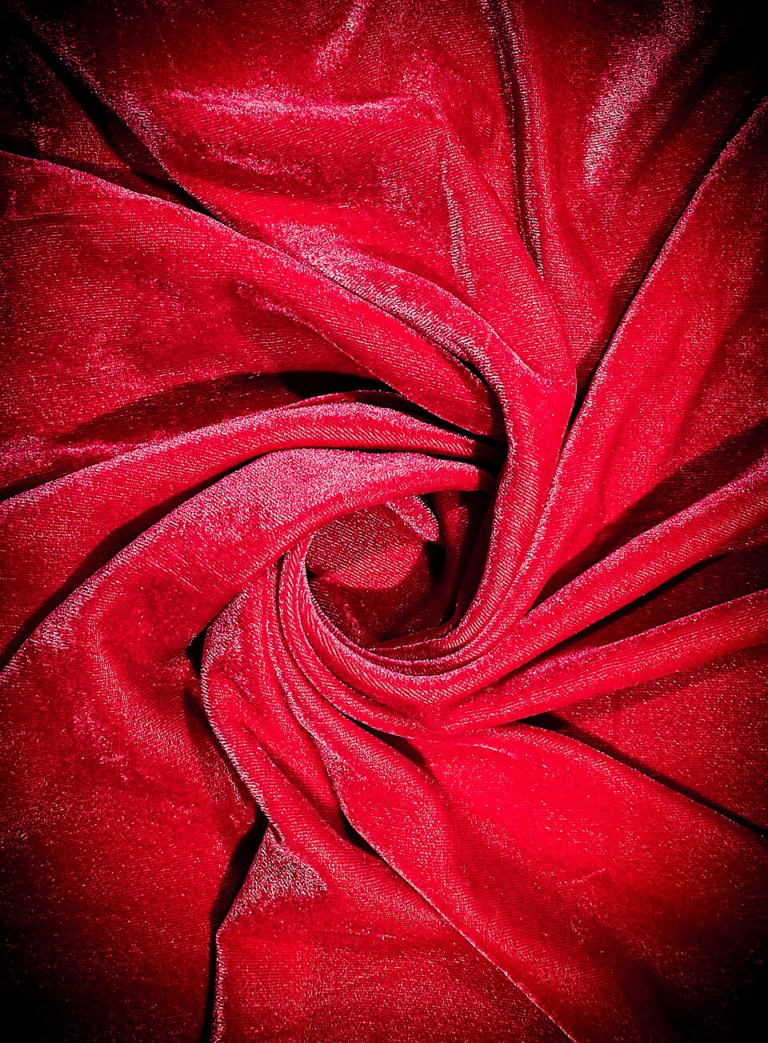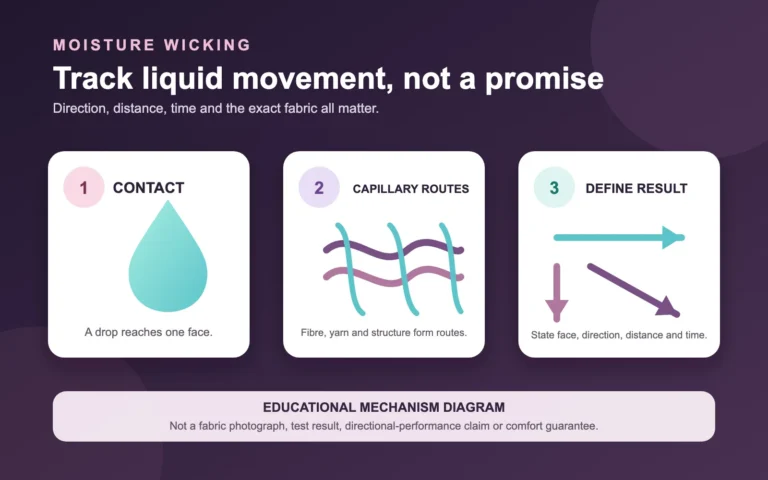
The clearest traditional distinction is structural: velvet is associated with pile formed from supplementary warp yarns, while velveteen is a weft-pile fabric. That distinction is useful, but it does not tell you every modern product’s fibre, weight, drape, abrasion performance or care route. Buyers should verify the actual construction and compare physical samples under the same conditions before choosing. [1][2]
Velvet vs velveteen at a glance
| Question | Velvet | Velveteen | What the buyer should verify |
|---|---|---|---|
| How is the pile formed? | In the traditional woven construction described by The Met, extra pile warps are raised over rods or wires; loops may be cut or left uncut | Museum terminology defines velveteen as a weft-pile weave, often cotton, with solid cut pile | Construction diagram, pile system and whether the commercial name matches the supplied fabric |
| What fibre is it? | Historical examples may be silk, but the name does not establish one modern fibre | Documented examples are cotton, but “often cotton” is not “always cotton” | Full fibre percentages for pile and ground |
| How does the surface look? | May show directional pile and changing light response | A documented all-over cut-pile surface; visual character still varies by pile and finishing | Pile height, density, direction, finish, colour and an actual swatch |
| Which drapes more? | No universal winner | No universal winner | Fabric mass, stiffness, thickness, backing and a same-size drape comparison |
| Which is more durable? | Cannot be ranked by name | Cannot be ranked by name | Same-method abrasion and appearance-change results for the exact samples |
| Which should I choose? | Choose a verified velvet sample when its construction and tested behaviour fit the design | Choose a verified velveteen sample when its weft-pile build and tested behaviour fit the design | End use, silhouette, sewing route, care, performance thresholds and lot approval |
This table is a specification framework, not a promise that every item sold under either name follows one recipe. The Met source describes historical silk velvet, while Te Papa’s terminology says velveteen is “often” cotton. Those scopes must remain visible when applying the definitions to current commercial fabric. [1][2]
What is velvet construction?
In The Metropolitan Museum of Art’s account of Renaissance silk velvet, supplementary pile warps are drawn over rods or wires during weaving to create loops. The loops can be cut to form pile or left uncut. This explains the traditional warp-pile distinction and the changing sheen seen when a piled surface bends and reflects light at different angles. It is a historical construction account, not evidence that all present-day velvet is silk or made on the same machinery. [1]
The term “velvet” is also used broadly in commerce. A product name may not disclose whether the base is woven or knitted, what the pile and ground fibres are, whether elastane is present, or whether the fabric has a coating, backing, embossing or other finish. Treat the name as a category cue and the specification sheet as the actual purchasing evidence. See our velour vs velvet guide for a separate comparison; velour, velvet and velveteen should not be treated as interchangeable labels. [8]
How is velveteen woven?
Te Papa’s collection terminology defines velveteen as a weft-pile weave, often of cotton, with solid cut pile. Its broader weft-pile entry explains that the pile is produced by a supplementary pile weft. This is the essential construction-first answer: the pile system is associated with the weft direction rather than the supplementary pile-warp system described for traditional velvet. [2]
An exact Cooper Hewitt object helps show the term in a documented collection context. Its 1784 English salesman’s sample book lists cotton and linen samples and identifies supplementary weft pile as velveteen among the techniques represented. The accession is 1950-91-1. This object is evidence that the terminology was used for those catalogued samples; it does not prove the fibre or performance of every modern velveteen. [3]
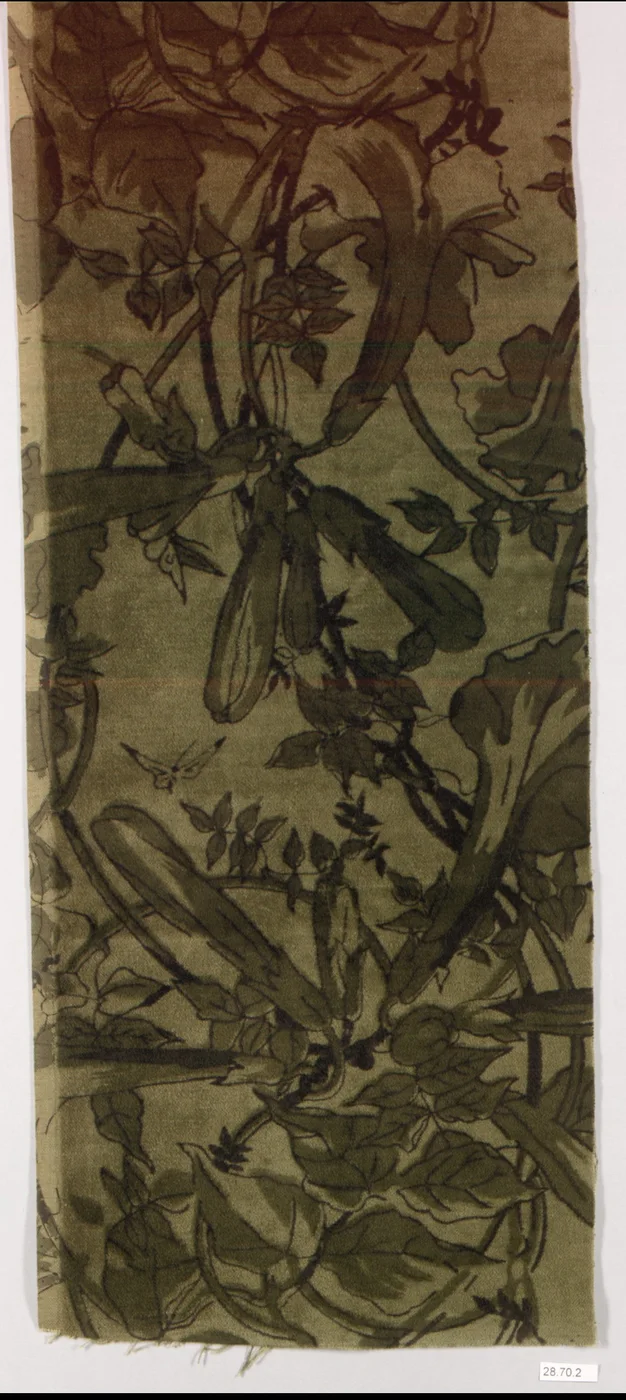
The Met’s object record for the pictured textile identifies it precisely as woven cotton velveteen, block-printed. It therefore provides a truthful material identity for the image and a concrete example of cotton velveteen. It cannot support a claim that all velveteen is cotton, printed, green, lightweight or suitable for the same use. [4]
How does construction affect the surface?
Both fabrics have pile above a ground structure, so both can show direction, shading and surface marking. The difference in pile direction—warp pile in the traditional velvet definition and weft pile in velveteen terminology—explains how they are classified. It does not by itself establish which sample looks richer, feels softer or marks less. Those observations depend on the exact pile yarn, pile height and density, ground, finish and colour. [1][2]
The Museum Conservation Institute page often cited for pile shading needs careful attribution. It is a bibliographic record containing an abstract of Norman Oehlke’s article “Highlights on pile and napped fabrics” in the International Fabricare Institute Bulletin: Fabrics, Fashions. The abstract says altered light reflection creates shading or highlights and that longer pile generally shows more shading than shorter pile materials. It is not a Smithsonian-run comparative experiment on velvet versus velveteen, so it supports only a cautious pile-length and visual-direction boundary. [5]
For sourcing, inspect each sample with and against the pile, under at least two useful lighting directions. Photograph the same area without changing exposure if you need to compare visual marking. Record whether the pile returns after light handling, but do not convert a hand check into a laboratory performance claim.
Which fabric drapes more?
There is no defensible universal answer. Drape is affected by fabric mass, thickness, yarn and fibre properties, ground construction, pile amount, finish, stretch and backing. A silk warp-pile museum velvet, a modern stretch velvet and a cotton velveteen are not controlled versions of one variable; their names alone cannot isolate the cause of a drape difference. [1][2][4]
Compare candidate fabrics in equal-size, equally oriented swatches. Hang them over the same edge or form, keep the pile direction consistent, and review fold depth, recovery and silhouette. For programs where drape is critical, define an agreed test or approval method and retain the signed sample. The comparison must be tied to the submitted fabrics, not to “velvet” or “velveteen” as universal classes.
Use language such as “Sample A formed deeper folds than Sample B in this comparison.” Avoid “velvet always drapes better” or “velveteen is always stiff.” A buyer can make a valid sample decision without turning that result into a permanent category ranking.
Is velveteen more durable than velvet?
Not necessarily. “Durable” can refer to several different failure modes: pile loss, surface change, yarn breakage, seam damage, dimensional change, colour change or coating/backing failure. A fabric name does not specify the test method, endpoint or required level. The exact fibre, yarn, pile, ground, finish and end use all matter.
ISO 12947-2:2016 specifies a Martindale procedure for determining specimen breakdown by inspection at fixed intervals. The standard is not applicable to coated fabrics, including laminated fabrics. When the abrasion behaviour of a coated surface is the target, ISO directs users to the ISO 5470 series; ISO 5470-2:2021 is the Martindale route for coated surfaces. The laboratory or specifier must select the method for the exact surface system under evaluation. Do not transfer an ISO 12947-2 result to a coated or laminated fabric. [6]
For appearance-sensitive pile fabrics, specimen breakdown alone may not answer the buyer’s real concern. Ask whether the test record also documents visible pile change, shading or matting under a stated method. Compare exact results for exact submissions. Do not accept “velveteen is tougher” or “velvet is delicate” as a substitute for a defined requirement and test report.
Care differences also need product evidence
Neither fabric name supplies a complete care instruction. Fibre content, dyes, prints, finishes, backing, lining, thread and trim can change the route for a finished product. The U.S. Federal Trade Commission’s care-labelling guidance requires a reasonable basis for care instructions and warnings and applies them to the whole item. A supplier’s care recommendation should therefore be connected to the exact construction and finished product, not copied from another pile fabric. [7]
Before approval, test appearance after the intended care cycle and review both pile directions. If the item is lined, bonded, printed, structured or trimmed, include those components in the evaluation. “Cotton velveteen” is not automatically machine washable, and “silk velvet” is not the only velvet that may require restricted care.
When should you choose velveteen instead of velvet?
Choose velveteen when the verified sample, not the stereotype, better fits the program. A velveteen candidate may be appropriate when you specifically want a documented weft-pile construction, a particular all-over cut-pile face, a print result like the historical Met example, or a sample that supplies the required body and surface at the target weight. Those are conditional selection reasons, not universal properties of the category. [2][4]
Choose a velvet candidate when its verified warp-pile or other specified construction, pile response, drape and finish fit the intended visual effect. If the commercial velvet is knitted, stretch, backed or blended, write those facts into the specification; do not let the familiar name hide them.
Use this end-use decision table:
| End use or design need | Evidence to request before choosing |
|---|---|
| Fluid dress, skirt or stage drape | Same-size hang comparison, mass, thickness, stretch/recovery, pile direction and finished-garment trial |
| Tailored jacket, structured accessory or panel | Bend and recovery review, seam trial, edge bulk, pressing/finish limits and component compatibility |
| Printed decorative surface | Print method, ground shade, strike-off on the production substrate, pile appearance and colourfastness method |
| Upholstery or frequent-contact surface | Exact abrasion method and endpoint, appearance-change record, seam performance, care route and backing details |
| Children’s or regulated product | Applicable legal and brand requirements, fibre/finish records and product-specific test evidence |
| Colour-critical program | Lot-to-lot shade control, lighting conditions, pile-direction standard and retained approval sample |
A buyer’s sample-comparison checklist
Do not compare one supplier’s velvet and another supplier’s velveteen from product names alone. Ask both suppliers for the same fields:
- exact commercial name and construction description;
- pile system and ground construction;
- fibre percentages for pile and ground where available;
- usable width, mass and thickness;
- pile height, density and direction;
- stretch and recovery in both directions;
- backing, coating, lamination and finish declarations;
- colouration or print method relevant to the order;
- intended care route and whole-item limitations;
- end-use test methods, endpoints and actual reports;
- sewing, pressing and finishing trials;
- approved handfeel, drape and shade samples retained by both parties.
Once these fields are aligned, the names become helpful labels rather than the entire decision. If a value is unknown, mark it unknown and test it; do not fill the gap with a category assumption.
Frequently asked questions
What is the difference between velvet and velveteen?
The traditional construction distinction is pile direction: velvet is associated with supplementary warp pile, while velveteen is a supplementary weft-pile fabric. Historical velvet sources often describe silk, and museum velveteen examples may be cotton, but those examples do not define every modern product’s fibre or performance. [1][2][4]
How is velveteen woven, and how does that affect its surface?
Museum terminology defines velveteen as a weft-pile weave, often cotton, with solid cut pile. That construction identifies how the pile is formed. The visible surface still depends on pile yarn, height, density, ground, finish and colour, so the construction name cannot by itself predict softness, shading or wear. [2][5]
How do velvet and velveteen differ in drape and durability?
They cannot be ranked reliably by name. Compare the exact samples for mass, thickness, stiffness, pile, ground, finish and backing. Use the same drape setup and the same specified abrasion or appearance method; report the result for those samples rather than declaring one category universally superior. [6]
When should a buyer choose velveteen instead of velvet?
Choose velveteen when its documented weft-pile construction and tested sample behaviour meet the required silhouette, surface, printing, sewing, care and performance criteria better than the velvet candidates. Do not choose it solely because it is described as cheaper, tougher or less luxurious; those rankings require comparable product and test evidence.
Final answer
Velvet and velveteen are best separated by construction, then chosen by evidence. Traditional woven velvet uses a supplementary pile warp; velveteen is a supplementary weft-pile fabric, often—but not always—cotton. From there, compare the actual fibre system, mass, ground, pile, finish, backing, drape, care and relevant test results. The construction name narrows the question. The approved sample answers it.
References
- The Metropolitan Museum of Art, Renaissance Velvet Textiles — historical silk velvet and supplementary warp-pile construction; not every modern velvet.
- Museum of New Zealand Te Papa Tongarewa, public Collections Online Velveteen terminology record and weft-pile weave record — supplementary weft pile and the qualified “often cotton” definition. The Getty Art & Architecture Thesaurus record 300227925 independently records the same qualified velveteen terminology.
- Cooper Hewitt, Smithsonian Design Museum, Salesman’s Sample Book, accession 1950-91-1, exact object record mirrored by Google Arts & Culture — catalogued supplementary weft pile (velveteen) examples.
- The Metropolitan Museum of Art, Trumpet-vine textile, object 28.70.2 — exact woven cotton velveteen, block-printed object and Public Domain image.
- Smithsonian Museum Conservation Institute, MOBI record 49942 — bibliographic abstract of Norman Oehlke’s International Fabricare Institute article; not a Smithsonian comparative experiment.
- International Organization for Standardization, ISO 12947-2:2016 — Martindale specimen-breakdown procedure; expressly not applicable to coated fabrics, including laminated fabrics. See ISO 5470-2:2021 for the Martindale route applicable to coated surfaces. These citations define method scope, not a product result.
- U.S. Federal Trade Commission, Clothes Captioning: Complying with the Care Labeling Rule — evidence-based whole-item care instructions and warnings.
- WellDoneTex, Velour vs Velvet Fabric — current buyer guide for the separate velour/velvet decision.