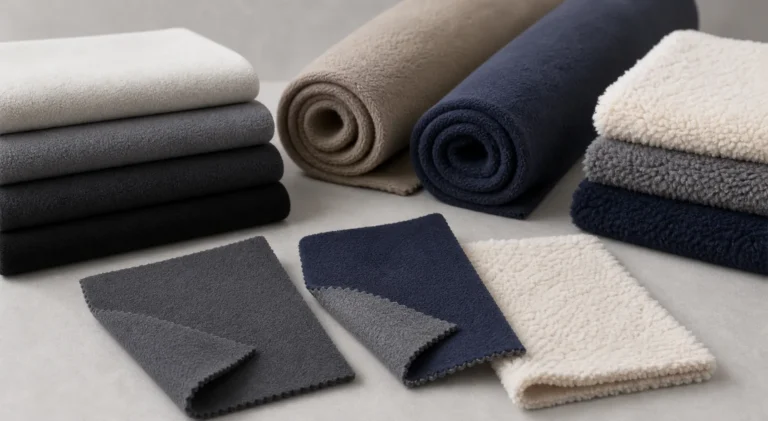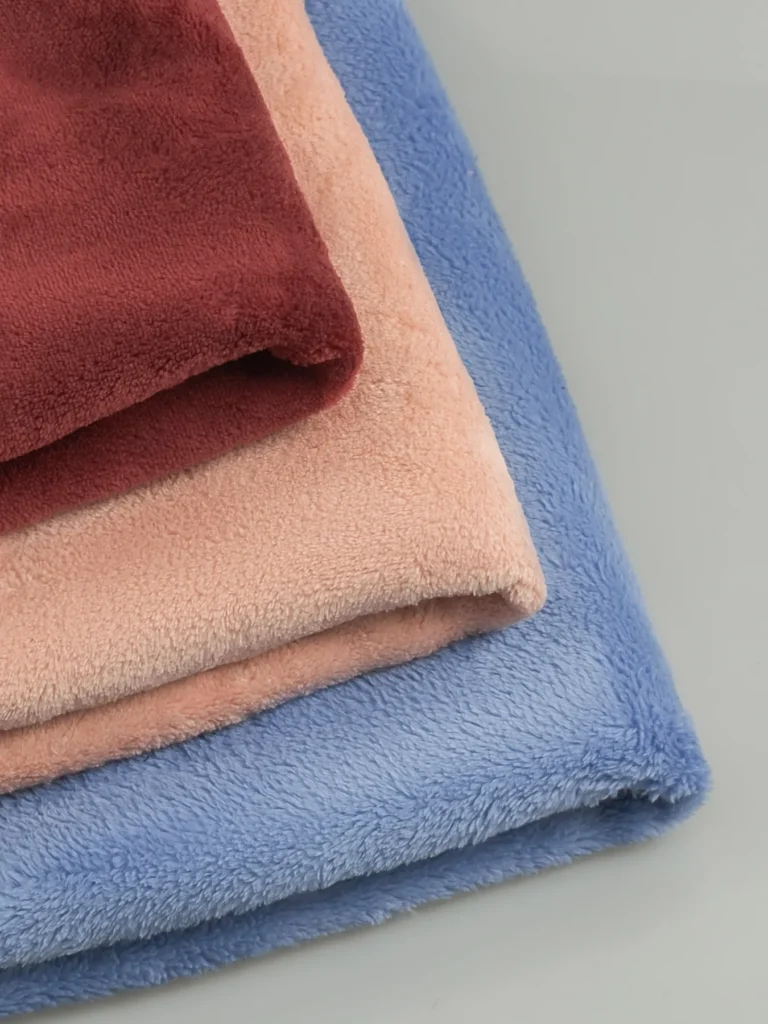
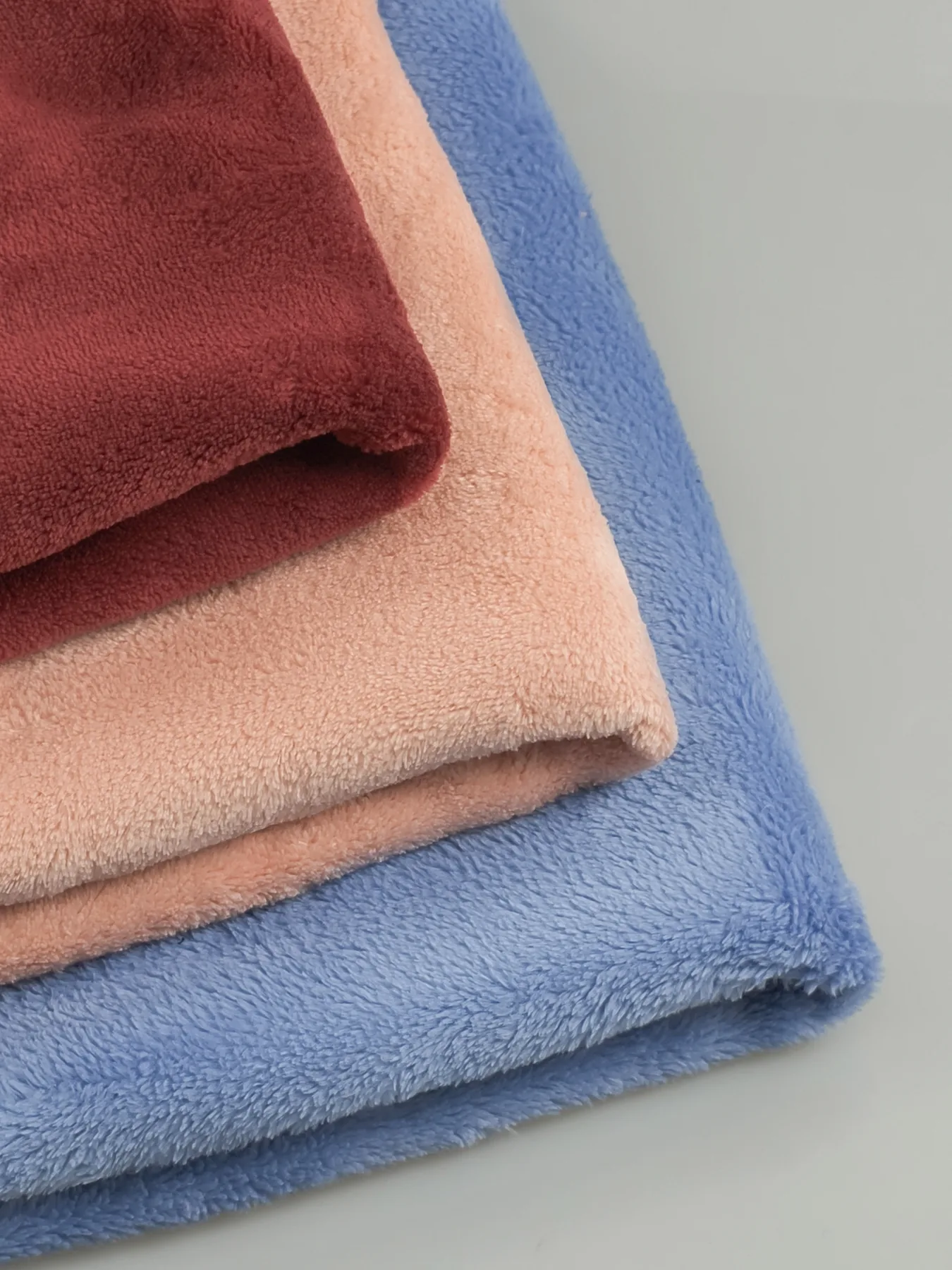
Image note: the featured coral fleece photograph illustrates fabric colors. It does not show available stock, an accepted order or the quantities used in the planning examples.
To plan a custom knit fabric MOQ, check two quantities separately: the total weight that counts toward the order minimum and the weight of each color. Meeting the total alone does not establish that every color allocation is suitable. Confirm which fabric specifications can be included in that total before treating a proposed mix as ready to order.
WellDoneTex supplies made-to-order fabric and does not supply stock fabric. Its usual planning basis is 1,000 kg per order and typically 400 kg per color, subject to confirmation for the specific fabric and color program. This guide shows how buyers can use those figures to prepare a clear inquiry without turning them into an assumed quotation or production approval.
1. Start with the fabric specification and the order scope
Write down the intended fabric article before allocating colors. Include composition, knit construction, GSM, finished width, finish and end use. For a garment program in Bangladesh or another receiving market, also identify which factory will use the material and what quantities its production plan requires.
The fabric specification checklist can help organize those inputs. If the same commercial order includes fleece, jersey and mesh, do not assume their weights can all be combined to satisfy one minimum. Ask which lines can be grouped and which need a separate quantity review. The same question applies when composition, GSM, width or finishing differs.
This is a request for confirmation, not a claim that different articles can never be combined. The useful outcome is a written statement of the scope to which each minimum applies.
2. Check the total and each color separately
For an initial worksheet, give every color its own row. Enter the proposed kilograms, then add the rows to obtain the proposed order total. Check the total against the confirmed order minimum and each row against the confirmed minimum for that color.
Using the usual 1,000 kg total and 400 kg per-color figures only as a planning example:
- Two colors at 400 kg each: 800 kg in total. Both color rows reach 400 kg, but the combined quantity remains below 1,000 kg.
- Two colors at 600 kg and 400 kg: 1,000 kg in total. This clears both numerical checks under the stated assumptions.
- Three colors at 400 kg each: 1,200 kg in total. The per-color quantities drive the total above 1,000 kg.
- Three colors at 600 kg, 300 kg and 300 kg: 1,200 kg in total, but two color rows remain below the assumed 400 kg figure.
These are hypothetical allocations, not accepted WellDoneTex orders, price offers or promises of production availability. Clearing a numerical threshold leaves specification, color development and commercial confirmation to be completed.
3. Understand what the simple minimum formula does
If all colors share the same confirmed minimum and all their quantities count toward the same order scope, an arithmetic lower bound is:
Minimum planned total = the larger of the order minimum and the number of colors multiplied by the per-color minimum.
With the illustrative figures above, four colors require at least 4 × 400 kg = 1,600 kg to clear the color thresholds. That exceeds the 1,000 kg order minimum. For one color, the total-order threshold still matters: 400 kg does not automatically become a qualifying order just because it reaches the color figure.
The formula is a screening tool. It does not determine the best allocation, establish the supplier’s accepted production grouping or calculate a price. If different color or article lines have different confirmed requirements, evaluate those lines separately rather than forcing them into this simplified formula.
4. Allocate quantity from demand, not from an equal split
An equal color split may be convenient on a spreadsheet but unsuitable for the garment plan. Start with the expected requirement for each color and ask the production or cutting team how it was calculated. Keep any allowances explicit rather than adding an unexplained buffer.
Where a low-demand color falls below the confirmed minimum, identify the decision instead of silently increasing it. Options for discussion might include reducing the number of colors, revising the garment color mix or reviewing a different fabric specification. Each option needs commercial and technical confirmation; none should be presented as an automatic MOQ exception.
Buying more kilograms also creates a demand-planning question. Record what happens to the additional material and who approved that quantity. This guide does not prescribe an extra percentage for wastage or promise that excess material can be returned.
5. Keep development, bulk and repeat orders distinct
A sample request is a development step with its own scope. Do not assume a small sample quantity establishes a lower bulk-order minimum. Ask what sample can be supplied, what it represents and what still requires approval before bulk production.
Likewise, ask how a repeat order will be assessed when replenishment is needed. A previous order does not by itself confirm that the supplier holds matching stock or that a smaller follow-up quantity is available. WellDoneTex’s model is made to order, so discuss the specification, quantity and color requirements for the new request.
If you hope to combine a replenishment line with another order, ask whether that combination can be accepted. Do not assume either automatic eligibility or an absolute prohibition. Record the supplier’s answer for the specific program.
6. Separate quantity confirmation from color approval
A color row in a quantity plan needs an identifiable reference, such as a buyer color code and the agreed physical standard where applicable. A color name alone can leave the development request unclear.
Confirm the approval route alongside the quantity plan. The fleece lab dip approval guide explains the distinction between a color sample and bulk shade review. Increasing a color quantity does not establish shade approval, and an approved color sample does not automatically confirm the final order allocation.
If the color mix changes after the inquiry, send a revised allocation with a clear date or version. Ask the supplier to reconfirm the affected quantities and commercial terms. Do not rely on a quote prepared for a different number of colors.
A concise MOQ confirmation sheet
Before requesting a final quotation, prepare these fields for each proposed fabric line:
- Fabric article and specification revision.
- Buyer color code and color-standard reference.
- Required kilograms for that color.
- The confirmed minimum applicable to that line.
- The order group or scope its quantity counts toward.
- Any quantity below a confirmed threshold and the decision needed.
- The total quantity for each confirmed order group.
- Whether the request is development, initial bulk or replenishment.
Then ask for written confirmation of the grouping, accepted quantities and quotation basis. Keep delivery planning and approval milestones as separate questions; this worksheet does not establish a lead time.
Prepare your color allocation inquiry
For a WellDoneTex inquiry, share the fabric specification, total kilograms and kilograms per color together. Use 1,000 kg per order and typically 400 kg per color as the initial planning basis, then request confirmation for the actual construction and color program. There is no stock-fabric offer implied by the examples or illustration.
Send your fabric specification and proposed color quantities for a quote discussion. If an allocation is below a minimum or depends on combining different lines, flag that point so it can be reviewed explicitly.