You can describe a fabric in three ways: what fiber it contains, how the fabric is made, and what finish it has. Cotton is a fiber. Jersey is a knit structure. Brushing is a surface treatment. A fabric can be all three: a cotton jersey with a brushed back.
If you are choosing material for clothing, correct one common mistake first: comparing names from different categories. “Cotton or jersey?” is not an either-or choice. “Cotton jersey or cotton woven poplin for this garment?” is a comparison you can make with two samples.
The three descriptions to look for on a fabric listing
| Description | Common examples | A useful question |
|---|---|---|
| Fiber: what it contains | Cotton, wool, polyester, nylon, viscose or a blend | What are the actual fiber percentages, including any stretch fiber? |
| Construction: how it is made | Woven poplin or twill; knitted jersey, rib or interlock; a bonded nonwoven | How does this structure behave at a seam, across the width or where it must stretch? |
| Finish: what was done to the surface or fabric | Brushed, peached, printed or coated | Is the finish on one side or both? What changes after the intended care cycle? |
Labels such as stretch, soft or water-resistant describe intended behavior, not a fiber or construction. Check the specification or test evidence if one of those properties matters to the garment.
Woven, knitted and nonwoven: what is the difference?
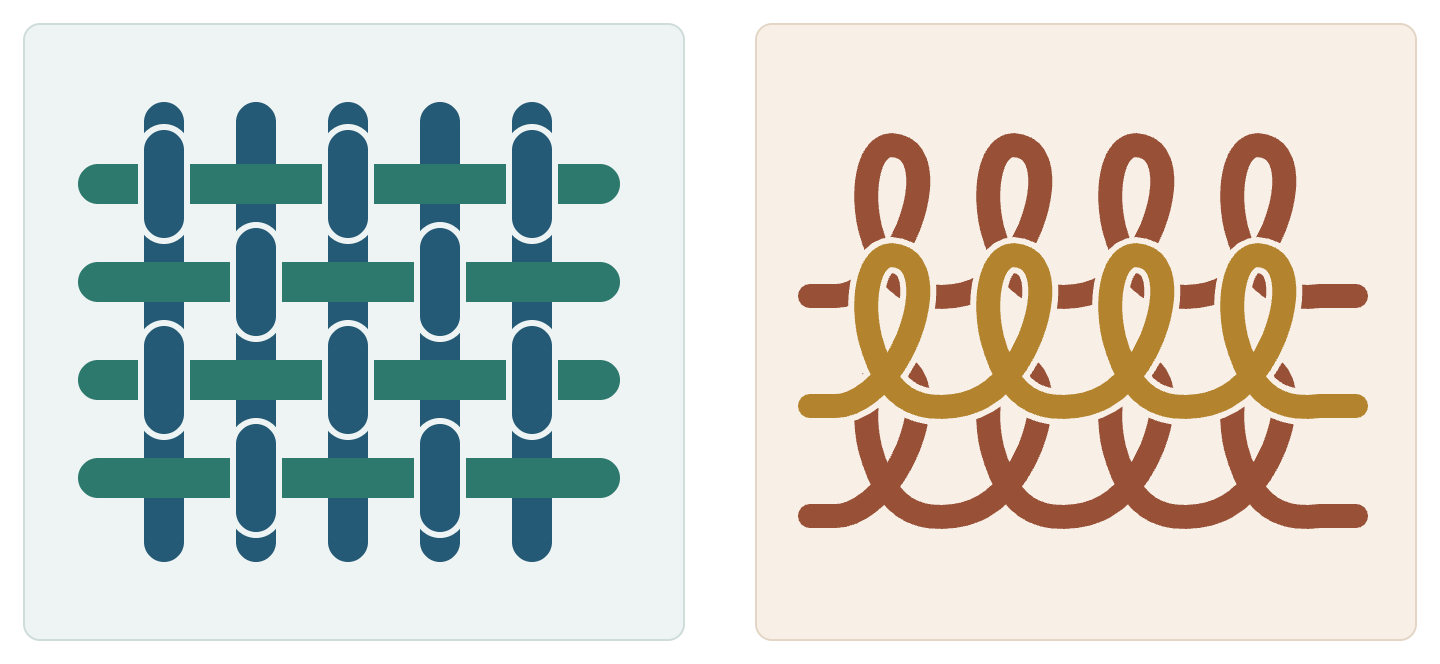
Woven fabrics are built by interlacing yarns. The lengthwise set is the warp, and the crosswise set is the weft. Plain weave and twill differ in how the yarns pass over and under one another. A shirt poplin and trouser twill are both woven, but do not assume they have the same weight, drape or movement. CottonWorks' weaving guide explains the two yarn directions.
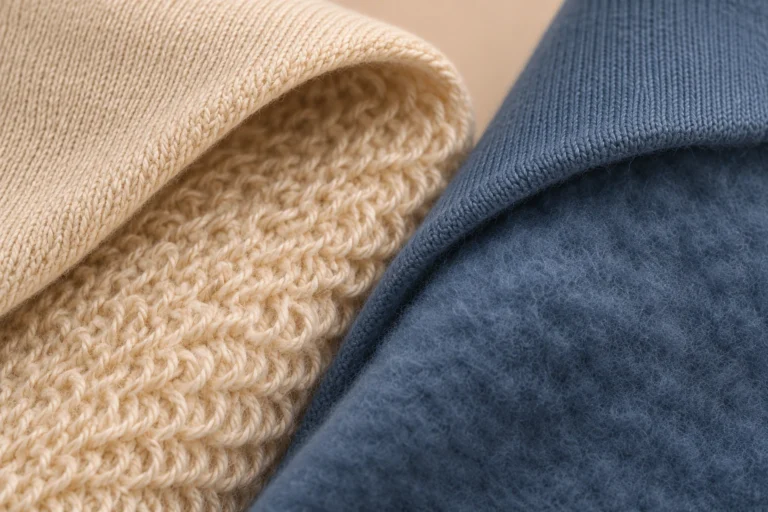
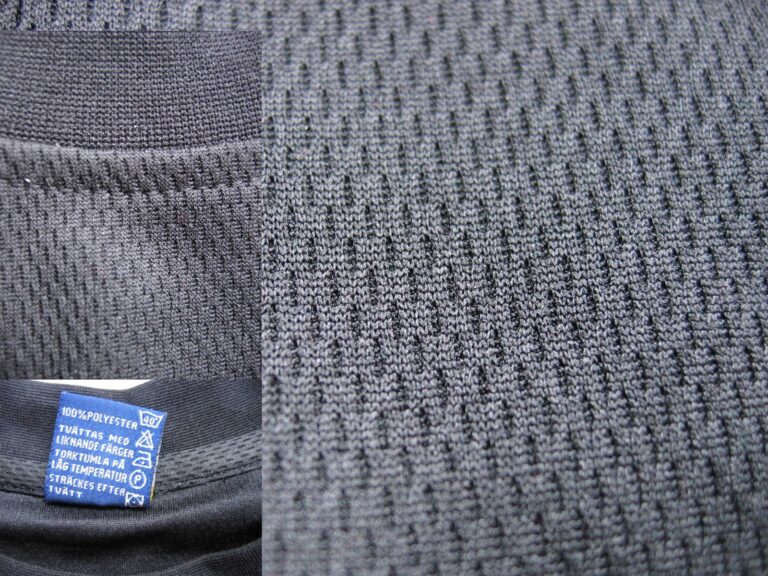
Knitted fabrics are built from yarn loops. Those loops can move without a stretch fiber, but the amount and direction of stretch vary. For a T-shirt, compare how a single jersey and an interlock fall, how their cut edges behave, and how their necklines return to shape. Look at both sides before choosing. CottonWorks' knit guide shows how knitted faces and backs can differ.
Nonwovens are fibrous structures held together by physical or chemical means rather than by weaving or knitting. One clothing example is a nonwoven interfacing: it may sit inside a collar to help it hold its shape while the outer layer is still woven. Not all interfacings are nonwovens, and “nonwoven” does not imply a particular fiber or care method. See EDANA's definition and examples.
Try classifying three example labels
| Example label | What you can tell | What you still need to check |
|---|---|---|
| Cotton jersey T-shirt | Cotton is the fiber name; jersey is the knit construction. | Opacity, stretch and recovery, and whether a blend is actually listed on the full label. |
| Polyester woven lining | Polyester is the fiber name; woven is the construction family. | How it slides against the outer layer, its exact weave, and the assembled garment's care requirements. |
| Brushed-back sweatshirt fleece | The phrase describes the inside surface. | Confirm the base structure and full blend. Compare with loop-back French terry if you need a different inside feel. |
These are reading examples, not approved products or test results. You cannot reliably identify every fiber blend by sight or touch. Use a swatch to observe the construction and feel; use the actual composition label or supplier specification to verify the fiber percentages.
Once you know the fabric type, check the garment's job: how it should hang, move and look after care. The Fabric Buying Guide is the next step for defining sample, measurement and quotation requirements. Use the fabric catalogue for specific materials rather than treating this classification as a list of products for sale.