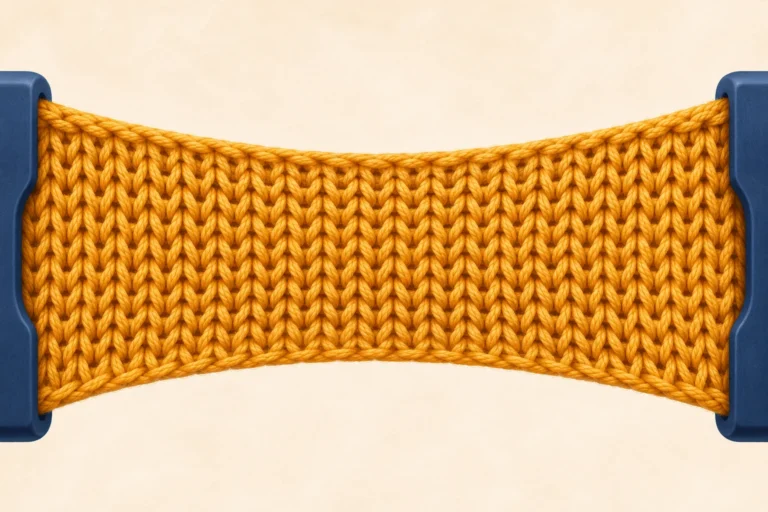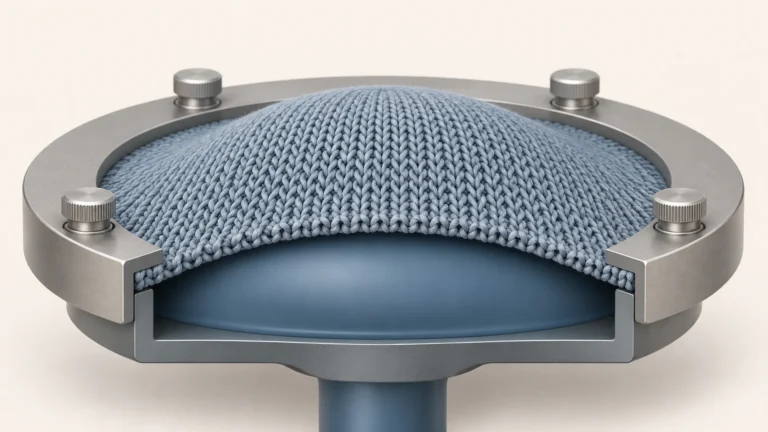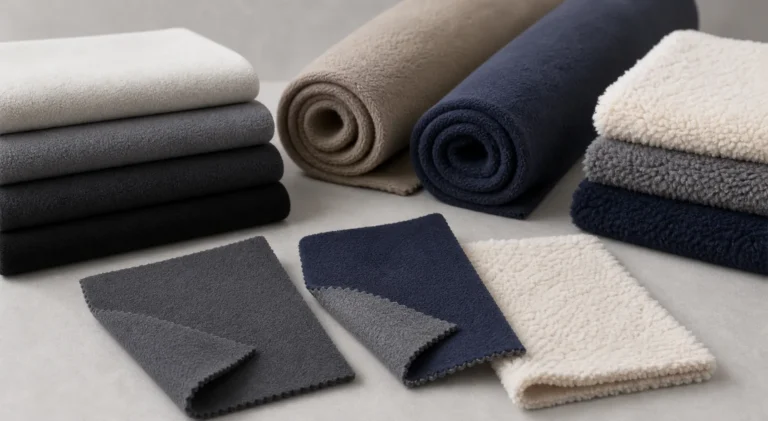

Image note: this conceptual illustration shows fleece under a magnifying lens beside a blank report folder. It is not an actual test specimen, pilling grade or test report.
A useful fleece pilling test report identifies the fabric, test method, exposure, specimen preparation and acceptance requirement behind the result. Before approving bulk fabric, check those details together. A grade on its own does not tell a buyer whether two reports are comparable or whether the tested sample represents the material being ordered.
This guide is a purchasing review checklist, not a laboratory procedure or a claim about WellDoneTex test results. For the meaning and limits of the product description, start with what anti-pill fleece means.
1. Identify the method behind the grade
Ask for the full standard reference and edition. ISO 12945-2:2020 addresses surface pilling, fuzzing and matting using the modified Martindale method. ASTM D3512/D3512M-22 uses a random tumble pilling tester. These are different test methods; “pilling tested” does not identify which one was used.
Record the test exposure using the terminology and units in the chosen method. Ask the laboratory to clarify an abbreviated entry such as “cycles” rather than interpreting it yourself. For a supplier comparison, agree one testing brief before commissioning reports. If existing reports use different methods or exposures, flag that difference instead of ranking suppliers by grade alone.
2. Read the rating and its limits
ASTM D3512/D3512M describes a visual pilling scale from 5, meaning no pilling, to 1, meaning very severe pilling. The rating refers to the tested specimen under the reported conditions. ASTM also notes that actual wear depends on conditions of use and the wearer, so a laboratory result should not become a promise that a garment will never pill.
Keep the appearance properties clearly labelled. ISO 12945-4:2020 covers visual assessment of pilling, fuzzing and matting separately and includes napped fabrics such as fleece within its scope. Ask which properties were assessed rather than treating one unlabelled appearance grade as evidence for all three.
ASTM D3512/D3512M cautions that the method is not recommended for acceptance testing because between-laboratory precision is poor. If the parties use it for acceptance, agree the limitations and a process for investigating differences with the laboratory. Do not release a shipment on an isolated grade alone.
Your technical team should define the required result for the intended product. This guide does not recommend a universal passing grade, exposure or guarantee for fleece.
3. Check specimen identity and preparation
Match the report to the article code, composition, construction, GSM, color and final finish in your purchase specification. Identify which fabric face was assessed and whether the sample was supplied as finished material. Keep development samples and production-lot samples clearly distinguished in your approval records.
If testing after laundering is required, agree the washing and drying preparation before testing. ISO 6330:2021 specifies domestic washing and drying procedures for textile testing and notes that choices such as machine and detergent can affect results. Ask for the selected procedure, number of washes and drying route. “Washed sample” is insufficient for a purchasing comparison.
Ask the laboratory to confirm the applicable conditioning and any departures from the agreed method. The complete licensed standard, not this checklist, governs laboratory execution.
4. Use a report assessment checklist
The following is a suggested buyer record, not a list of mandatory reporting clauses for every standard:
- Identity: supplier article, color, finish, sample reference and production-lot reference where applicable.
- Method: standard and edition, apparatus method and reported exposure.
- Preparation: as-received or pretreated state, washing/drying details where required, and conditioning confirmation.
- Assessment: property being rated, specimen results and any qualifications reported by the laboratory.
- Decision: agreed requirement, decision owner and the reason for acceptance or further clarification.
- Traceability: laboratory, report number, test date and complete report retained with the approved specification.
Do not fill a missing field with an assumption. Request clarification and keep the approval open where the missing detail affects the decision.
5. Resolve differences before bulk approval
Hypothetical documentation example, not test data: one supplier sends an as-received modified Martindale report; another sends a random tumble report after laundering. Even if the reported grades look alike, the buying team has not established a like-for-like comparison. Ask the laboratory which additional evidence is needed under the agreed purchasing requirement.
If the fabric finish or another agreed specification changes after sample approval, ask the responsible technical team whether the existing report still applies. Do not silently transfer an earlier approval to a different article or lot.
For material cleared for shipment, carry the accepted references into the roll packing list and receiving records. Document exceptions or retesting with the original evidence, so the receiving factory can distinguish accepted material from unresolved material.
6. Send a testing brief with your fleece inquiry
Include the intended garment use, composition, construction, target GSM, usable width, finish, colors and quantity by color. Add the required pilling method, exposure, preparation and acceptance requirement when these are known. Mark undecided items for technical discussion rather than requesting a blanket “anti-pill guarantee.”
WellDoneTex supplies custom, made-to-order knit fabric and does not hold ready stock. Orders typically start at 1,000 kg total, with a usual minimum of 400 kg per color. Confirm the particular program with the team; see the MOQ and color-split planning guide.
Send your fleece specification and pilling-test requirements for a quotation discussion. Sample arrangements, test scope, timing and commercial terms require confirmation for your project.