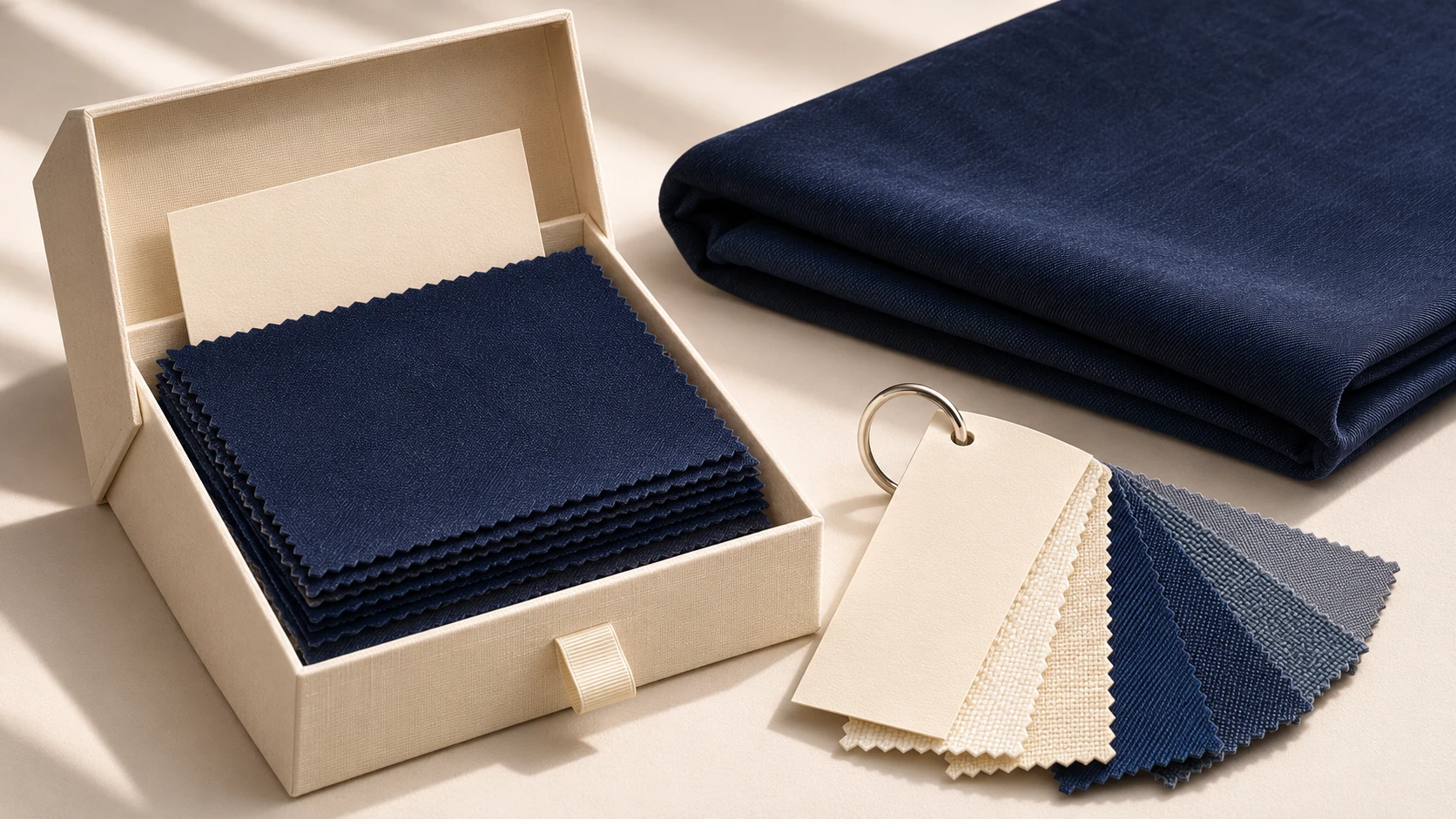
Image note: this conceptual illustration shows fabric reference swatches, an archive box and blank reference cards. These are not actual customer samples, an approved specification or evidence that two production orders match.
When reordering custom knit fabric, replace “same as last time” with an identified specification, an approved reference and a written list of changes. A previous purchase order helps locate the earlier program, but the new order still needs a clear statement of what should remain the same and what may be different.
This checklist is for buyers repeating fleece, jersey or other knit fabric programs. It is a suggested purchasing workflow, not a claim that a supplier can reproduce every characteristic without variation or that past approval automatically releases a new production lot.
1. Identify the version you want to repeat
Start with the earlier purchase order, supplier article code and the specification revision that was actually approved. Include the approval date and reference sample identifier where available. If several samples circulated during development, distinguish the final approved reference from earlier submissions.
Bring composition, construction, target GSM, usable width, finish and color references into one current document. Link the relevant fabric specification details instead of relying on descriptions spread across old messages.
ISO 10007:2017 provides general guidance on configuration management across the product and service life cycle. For a fabric buyer, maintaining an identifiable specification version is a practical way to organize the reorder discussion. This article does not claim ISO certification or reproduce a mandatory ISO procedure for fabric purchasing.
2. Separate unchanged requirements from proposed changes
Create a short comparison record with four fields for each item: previous approved requirement, new requested requirement, reason for change and approval status. Mark genuinely unchanged entries explicitly. Leave undecided items open rather than copying a convenient value from a prior order.
Review product requirements and commercial requirements separately. A new quantity, color split or delivery destination is not the same kind of change as a new finish or usable width. Both need confirmation, but they should not disappear into one note saying “repeat order.”
Ask the supplier to identify any proposed substitution or difference from the reference specification before order confirmation. The buyer’s technical owner should decide whether further sample review, measurement or testing is needed. Do not assume that approval of one changed item approves all other changes.
3. Make the physical reference usable
Record what each retained swatch represents: development material, an approved sample or material from a named production lot. Keep the sample label connected to its specification revision and approval record. A loose swatch with no date or article reference can be difficult for either team to interpret.
If the available reference has been washed, cut, handled extensively or otherwise altered, disclose that condition. Ask the teams to agree which reference and documented requirements will govern the comparison. A photograph can help identify a sample or point of concern, but should not be treated as a complete record of touch, dimensions or measured performance.
For color, state the approved reference and required review process rather than treating the old color name as the entire instruction. See the lab dip and bulk shade approval guide for the separate color-approval discussion.
4. Decide which earlier evidence still applies
List the reports used for the earlier approval and identify the material each report covered. Keep report number, sample or lot reference and specification revision together. The purpose is to make the evidence review possible, not to assert that all old reports expire or remain valid automatically.
Ask the responsible technical team which existing evidence can support the new order and which requirements need fresh confirmation. Record that decision, especially where the fabric specification, intended use or buyer requirement has changed.
Keep specification targets separate from results. The earlier order’s measured GSM or shrinkage result should not be copied into the new lot’s result column before that lot has been assessed. Use the agreed GSM and width requirements as requirements, with new observations recorded separately.
5. Record approval scope before production release
Hypothetical purchasing example, not a customer case: a buyer requests the previous fleece article with a wider usable width and a different finish. The old swatch still identifies the starting point, but the instruction is now a changed specification. Record both requested changes, obtain the relevant technical review and identify the approved revision before treating it as a repeat of the earlier program.
For every open item, note who decides, what evidence is needed and whether the item prevents release under the agreed workflow. If approval is conditional, describe the condition and the material or order lines it covers. Do not convert a limited sample approval into an unsupported statement that the whole order is approved.
Retain the earlier version and the change record. Send the agreed current revision to the people handling the order, rather than silently replacing a file and leaving different teams with different instructions.
6. Keep the new order traceable through receipt
GS1 explains traceability as a process involving identification, data capture, records and information sharing between trading partners. A practical reorder record should therefore connect the approved specification to the actual new order and its supplied material. This does not require a particular barcode format or claim that WellDoneTex uses GS1 identifiers.
Use distinct references for the product specification, purchase order and production lot. Link dispatched rolls to the applicable records in the roll packing list. If some material remains under review, preserve that status when handing documents to the receiving factory.
Before sending a repeat inquiry, check that you have the prior order reference, current specification revision, sample reference, change list, approval owner and quantities by color. Ask for confirmation of the new order’s terms instead of assuming that an earlier quotation, schedule or sample arrangement still applies.
WellDoneTex supplies custom, made-to-order knit fabrics and does not hold ready stock. Orders typically start at 1,000 kg total, with a usual minimum of 400 kg per color, subject to confirmation for the particular program.
Send your previous article reference and updated reorder requirements for a quotation discussion. Sample scope, testing, timing and commercial terms need project-specific confirmation.