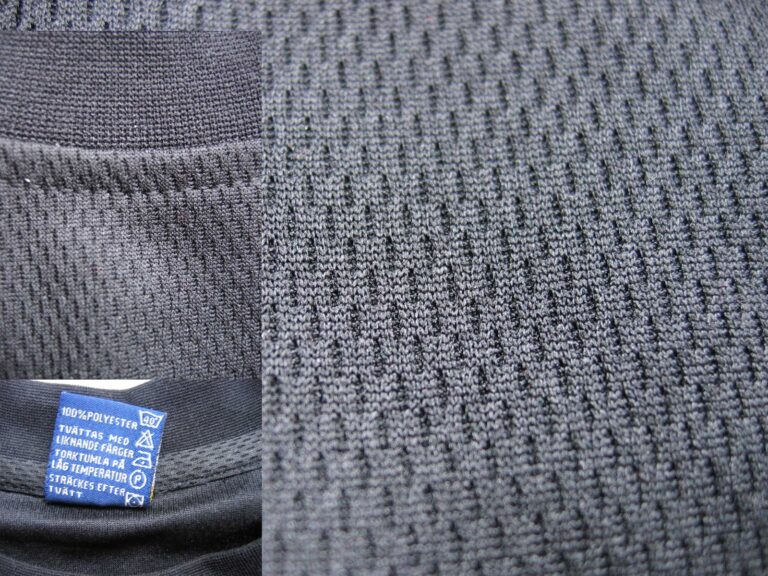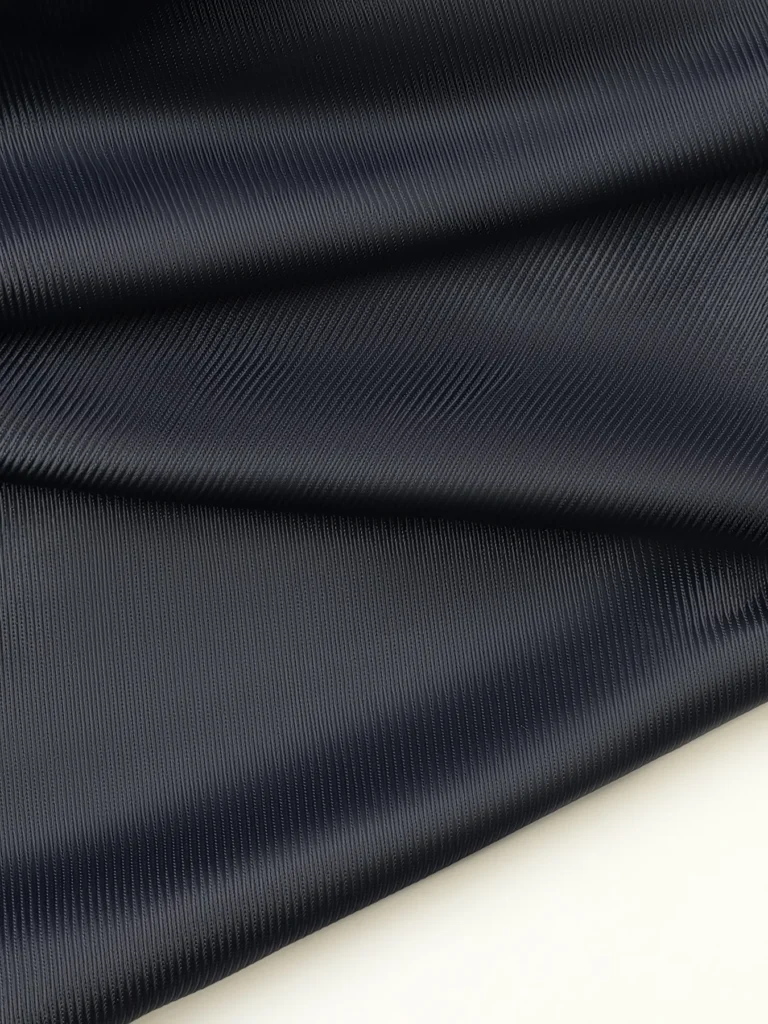
Choosing fabric for a blanket starts with a use, not a fiber name. A light travel layer, a plush sofa throw, a washable household blanket and a decorative bed cover can all call for different surfaces, bulk, care routes and finished construction.
There is no single “best” blanket fabric for every project. A useful comparison asks five questions first: where the blanket will be used, how it should feel, how much bulk is acceptable, how it will be cared for, and whether the buyer needs fabric by the roll or a finished item. Only then should terms such as fleece, Sherpa, coral fleece, faux fur, cotton, wool, acrylic or blend become a shortlist.
This guide gives a practical first comparison for home, travel, design and sourcing decisions. It does not assign performance to an untested sample. Exact composition, construction, finish, mass, care response and test results should come from the selected material and its supporting documents.
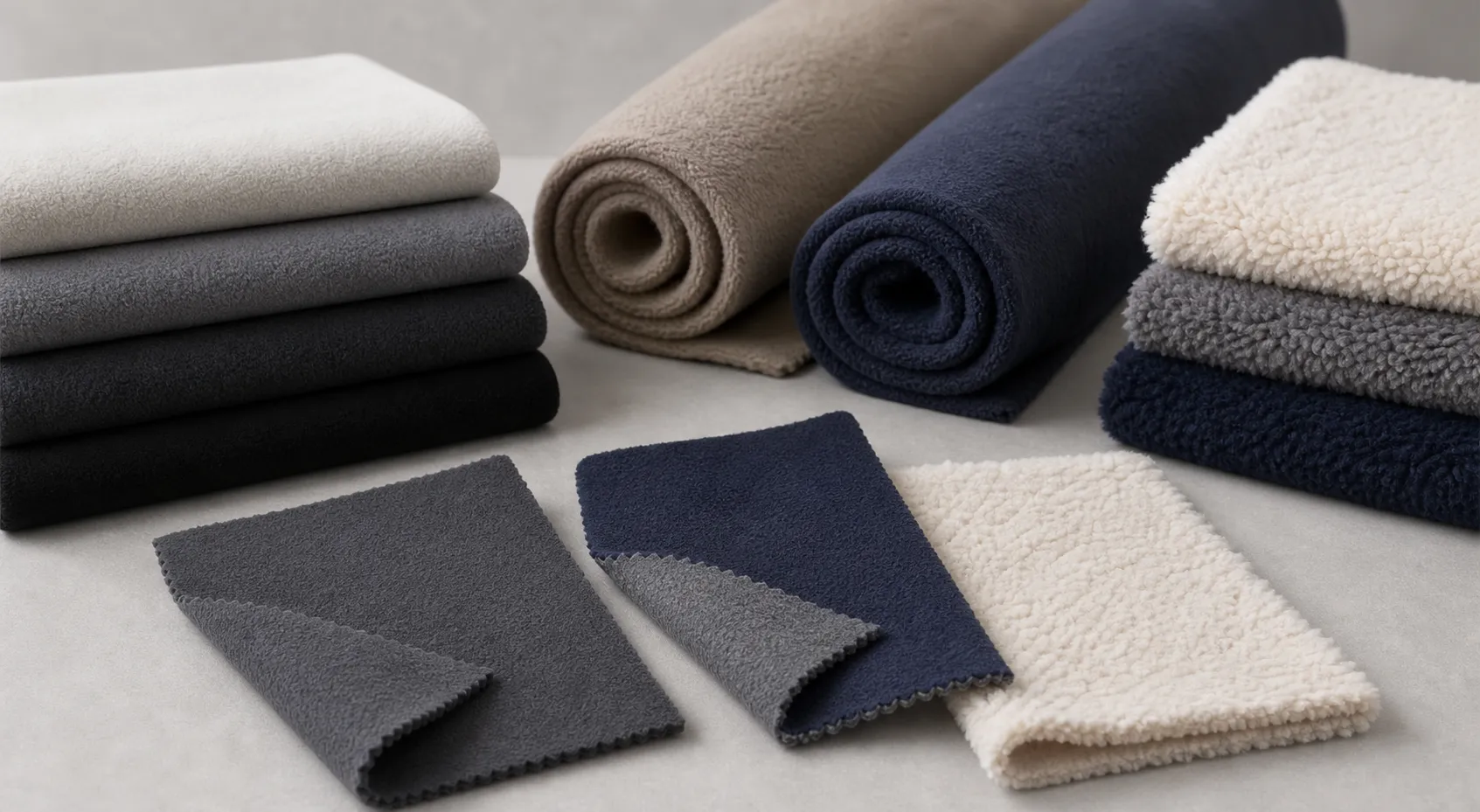
Project-owned educational composite showing a range of fleece-like rolls and swatches. It is not a photograph of a blanket program or a set of positively identified product samples, and appearance does not prove fiber content, GSM, warmth, pilling, care performance or certification.
Quick answer: which blanket material should you consider?
- Start with polyester or polar fleece when a general-purpose raised surface is a possible direction and you can compare the actual sample for bulk, finish, care and pilling behavior.
- Consider coral fleece when the design calls for a fuller plush pile, but confirm the exact sample identity, measured mass, pile, backing and care evidence.
- Consider Sherpa or another high-loft plush when pronounced texture is part of the design and extra bulk is acceptable.
- Consider faux fur when a long decorative pile is the main visual feature and the project can accommodate its separate cutting, edge and care questions.
- Consider cotton, wool, acrylic or blends when a fleece pile is not the desired look or the construction brief points elsewhere.
Those are material directions, not winners. Two fabrics in one family can handle differently because of knitting or weaving, pile height, density, brushing, backing and finishing. Compare the actual fabric and the intended finished construction rather than buying from a family name alone.
Quick comparison of blanket material directions
| Material direction | Reader-facing look and handling question | When it may enter the shortlist | What still needs checking |
|---|---|---|---|
| Polyester or polar fleece | Usually compared as a raised fleece surface; actual loft and pack volume vary by construction | When a general-purpose fleece or travel layer is being considered and the sample can be checked at finished size | Exact construction, composition, GSM, finish, width, pilling behavior, care route and sample feel |
| Coral fleece | A plush, visibly piled surface whose fullness should be judged on the actual sample | When a soft, fuller-looking throw surface is the design direction | Positive sample identity, pile and backing, measured GSM, shedding observations and care evidence |
| Sherpa or other high-loft plush | A pronounced, textured pile that usually takes more visual and packing space than a flatter face | When high loft is a design priority or the material is being considered as one layer or a lining | Backing structure, total bulk, edge construction, packing and wash behavior |
| Faux fur | A long decorative pile with strong visual impact and direction | When appearance is more important than a compact, low-profile surface | Exact pile and backing identity, cutting debris versus continuing pile loss, edge treatment and product-specific care |
| Cotton, wool, acrylic or blends | A broad set of non-fleece routes, including smoother or less visibly piled surfaces depending on construction | When a fleece pile is not the desired look or the fiber/construction brief points elsewhere | Exact fiber content, construction, finish, care, sourcing statements and sample-specific evidence |
The table is a route map, not a performance ranking. It deliberately leaves warmth, durability, washing results and suitability open until the exact sample and finished-item plan are known.
Choose by use before choosing by material
Sofa throws and everyday lounging
Start with hand feel, visual texture, room temperature, expected handling and care frequency. A flatter fleece may suit a low-bulk everyday layer, while a high-loft Sherpa or long pile may be chosen primarily for texture. Neither choice is automatically warmer, easier to clean or more durable without comparable construction and test evidence.
Bedding and layered warmth
Ask whether the blanket will be the main cover, an extra layer or a decorative top layer. Finished size, drape, total weight and the way the material sits with sheets or other blankets matter. A fabric that feels pleasant as a small swatch may feel different across a full bed size, especially after binding, seams or a second layer are added.
Travel and compact storage
Pack volume, fold recovery and finished weight matter alongside touch. Compare samples at the intended finished size or with a realistic prototype. Do not assume that a lower GSM automatically means the smallest pack, because loft, thickness, edge construction and packaging also affect the final volume.
Children, pets and frequent household use
Define the cleaning route, supervision and wear pattern before selecting the material. Loose long pile, decorated surfaces, trims and edge constructions may add risks or maintenance needs that a flat swatch comparison misses. Product safety and suitability depend on the complete finished item and applicable requirements; this fabric guide does not certify an item for a child, pet or medical use.
Decorative blankets and statement textures
When the main goal is appearance, inspect pile direction, color under the intended light, surface consistency, backing visibility and how cut edges will be finished. Faux fur and other long-pile materials need a separate cutting and seam plan. A dramatic surface can also add bulk and may show compression or directional shading.
DIY and sewing projects
Confirm whether the pattern expects a woven, knit, stretch or non-stretch material. Record nap or pile direction before cutting, test the intended seam and edge finish on an offcut, and follow the exact care information supplied with the material. Yardage, layout and edge treatment depend on the project dimensions and fabric width, so they are separate calculations rather than universal values in this guide.
A five-step way to choose blanket fabric
1. Define the real use
Write one sentence that describes the job: a sofa throw that is washed at home, a decorative bed layer, a compact travel blanket, a high-loft lined design, or roll goods for a professional program. Replace vague words such as “warm” or “luxury” with the situation, season, layering plan, preferred surface and acceptable bulk.
2. Choose the surface experience
Decide whether the priority is a smooth face, a brushed fleece feel, a plush pile, a high-loft Sherpa look or a decorative long pile. Then check both sides of the actual material. A photograph can show one sample's visible surface, but it cannot prove composition, thermal performance, pilling resistance or wash durability.
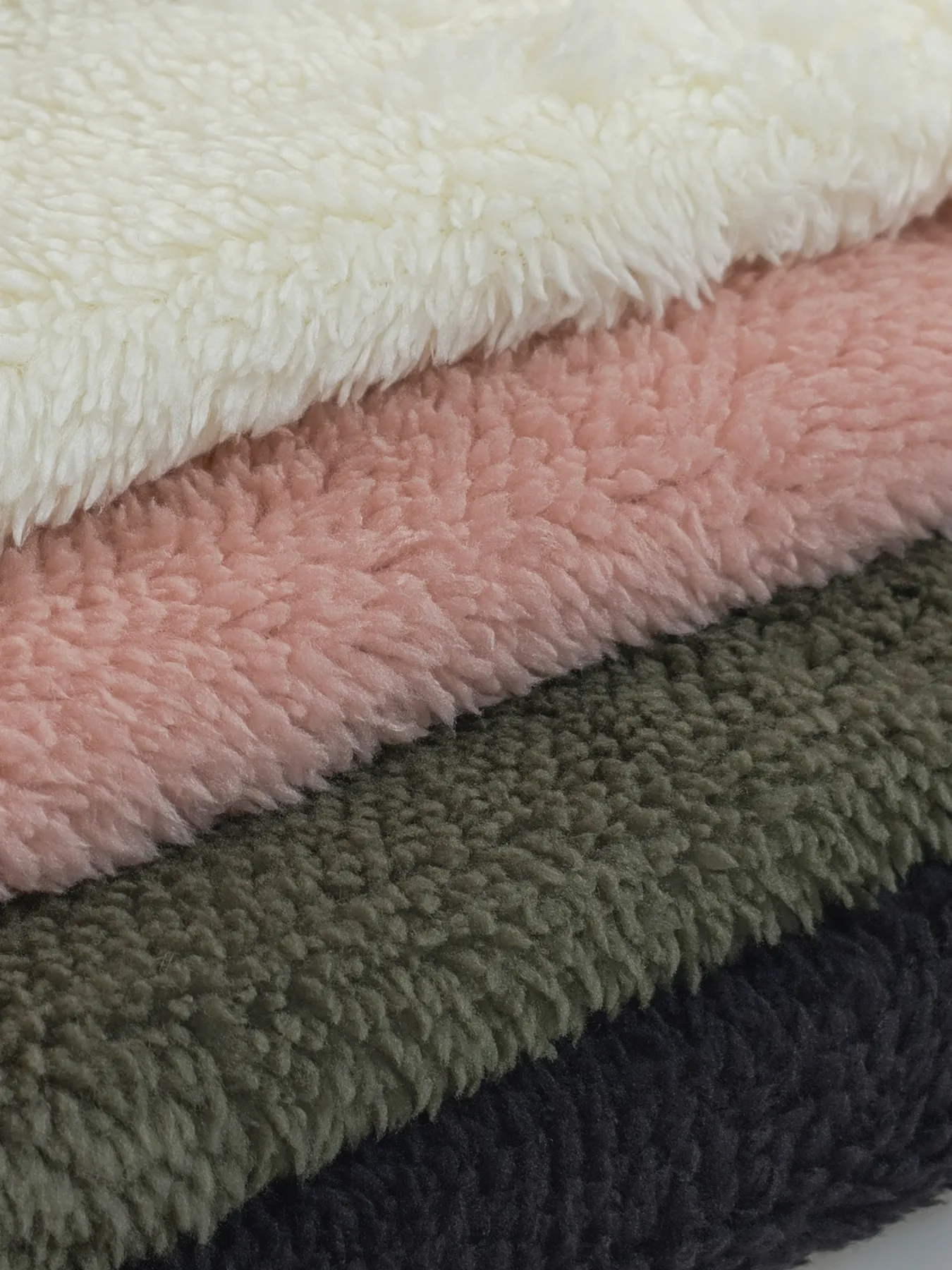
Multicolour first-party WellDoneTex Sherpa fabric samples showing their visible pile surfaces. They are not finished blankets or airline products, and the photograph does not prove warmth, composition, backing construction, care performance or certification.
For more detail on pile, backing and sample review, see What Is Sherpa Fleece?. Here, the useful decision is whether that pronounced texture and bulk fit the intended blanket, layer or lining.
3. Set the care constraint before selecting the sample
Ask who will clean the blanket, by which process, and how often. A household care route and a commercial or program-specific laundry route are not interchangeable. Care instructions and durability statements must match the exact construction and finished item. Do not copy a wash cycle, drying route or expected life from another fleece product.
4. Compare bulk as well as fabric mass
GSM is useful, but it is not the whole handling experience. Loft, thickness, layers, backing and edge construction can change how a blanket feels, folds and packs. Compare samples at the intended finished size where possible, especially when storage or travel bulk matters.
5. Approve evidence for the selected material
For an ordinary home or DIY project, this may mean confirming identity, hand, care instructions and a small sewing or wash trial. For a professional program, add an agreed specification, sample or lot reference, test methods, pass/fail criteria and report scope. “Anti-pill,” “reusable,” “travel” or “airline” should not be treated as a transferable performance certificate.
Explore each fleece family in more detail
If fleece is the likely direction, use the selection question to choose the next level of detail:
- Read Types of Polar Fleece for the existing taxonomy and construction routes.
- Read What Is Anti-Pill Fleece? before treating an anti-pill label as a zero-pilling promise.
- Read What Is Coral Fleece Fabric? for the existing Coral definition, comparisons and care questions.
- Read What Is Sherpa Fleece? for pile, backing and sample-review detail.
- Read the Faux Fur Care Guide when the design moves toward long decorative pile and its separate cutting, shedding and care questions.
These families should not be collapsed into one generic “plush” label. The correct comparison keeps the identity of the actual sample visible and leaves unmeasured performance open.
Fabric by the roll is not the same as a finished blanket
A fabric specification describes roll goods: for example, identity, construction, composition, width, mass, finish, color and the evidence agreed for that fabric. A finished blanket adds size, cutting, seams, edge treatment, labels, trims, possible additional layers and packaging.
This distinction matters when asking for a quote or comparing supplier pages. A fabric supplier may be able to discuss roll goods without offering finished blanket manufacturing. Conversely, a finished-item listing does not reveal the full fabric specification or make its claims transferable to a different material. State which scope you need before assuming that sewing, binding, branding, individual packing or program approval is included.
GSM is not the same as finished blanket weight
GSM means grams per square metre: the mass of the fabric per unit area. It helps compare fabric samples when the measurement method and specimen are defined.
A simple planning estimate for fabric mass is:
fabric mass in grams = fabric GSM × finished fabric area in square metres
But that estimate is not automatically the finished blanket weight. A finished item can also include binding, seams, labels, embroidery, extra layers or other components. Packaging belongs to the logistics calculation, not the fabric GSM. Tolerances, cut size and construction can also change the actual result.
For a deeper explanation of the metric, see the Fleece Fabric GSM Guide. For an order or program, use an approved bill of materials or measure the finished sample rather than copying a competitor's listed weight.
What should a professional blanket-fabric brief include?
Start with the information that controls material selection. Do not invent a specification just to complete a form.
- Use and environment: home, travel, hospitality or another defined program.
- Required scope: roll-goods fabric, a prototype, or a finished item.
- Preferred surface and construction direction: smooth, brushed, plush, high loft, long pile, single layer or layered.
- Finished dimensions and acceptable bulk: include packing limits if relevant.
- Care or laundering route: domestic, commercial or another buyer-defined process.
- Known fabric fields: composition, construction, width, mass, finish and color, leaving unknown fields open for discussion.
- Evidence and acceptance: sample or lot identity, methods, conditions, pass/fail limits and report format.
- Finished-item details if they are truly in scope: edge, label, branding, packing and any buyer-specified approvals.
Methods such as ASTM D3776/D3776M for fabric mass per unit area, ISO 12945-2 for pilling/fuzzing/matting, ISO 6330 for domestic washing/drying procedures, ISO 5077 for dimensional change and ISO 11092 for steady-state thermal and water-vapour resistance can frame evidence questions. Naming a method is not a test result, and the correct route depends on the specimen, construction, jurisdiction and buyer criteria.
Airline and travel blankets: treat the application as a program brief
“Airline blanket” describes an application, not one universal material. In supplier pages reviewed on September 18, 2026, Mills Textiles listed multiple blanket-material routes, while Inflight Product marketed one compact polyester-fleece configuration. Those examples show that several routes exist; they do not show which material is most common, prove suitability for every airline, or establish any WellDoneTex finished-blanket capability.
For a travel or airline program, start with these questions:
- Is the requirement roll-goods fabric or a finished blanket?
- Does the program define the item as single-use, limited-reuse or reusable, and what does that mean operationally?
- What finished dimensions, fabric mass, pack size and acceptable bulk are required?
- What care or laundering route applies, and what evidence must be supplied after that process?
- Which current operator, market or program requirements and acceptance criteria has the buyer provided?
- Are edge construction, branding and individual packing actually in scope?
The answer should come from the program owner and the exact product evidence. Current operator, regulator and market requirements must be confirmed for the actual program. This guide does not claim airline approval, certification, fire performance, wash-cycle life, pilling grade, or a customer relationship.
Frequently asked questions
What is the best fabric for a blanket?
There is no universal best fabric. Choose by use, preferred surface, acceptable bulk, care route and finished construction. Then compare positively identified samples and their evidence.
Is fleece a good blanket material?
Fleece is a common blanket-material direction, but the family name does not determine warmth, durability, pack size or care performance. Check the exact construction, composition, GSM, finish, pilling behavior and care route.
Is a heavier GSM blanket always warmer?
No universal conclusion follows from GSM alone. GSM measures fabric mass per area; thermal behavior also depends on construction, loft, layers, air spaces, moisture and the test conditions. Compare relevant evidence for the actual sample and finished design.
What is the difference between polar fleece, coral fleece and Sherpa?
They are distinct material or surface directions, not interchangeable labels. Polar fleece covers several construction routes; coral fleece is generally discussed as a plush piled fleece family; Sherpa has a pronounced high-loft pile and its backing must be inspected. Use the linked detailed guides for definitions and sample checks.
How do I choose fabric for a washable blanket?
Start with the intended cleaning process and frequency, then check the exact fabric and finished construction against supported care instructions. A domestic-wash method or a result for one sample does not automatically transfer to another blanket.
What should I ask before buying blanket fabric by the roll?
Ask for the material identity, construction, composition, usable width, mass, finish, color, sample or lot reference, care information and whatever test evidence the application actually requires. Also clarify whether the offer is roll goods only or includes any finished-item work.
Final checklist
- Define the use and finished scope.
- Compare actual surfaces, both sides and total bulk.
- Set the care route before approving the material.
- Separate fabric GSM from finished blanket weight.
- Keep fleece, Coral, Sherpa and faux fur identities distinct.
- Ask for sample-specific evidence instead of transferring claims from another product.
- Treat travel or airline requirements as a buyer-defined program, not a universal material label.
If you are evaluating roll goods for a blanket project, share the intended use, preferred surface, known size or bulk limits, care route and any specifications you already have. Unknown fields can remain open for sample discussion; the next step should be to verify the exact material and evidence, not to force a generic “best fabric” answer.
Sources
- Mills Textiles, “Blankets”, reviewed 2026-09-18. Used only to show that one supplier lists multiple material routes; not market share, rights to its images, or WellDoneTex capability.
- Inflight Product, “Disposable Airline Blankets”, reviewed 2026-09-18. Used only as one seller's polyester-fleece configuration; seller statements are not independent test evidence.
- ASTM D13.60 jurisdiction page for D3776/D3776M-20(2025), version recorded 2026-09-18. Used only for fabric mass-per-unit-area context.
- ISO 12945-2:2020, ISO 6330:2021, ISO 5077:2007 and ISO 11092:2026, versions recorded 2026-09-18. Used only to frame possible evidence questions; none supplies a result for an unidentified blanket sample.
- Existing WellDoneTex educational pages linked above were reviewed or inspected on 2026-09-18. They provide the detailed family explanations that this selection guide intentionally does not repeat.